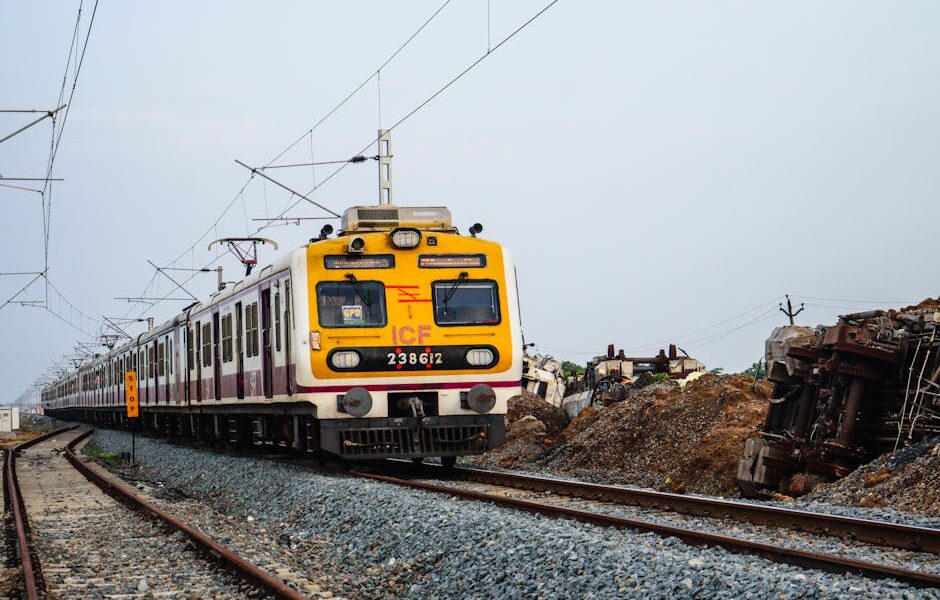
It was supposed to be just another Tuesday. A passenger train, packed with travellers making their way through the rugged landscapes of Balochistan, chugged along a track that has seen better days. Then, at a remote crossing, the quiet was shattered. A suicide bomber, waiting in the shadows, detonated his payload as the train passed, turning a mundane commute into a scene of unthinkable carnage. The Balochistan train attack, which killed at least 24 people, many of them military personnel who were simply heading home or to their posts, highlights the enduring conflict in the region.
A Strategy of Chaos: The Balochistan Train Attack
This attack is not an isolated act of madness. It fits a grimly familiar pattern. Militant groups, particularly those operating in the restive province of Balochistan, have a long history of using soft targets like trains and buses to sow terror. The logic is brutal but clear: hit the arteries of daily life, and you force the state to bleed from a thousand small cuts. When a bomb goes off on a railway line, it does not just kill; it sends a message that no journey is safe, no destination guaranteed.
The Forgotten Frontline
While the world’s attention often pivots to the border skirmishes with India or the fraught politics of the Afghan frontier, Balochistan remains Pakistan’s quiet war. It is a region rich in natural resources but poor in development, and its people have been caught between separatist insurgencies, sectarian violence, and a heavy-handed military presence. For the soldiers on that train, this was not a deployment to a far-off battlefront. It was a routine movement of troops—men returning from leave, officers travelling for meetings. Their only crime was being in uniform on a public railway.
Why Trains?
To understand the choice of target, you have to think like a guerrilla. A train is predictable. It runs on a fixed schedule along a fixed track. Unlike a military convoy, which can vary its route and speed, a train is a captive audience. The bomber knew exactly where to stand and when to strike. Moreover, the aftermath is visually and psychologically devastating. The twisted metal, the overturned carriages, the blood on the gravel—it is a spectacle designed to dominate headlines and terrify the public.
Beyond the Numbers
We are accustomed to hearing casualty figures from Pakistan’s conflict zones. Twenty-four dead. Dozens wounded. Those numbers flatten the humanity out of the story. Behind each statistic is a family that will never hear a loved one laugh again. A child who will grow up without a parent. A village that will hold a mass funeral and ask itself, once again, why peace seems so elusive. The soldiers who died were not just cogs in a machine. They were sons and brothers, men who had chosen a dangerous profession in a volatile country.
What Comes Next?
The Pakistani government will respond. Airstrikes in the tribal areas. Security crackdowns. Promises of a wider investigation. But these measures, however necessary, feel like bandages on a wound that will not heal. The real question—one that no official statement will address—is how a nation can break the cycle of retribution and violence. Until the underlying grievances of Balochistan are addressed, and until the flow of weapons and ideology into the region is stemmed, there will be another train, another market, another school targeted by those who see murder as politics by other means. For more on regional conflicts, see quiet diplomatic signals between India and Pakistan. Additionally, the role of Pakistan’s general in US-Iran diplomacy highlights the broader geopolitical context.
For now, the tracks have been cleared. The bodies have been taken away. But the shadow of this attack falls long and dark over the future of a country that desperately needs a different kind of journey. Learn more about the broader conflict dynamics from International Crisis Group and BBC News.