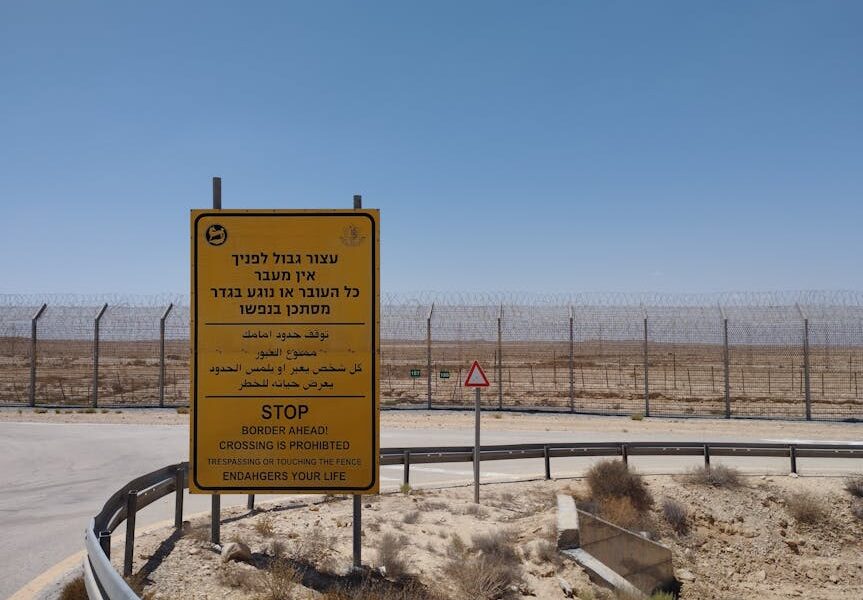
For months, the border between Israel and Lebanon has been a powder keg, with skirmishes and rocket fire threatening to drag the region into a wider war. But amidst the cacophony of conflict, a rare voice has emerged from within Hezbollah’s political wing, laying out a surprisingly concrete roadmap for what a durable ceasefire might look like. The Hezbollah ceasefire demands include a list of three non-negotiable conditions, but to understand them, we have to look not just at the words, but at the decades of history and strategic calculation behind them.
The Three Pillars of a Pause: Hezbollah Ceasefire Demands
According to a Hezbollah MP, any lasting cessation of hostilities with Israel must rest on three specific pillars. These are not vague aspirations; they are hard, territorial and political demands that reflect the group’s core identity and survival instincts.
- An immediate and complete halt to Israeli military operations — not just a reduction in strikes, but a full stop to what Hezbollah frames as ongoing aggression. For many in southern Lebanon, this means an end to the daily hum of drones and occasional airstrikes that have become background noise.
- The removal of Israeli forces from all Lebanese territory, specifically referencing the Shebaa Farms and the hills of Kfarshuba. These are small, disputed patches of land that Israel captured in 1967, but which Lebanon claims as its own. For Hezbollah, this isn’t just about soil; it’s about symbolic sovereignty and the ‘resistance’ narrative that justifies its armed existence.
- Guarantees for the return of displaced civilians on both sides of the border. Hezbollah insists that any deal must make provisions for tens of thousands of Lebanese who have fled their villages in the south, mirroring the displacement of Israeli communities from the northern border.
The Missing Piece: The Gaza Link
Here is where the story gets more complicated than the source material might suggest. What the MP’s statement doesn’t explicitly say — but what every analyst in Beirut knows — is that Hezbollah has linked its actions on the Lebanese border to the war in Gaza. For months, the group has insisted that its front will not quiet down until there is a ceasefire in the Palestinian enclave. This demand for a ‘unity of fronts’ is a strategic doctrine that ties the fate of southern Lebanon directly to the situation in Gaza.
This linkage is the real wildcard. Even if Israel were to theoretically accept the three conditions for the Lebanese border, Hezbollah would likely refuse a separate peace while the bombs continue to fall on Gaza. The trio of Hezbollah ceasefire demands is therefore not a standalone peace plan. It is a conditional framework, and the most critical condition — the one not listed in the public demands — is the end of the war in Gaza. Negotiators who focus only on the ‘three things’ risk missing the larger, more intractable chessboard in the region. For more on the broader conflict, see our analysis of the Gaza ceasefire flaws.
A Mirror to History
This is not the first time Hezbollah has presented such conditions. In 2006, after the 34-day war, the group used similar language to justify its retention of weapons, arguing that only a strong military arm could guarantee the withdrawal of Israeli forces and the protection of Lebanese civilians. The current Hezbollah ceasefire demands echo that playbook. They are designed to be just attainable enough to seem reasonable to an international audience, yet just stringent enough to be difficult for Israel to fully accept without broader concessions.
For ordinary Lebanese citizens, these political maneuvers come at a staggering cost. The Lebanese economy was already in freefall before the current escalation. Now, agricultural land in the south is scorched, tourism has evaporated, and the Lebanese pound is plummeting further. A ceasefire is desperately needed — not just for ideological reasons, but for the survival of a nation that is simply too fragile to endure another full-scale war.
What Comes Next?
The real question is whether the international community can broker a deal that addresses Hezbollah’s stated demands while also understanding the unspoken ones. Diplomatic efforts, led by French and American intermediaries, are ongoing, but they walk a tightrope. Pressuring Israel to withdraw from the Shebaa Farms is one thing; untangling the Gaza connection is another entirely. For context on regional tensions, see our piece on Southern Lebanon casualties.
In the end, a lasting ceasefire on the Israel-Lebanon border is less about three points on a piece of paper and more about a fundamental reset of the rules of engagement that have held since 2006. Without a broader understanding that addresses Hezbollah’s regional ambitions and Israel’s security concerns, these three demands may simply become the opening bid in a very long, very dangerous negotiation. For authoritative background on Hezbollah, see Council on Foreign Relations and BBC News.