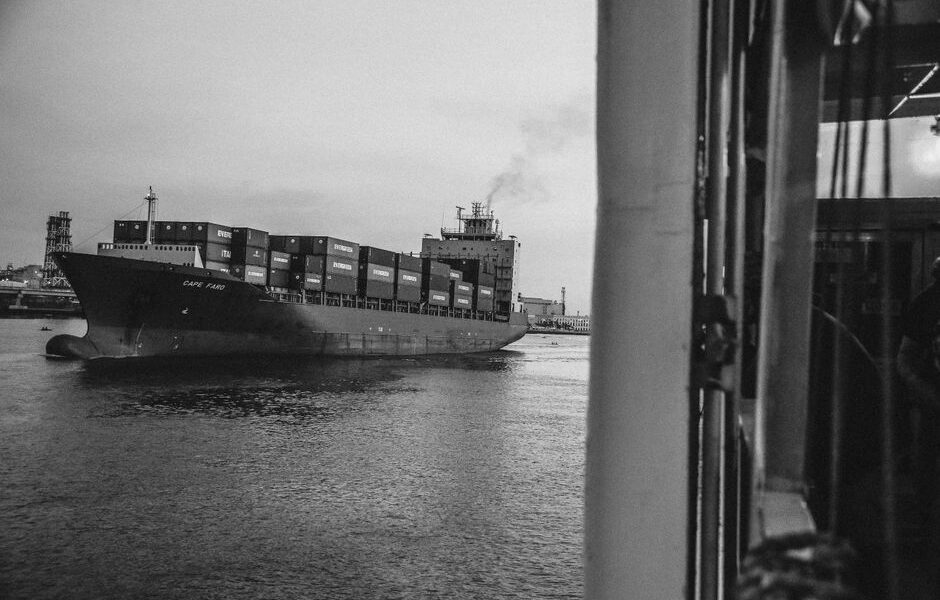
China Cuba rice aid has taken center stage as a cargo vessel docked in Havana this week carrying 15,000 tonnes of rice, more than just a delivery of grain. It was a signal of how far Cuba’s economy has fallen — and how far China is willing to go to fill the gap left by decades of U.S. sanctions.
The rice is the first installment of a 60,000-tonne aid package from Beijing, part of a broader lifeline that has become essential as Cuba endures its worst economic crisis since the collapse of the Soviet Union. The island nation is grappling with shortages of food, medicine, and fuel, and its people are facing blackouts that last up to 18 hours a day. In this context, a shipment of rice is not charity — it’s survival.
China Cuba rice aid beyond the blockade headlines
Much of the coverage around Cuba’s struggles points squarely at the U.S. embargo, which was tightened under the Trump administration and has not been significantly loosened under President Biden. That is a valid and important factor. But focusing solely on the blockade risks missing a bigger picture: Cuba’s economy was already fragile before the latest sanctions, and years of poor planning, a bloated state sector, and the pandemic’s blow to tourism had left it gasping.
The blackouts, for instance, are not just a result of U.S. policy. They stem from aging, Soviet-era power plants that Havana has struggled to maintain or replace. The same is true of its agricultural sector, which produces far less food than it did in the 1990s. The U.S. embargo undoubtedly makes everything harder — importing spare parts or machinery is a nightmare — but Cuba’s internal inefficiencies have also played a role in the current crisis.
China’s quiet strategy
Beijing has been sending aid to Cuba for years, but the scale has ramped up noticeably since 2023. In addition to rice, China has provided medical supplies, solar panels, and even financial credits. On the surface, this looks like a humanitarian gesture. But for China, it is also a strategic play. By deepening Cuba’s dependency, Beijing gains a foothold in the Caribbean — a region the U.S. has long considered its backyard.
The timing is also notable. Just last month, a U.S. congressional delegation visited Panama and the Dominican Republic, warning about Chinese influence in the region. In response, Chinese diplomats have pointed to their tangible aid as proof that they are a friend, not a predator. The rice shipment, then, is as much a geopolitical statement as it is food for hungry Cubans.
What this means for ordinary Cubans
For the average Cuban, the arrival of Chinese rice is a mixed blessing. On one hand, it helps stabilize a basic food item that has become increasingly scarce and expensive. Rice is a staple in the Cuban diet, and when it disappears from state stores, families are forced to buy it on the black market at triple the official price. On the other hand, dependence on a single foreign donor is risky. If China ever scales back its support — or uses it as leverage — Cuba would have few alternatives.
This is not the first time Cuba has relied heavily on a patron. During the Cold War, the Soviet Union propped up the island with oil, arms, and subsidies. When the USSR collapsed, Cuba entered the so-called Special Period — a time of extreme scarcity that many older Cubans still remember with dread. The fear now is that history could repeat itself, with China replacing the Soviet role, but without the ideological commitment that once bound Moscow and Havana.
A deeper look at the numbers
The 15,000-tonne shipment is welcome, but context matters. Cuba’s annual rice consumption is roughly 500,000 tonnes, and domestic production covers less than 40% of that. The rest has historically been imported from Vietnam, Brazil, and the United States. But trade with the U.S. has been dramatically curtailed by sanctions, and Brazilian exports have declined due to their own domestic needs. That leaves China as the most reliable supplier, but it is an expensive one — freight costs from East Asia are far higher than from regional partners.
At the same time, Cuba’s foreign currency reserves are nearly depleted. The government cannot simply buy rice on the open market; it depends on credit lines and aid. This makes every shipment a political calculation, not a commercial transaction.
Looking ahead
The Biden administration has shown little appetite for a major shift in Cuba policy, and with the 2024 election looming, even small gestures are unlikely. That means Cuba will continue to lean on China, and Beijing will continue to expand its influence in the region. For the Cuban government, this is a necessary evil. For ordinary Cubans, it means their daily life is increasingly tied to decisions made in Beijing, not just in Washington or Havana.
The rice on the docks of Havana is a meal today, but it is also a reminder of how fragile Cuba’s sovereignty has become. The island may be free of direct colonial rule, but it has traded one form of dependency for another — and that is a story the headlines about the blockade do not always tell. For more on China’s global strategy, see Inside the Shadow of Shanxi: The Human Cost of China’s Coal Rush. Learn about the broader geopolitical context from Council on Foreign Relations.