When Patrick Faley recalls the funeral that changed his life, he doesn’t talk about the dignity of the ceremony. He talks about the handshakes, the hugs, the human instinct to comfort the grieving. “You have to shake hands; you have to hug people,” he says. “Forgetting to know that we have a crisis.” Three days later, he was fighting for his life in an overcrowded ward in Monrovia. This story is a stark reminder of the ongoing Ebola outbreak Congo faces today, where similar challenges threaten lives.
Faley survived. His wife survived. Their four-year-old son, Momo, did not. That was a decade ago, during the worst Ebola outbreak the world has ever seen — a two-year nightmare that killed more than 11,000 people across West Africa. Now, the Democratic Republic of Congo is facing its own battle, the latest in a long line of outbreaks stretching back to 1976. More than 170 people have already died, and medics on the ground are racing against time with an added complication: this strain, known as Bundibugyo, has no approved vaccine.
The Ghost of Epidemics Past and the Ebola Outbreak Congo
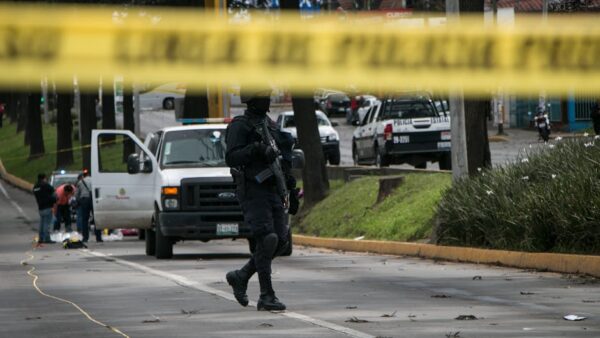
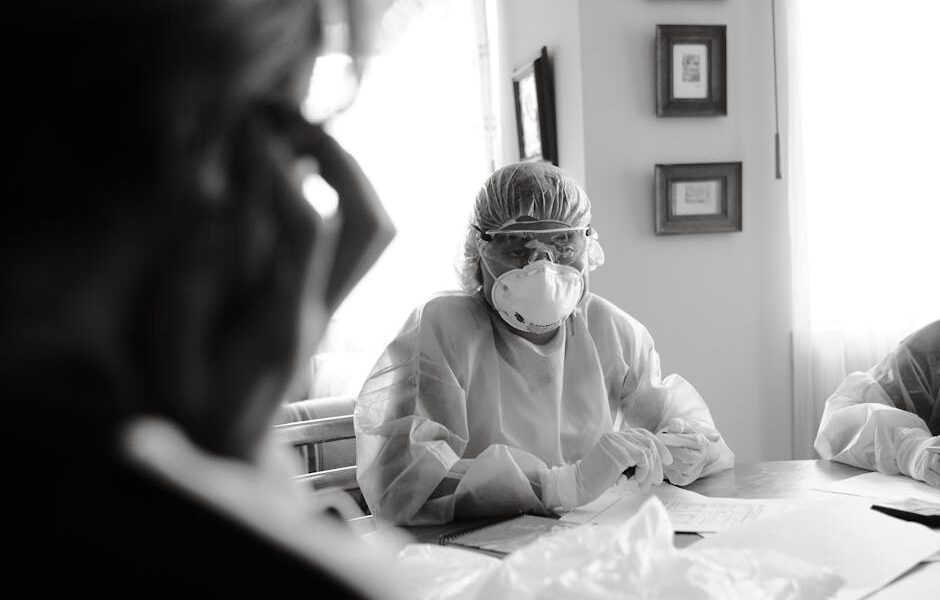
The scenes from eastern DR Congo — medics in full protective gear, families grieving from a distance, the burning of a hospital by angry residents — are hauntingly familiar to those who lived through the West Africa crisis. But while history often repeats itself, the lessons from that disaster are still being learned in real time.
Dr. Patrick Otim, the World Health Organization’s area manager for Africa, puts it bluntly: “Speed matters.” Delays in detecting cases, isolating patients, and engaging communities can turn a handful of infections into a regional catastrophe. But speed alone isn’t enough. “Community trust is essential,” he explains. “Safe and dignified burials, local leadership engagement and clear communication are just as important as laboratories and treatment centres.” That last point — trust — may be the hardest thing to build and the easiest to destroy.
A Virus Without a Vaccine
This outbreak is only the third time Bundibugyo has emerged in humans. First identified in Uganda in 2007, it differs genetically from the more common Zaire strain by about 30%. That genetic distance means the existing vaccine, Ervebo, which proved so effective in ending the West Africa crisis, simply won’t work here.
Professor Thomas Geisbert, one of the inventors of the Ervebo vaccine, is working on an adapted version for Bundibugyo. Tests on monkeys showed 83% protection, but human trials have never been funded. “Getting a vaccine from the laboratory to rollout can cost more than $1 billion,” he warns. It’s an investment no pharmaceutical company has seen as profitable. “It’s a whole bunch of zeros behind the dollars.”
For Wallace Bulimo, a biochemistry professor at the University of Nairobi, this neglect is a failure of foresight. “Why is it that we have not actually done a lot of work on this virus? And yet we knew it was there,” he asks. “It was first discovered in 2007, so we should have never ignored it.”
The Hidden Cost of Compassionate Intervention
There’s another lesson from the West Africa outbreak that often goes unmentioned: the arrival of foreign aid can do more harm than good if it’s not handled with care. Faley remembers how communities in Liberia reacted to the influx of international NGOs during the crisis. “A lot of foreigners trooping into their community brings fears,” he says. “People were still in denial and left their community because of the influx of NGOs.” In eastern DR Congo, where armed groups have operated for years, that dynamic is even more fraught.
The WHO insists the Congolese government is leading the response. But the outbreak is unfolding in the insecure province of Ituri, where displacement, limited infrastructure, and intense population movement make every step harder. Otim is clear: “The challenge is not a lack of experience. The challenge is the operational environment.”
What the Community Heard on the Radio
Perhaps the most delicate lesson comes from Faley’s own experience on the front lines. He warns that telling a community there is no known cure for an outbreak can backfire catastrophically. “If you’re going to tell the community that listens to the radio that Ebola has no cure, people who fall sick will not bother to seek medical help,” he says. “Going to the treatment unit means they’re just going to die.” That kind of fatalism can spread faster than any virus, undermining every effort to contain the disease.
The current approach in DR Congo includes banning funerals for those suspected of infection — a measure intended to prevent the spread of the virus through traditional burial practices that involve contact with the deceased. But when a crowd set fire to part of a hospital near Bunia last week after being told a body would not be released, it was a stark reminder that top-down directives can collapse without community buy-in.
Beyond the Science: The Human Factor
For all the talk of vaccines, genetics, and containment protocols, the real challenge of Ebola is deeply human. The disease preys on our most fundamental instincts: to comfort a friend, to grieve our dead, to trust our neighbours. In the absence of a cure for Bundibugyo, the only weapons available are speed, money, and compassion — and of those three, the most complex is compassion.
Faley’s team in Liberia didn’t just distribute information pamphlets. They went door to door, village to village, explaining why handshakes had to stop, why traditional mourning had to change, and why the people in white suits weren’t there to harm them. It was slow, exhausting work. And it was the work that saved lives. As the world watches DR Congo’s 17th Ebola outbreak unfold, the hope is that those hard-won lessons won’t be forgotten — even when the cameras leave.
For more on the broader impact, read about border towns paying the price as Ebola controls tighten in Central Africa. Also, see how global health reform could save millions. For authoritative information, visit the World Health Organization’s outbreak page and CDC’s Ebola updates.