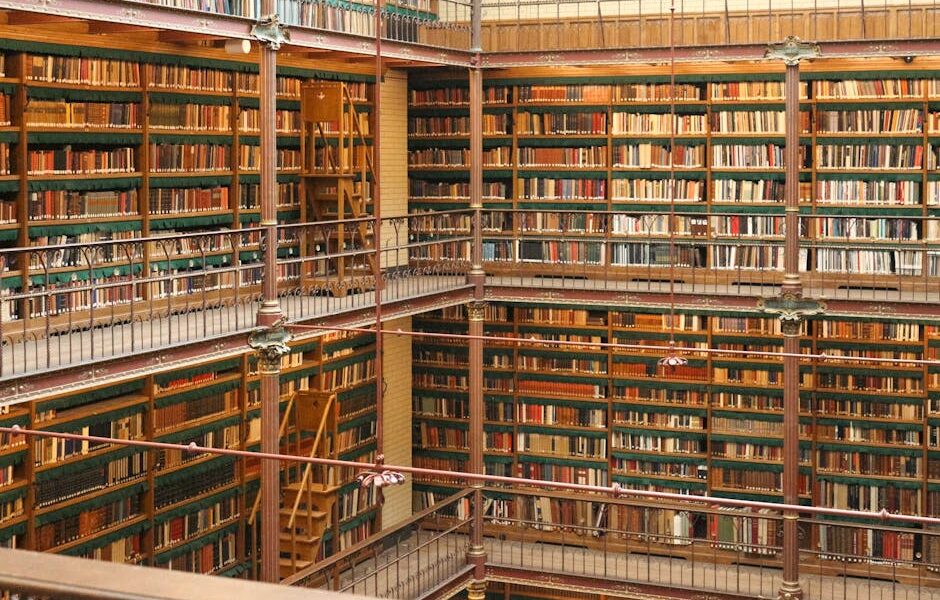
Walk into 101 Reade Street in New York’s Tribeca neighborhood, and you’re hit by something unexpected: the smell of paper. Thousands of bound volumes line the walls from floor to ceiling, each one a chunk of the 3.5 million pages the Department of Justice released under the Epstein Files Transparency Act. This Epstein documents exhibition is not a library in any traditional sense—there’s no librarian, no checkout desk, no quiet reading rooms for study. This is a memorial, a protest, and, as one survivor put it, a paper city.
The exhibition calls itself The Donald J. Trump and Jeffrey Epstein Memorial Reading Room, a deliberately provocative name that forces visitors to sit with a strange, uncomfortable juxtaposition. The man who became president and the convicted sex offender who died in federal custody share real estate here, and that’s the point. The Institute for Primary Facts, the nonprofit behind the project, isn’t interested in being polite. They want to make institutional failure impossible to ignore.
More Than Just a Stack of Paper: The Epstein Documents Exhibition
The sheer scale is overwhelming. Over 3,437 volumes sit on custom-built shelves, each one holding hundreds of pages. The documents include case timelines, handwritten visitor logs, and thousands of pages of law enforcement records. But this isn’t just an archive—it’s an indictment. The organizers printed everything, only to realize the DOJ had left survivors’ names visible while redacting witnesses and co-conspirators. ‘They brazenly broke the law,’ said David Garrett, a co-founder of the exhibition, referring to the botched redaction.
Finding a home for this project wasn’t easy. Garrett told reporters that multiple venues backed out after initially agreeing, worried about controversy or retaliation. The Tribeca gallery became the fifth space the team approached. It sits barely a mile from the Manhattan jail where Epstein died in 2019, adding a grim geographical echo to the whole affair.
For Survivors, Seeing Is Believing—and Wounding
Lara Blume McGee was seventeen when Epstein abused her. When she walked into the reading room last week, she said the sight hit her like a physical blow. ‘The silence was thick with memory,’ she recalled. ‘Row after row, each bound volume a life, a name, a day that should never have happened if the US government had acted when he was reported to the FBI in 1996.’
For Blume McGee, the project is a double-edged sword. On one hand, seeing her story recorded and preserved in a public space feels like long-overdue acknowledgment. On the other, she’s painfully aware that documentation is not the same as justice. ‘Visibility without consequence only prolongs the wound,’ she said. ‘We need both: the files on the table and the government to act—investigate, prosecute, reform.’
Survivors have been at the center of the exhibition from the start. Last week, a 24-hour livestream reading of the files began, with victims and advocates taking turns at the podium inside the dimly lit gallery. Dani Bensky, another survivor, opened the broadcast, holding one of the thick white volumes as she read aloud. Organizers say the hope is to ensure these documents don’t quietly disappear into the bureaucratic abyss.
A Monument to What Went Wrong
Visitors have left flowers, handwritten notes, and messages of grief and anger. Garrett recalled one woman who spent hours walking silently through the space before finally telling staff she was herself a survivor of sexual abuse. ‘She said this helped her realise that she felt seen,’ Garrett said. ‘That meant a lot to us.’
But there’s an argument to be made that this project is a symptom of a deeper problem—that we’ve created a culture where survivors have to build their own monuments because the system refuses to hold anyone accountable. The paper city is a testament to the scale of Epstein’s network, yes, but it’s also a testament to the scale of official inaction. Epstein was first reported to the FBI in 1996. He died in 2019. In between, hundreds of girls and young women were trafficked, abused, and silenced.
The Institute for Primary Facts is already planning more pop-up museums, each designed to generate public pressure on Congress and the Department of Justice. The goal, Garrett said, is to weaponize public outrage to force real transparency and accountability. But for now, the reading room stands as a reminder that sometimes, the most radical act is simply refusing to let the truth be buried.
Blume McGee put it best: ‘Finally, there is action: documentation, visibility, proof. But those same files map systemic failure—how many doors stayed shut, how many people escaped scrutiny.’ The paper city is a monument not just to those who were harmed, but to a system that let them down. The question now is whether anyone in power is willing to read the writing on the wall.
For more on institutional failure, read Erdogan’s Grip Tightens: Police Raid Opposition HQ as Turkish Democracy Faces Its Sternest Test. Learn about the broader context of justice and accountability in Behind the Verdict: How a Regional Conflict Is Reshaping Justice in the Gulf.
For further reading on the Epstein case, visit the U.S. Department of Justice and BBC News coverage of the Epstein scandal.