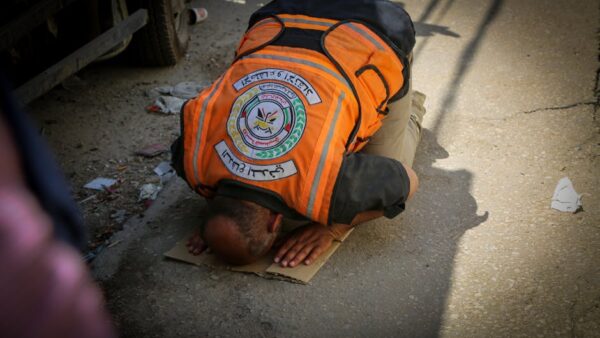
For millions of Muslims worldwide, the annual Hajj pilgrimage to Mecca represents the spiritual pinnacle of a lifetime. But for the elderly and devout in Gaza, that journey has become a mirage—visible on phone screens, yet impossibly out of reach for the third consecutive year as Gaza Hajj barred by ongoing war and border closures. This is not simply a story of border closures; it is a tale of shattered dreams, economic devastation, and a faith community held hostage by a conflict that refuses to end.
A Lifetime of Waiting, Ended by War: Gaza Hajj Barred
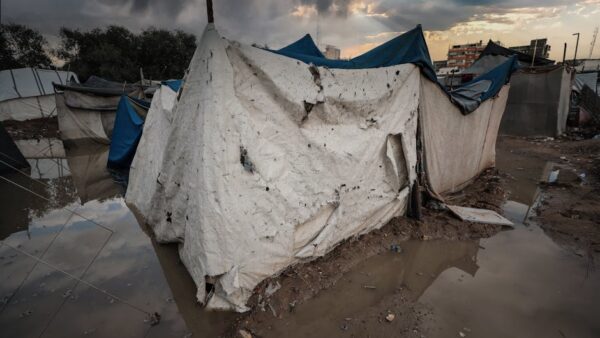
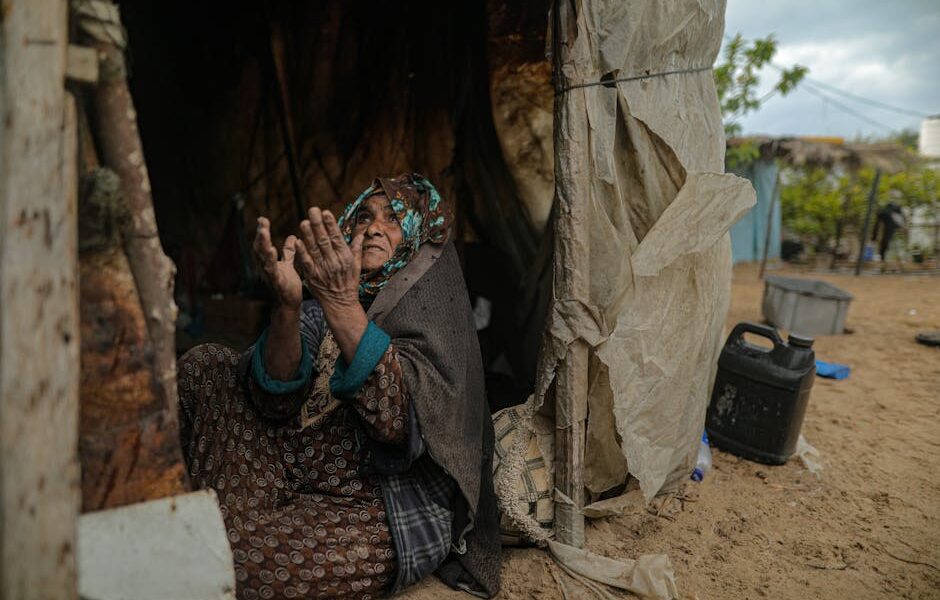
Take Hanan al-Hams, a 65-year-old grandmother from northern Gaza. She was selected to perform Hajj in 2024, a honor she had anticipated for decades. Instead, Israel’s war—launched on October 7, 2023—turned her world to rubble. She lost a son, her home was obliterated, and her pilgrimage slot evaporated. Today, she sits in a tent pitched over the ruins, watching others circle the Kaaba on a tiny mobile screen. Her story is not unique; it’s the lived reality for thousands.
According to Gaza’s Ministry of Awqaf and Religious Affairs, more than 10,000 residents have been barred from performing Hajj over the past three years. At least 71 pilgrims who had won the official lottery in previous years died during the war, never getting the chance to travel. The Rafah crossing, Gaza’s only gateway to the outside world, has remained shuttered for all but urgent medical evacuations since February of this year, leaving the rest trapped in what many call an open-air prison.
More than a Religious Ban: An Economic Genocide
The human toll is heartbreaking, but the economic impact is also staggering. A study published in May 2026 by the Palestinian Center for Political Studies (PCPS) describes the Israeli campaign against Gaza’s Hajj and Umrah sector as “structural economic genocide.” Before the war, this sector injected at least $12 million annually into the local economy, supporting more than 1,500 direct and indirect workers. Now, all 78 licensed travel companies have collapsed.
Mohammed al-Astal, head of the Association of Hajj and Umrah Companies in Gaza, told researchers that most offices were damaged or destroyed. Capital losses exceed $4 million, with an additional $2-3 million in frozen funds held by airlines and hotels in Saudi Arabia and Egypt. Imagine a local Hajj organizer named Mohammed Abdul Bari, who once deployed 20 buses for farewell festivals. Today, he stands before the rubble of his company, a monument to a vanished industry.
Collective Punishment Under International Law
The PCPS report argues forcefully that this systematic destruction is no accident. It constitutes collective punishment, explicitly prohibited under Article 33 of the Fourth Geneva Convention. Denying residents the ability to travel for religious purposes through Israeli-controlled crossings also violates the right to freedom of religion and freedom of movement, protected under Articles 18 and 12 of the International Covenant on Civil and Political Rights. Furthermore, Article 53 of the Fourth Geneva Convention prohibits the destruction of civilian property—making the obliteration of travel agencies a potential war crime.
Legal experts have long warned that blocking religious travel for an entire population, especially the elderly, crosses a red line. As Rami Abu Staitah, director general of Hajj and Umrah at the Waqf Ministry, put it: “We could not organise the season because we were given no guarantees that the crossing would open. The preparations require early, complex contracts for housing and transport, which are impossible under these conditions.”
Holding onto Faith Amid the Ruins
What is often lost in the geopolitical analysis is the intimate grief of individuals. Adnan Abu Foul and his wife Um Ibrahim wept as they watched pilgrims circumambulate the Kaaba on their phone. “The war stopped, and we hoped to perform Hajj, but for three years, I haven’t been able to leave,” Abu Foul said. That feeling of being so close, yet so far, is a unique form of torture.
The ministry has made an urgent appeal to the international community, Saudi Arabia, and Egypt, asking them to separate religious pilgrimage from political calculations. Yet, for now, the quota of around 3,000 slots reserved for Gaza is being filled by Palestinians with Gaza IDs who are stranded in Egypt or other countries, while spots are temporarily transferred to the West Bank and East Jerusalem. Official promises to compensate Gaza in future seasons ring hollow to those whose years are slipping away.
A Broader Context of Isolation
This is not just about Hajj. The blockade, in place since 2007, has systematically severed Gaza from the rest of the world. A ceasefire in October 2025 ended the active war, but Israel continues to occupy more than 60 percent of Gaza’s territory and maintains its military offensive. Most of the 2.3 million residents remain displaced, and over 72,775 Palestinians have been killed. In such a landscape, the dream of a pilgrimage becomes a symbol of a lost humanity.
One cannot help but ask: when a grandmother cannot travel to fulfill the most sacred obligation of her faith, what does that say about the world’s ability to protect basic rights? The answer, for now, is found in the eyes of the elderly, watching their dreams circle the Kaaba from a tent in the rubble.
For more on the broader impact of the conflict, read about the hidden flaws in Gaza’s latest truce. Additionally, the Hezbollah ceasefire demands reveal the fragility of peace in the region.