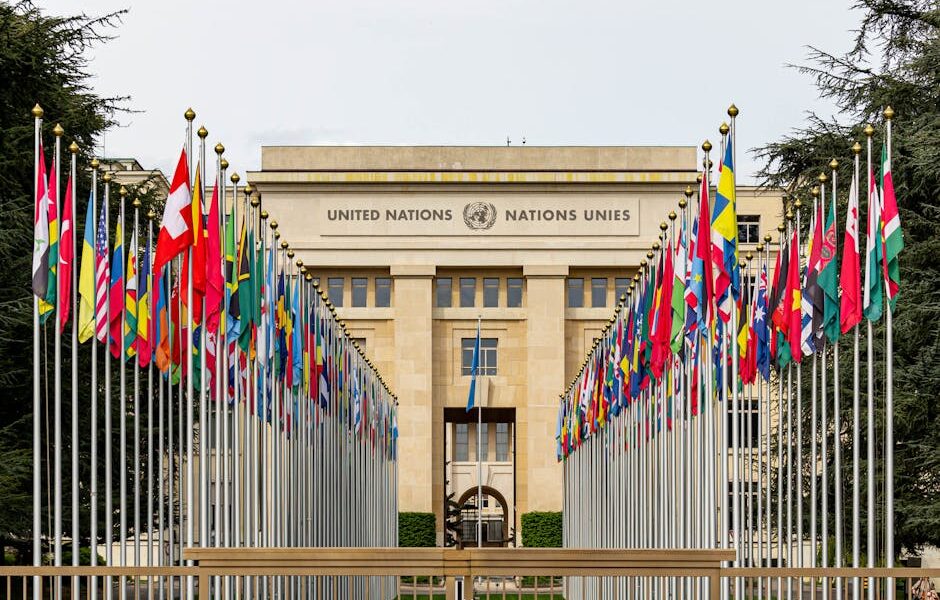
When diplomats and health officials gather at the World Health Assembly in Geneva, the headlines often focus on emergency outbreaks or dramatic funding pledges. But this year, a quieter, more structural decision known as global health reform may ultimately have a bigger impact on your health than any single vaccine campaign. Member states have agreed to launch a formal process to reform the entire global health architecture, acknowledging that the system built after the Second World War is no longer fit for purpose.
Global Health Reform: A System Designed for a Different Era
The original framework for global health cooperation was forged in the late 1940s, when the world was emerging from war and facing infectious diseases like tuberculosis and smallpox. That framework has delivered remarkable wins: smallpox eradication, dramatic reductions in child mortality, and near-universal standards for disease reporting. But as the World Health Organization itself now concedes, the architecture has not kept pace with a radically changed world. Consider what has shifted: national health systems in countries like Brazil, India, and South Africa have grown more sophisticated and assertive. New players—from the Gates Foundation to Gavi to private philanthropic funds—have entered the field, often with competing priorities. Meanwhile, the burden of disease has flipped. Noncommunicable conditions like heart disease, diabetes, and now stroke dominate the global tally of death and disability. And the digital revolution, including artificial intelligence and real-world data, offers tools that barely existed a decade ago. For more on how global health reform impacts disease outbreaks, see our article on Global Health Alert: How the New Ebola Outbreak Tests International Cooperation.
The Stroke Wake-Up Call: A Global Health Reform Priority
Speaking of stroke: in a historic first, the Assembly passed a dedicated resolution on the condition. This is not a niche concern. Over the past 20 years, the lifetime risk of stroke has jumped by 50 percent. One in four adults can now expect to experience a stroke at some point. In 2021, stroke was the third-leading cause of death and disability worldwide, accounting for nearly 94 million cases globally. The resolution, proposed by Egypt and co-sponsored by countries across every WHO region, calls for stronger prevention, acute care, rehabilitation, and system readiness. It’s a sign that the global health community is finally taking noncommunicable diseases as seriously as pandemic threats. But without a reformed architecture, even the best resolutions risk gathering dust on a shelf.
Pharmacovigilance: Learning from the Pandemic’s Hard Lessons
One area where global health reform is already tangible is drug and vaccine safety monitoring—known in the trade as pharmacovigilance. The COVID-19 pandemic exposed gaping holes in the system. Fragmented monitoring networks, uneven regulatory capacity across countries, and a firehose of mis- and disinformation eroded public trust just when it was needed most. A new resolution approved at this Assembly commits member states to modernize their safety systems, integrate patient reporting, and embrace digital tools including AI. The goal is not just to catch problems faster, but to do so without triggering panic. Smart pharmacovigilance, as WHO calls it, uses risk-based prioritization rather than a one-size-fits-all approach. That means a tiny risk signal for a common painkiller might be handled differently than a similar signal for a novel vaccine used by millions.
Emergency, Critical, and Operative Care: The Missing Link
Another landmark this year is the adoption of a ten-year global strategy for what WHO terms ECO care—emergency, critical, and operative services. These are the services that save lives when seconds count: the ambulance that arrives in time, the surgeon who can stop a hemorrhage, the ICU bed that’s available. Conditions that require ECO care account for an estimated 38 million deaths and 1.3 billion disability-adjusted life years annually. Yet in many countries, these services are fragmented, understaffed, or only available to those who can pay. The new strategy provides a roadmap for integrating these services into primary care and national health plans. It also explicitly addresses the growing pressure from climate-related disasters, conflicts, and outbreaks—all of which strain emergency systems to the breaking point. WHO will develop an action plan with specific targets by the end of 2026.
Argentina’s Exit and the Fragility of Global Solidarity
Not everything at the Assembly was about building new institutions. Delegates also had to navigate the fallout from Argentina’s notification of withdrawal from WHO—a move that echoes similar exits in recent years. The Assembly opted for a compromise: it took note of Argentina’s communication but decided that no further action was desirable at this stage, while reaffirming that WHO welcomes the country’s full cooperation. This episode underscores a critical vulnerability in the global health architecture: it is only as strong as the commitment of its member states. A reform process that fails to address the political and financial incentives for disengagement will be incomplete. The real test of the new joint reform process will be whether it can make membership in the global health system so valuable that no country wants to leave.
What This Means for You
For the average person, these bureaucratic maneuvers in Geneva can feel distant. But they shape the world you live in. A reformed global health architecture means faster detection of the next pandemic, safer medicines on pharmacy shelves, better emergency care when you need it most, and a coordinated global response to the stroke epidemic that is already affecting your neighbors and possibly your own family. For authoritative insights on global health reform, visit the World Health Organization. The process agreed at this Assembly will run through next year, with a final report due to the 2027 World Health Assembly. In the meantime, the real work—of reconciling national interests with global needs, of integrating new technologies without leaving the poor behind, of building a system that is both efficient and equitable—will test the resolve of every government that signed on. The architecture may be outdated, but the will to rebuild it appears to be stirring.