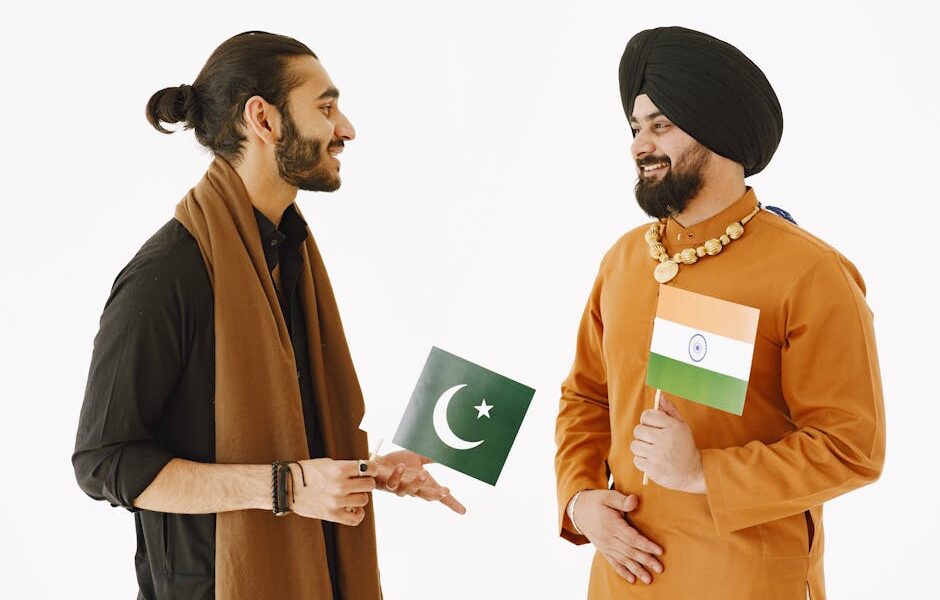
For decades, the relationship between India and Pakistan has been defined by high drama—tanks rattling across borders, fiery speeches from capitals, and flag-lowering ceremonies that feel more like performances than peace. But recently, beneath the noise of war anniversaries and political posturing, something quieter is stirring in India Pakistan diplomacy. It’s not a formal peace process, not yet. But it might be the careful, deliberate groundwork for one.
Earlier this month, as Indian television commemorated the anniversary of the 2025 conflict with Pakistan, a surprising voice broke ranks. Dattatreya Hosabale, the general secretary of the Rashtriya Swayamsevak Sangh (RSS)—the ideological backbone of Prime Minister Narendra Modi’s Bharatiya Janata Party—suggested that New Delhi should explore dialogue with Islamabad. The reaction was instantaneous: political uproar in India, cautious optimism in Pakistan, and a flurry of analysis from pundits on both sides.
But here’s the thing: Hosabale didn’t speak in a vacuum. Over the past year, at least four quiet meetings have taken place between former officials, retired generals, and even some serving figures from both countries. These were held in Muscat, Doha, Thailand, and London—neutral grounds where Track 1.5 and Track 2 dialogues can happen without the glare of media cameras. These aren’t peace treaties. They’re more like the whispered conversations at a party before two estranged friends finally agree to talk.
Why the RSS? Why Now? The Role in India Pakistan Diplomacy
The RSS isn’t a fringe group in India—it’s the movement’s heart, with many BJP leaders, including Modi himself, having served in its ranks. So when Hosabale speaks, it’s not just a random opinion; it’s a signal. Critics argue it’s a way for the Modi government to test the waters without getting its own feet wet. As Irfan Nooruddin, a professor of Indian politics at Georgetown University, explained, the government has painted itself into a corner with years of anti-Pakistan rhetoric. A direct overture would be politically costly. But if the call comes from the RSS, it can be framed as a response to society, not a concession.
This tactic isn’t new. Governments often use proxies to float ideas they can’t openly champion. What’s striking is the timing. Just last week, former Indian army chief General Manoj Naravane publicly backed Hosabale, saying the common man has nothing to do with politics and that people-to-people ties matter. Across the border, Pakistan’s Foreign Ministry spokesperson Tahir Andrabi welcomed the remarks, albeit cautiously: “We hope sanity will prevail.”
The shifting ground beneath both countries has made India Pakistan diplomacy more complex. After the May 2025 war—a brief but intense conflict that both sides claim to have won—Pakistan’s global standing has shifted dramatically. Field Marshal Asim Munir, who led Pakistani forces during the war, by 2026 was mediating ceasefires between the US and Iran. Yes, you read that right. The same general once accused of sponsoring cross-border attacks was now Washington’s go-to broker in Tehran. The US-India relationship, meanwhile, has soured over trade tariffs and immigration disputes. India can no longer count on American deference to its hardline stance on Pakistan.
Nooruddin summed it up: “India has gone from having pole position in Washington to being on the outside, while Pakistan has expertly re-entered America’s good graces.” For New Delhi, that’s a bitter pill to swallow. It means the old strategy of isolating Pakistan is no longer viable—at least not without consequences.
The Hard Truth About Dialogue in India Pakistan Diplomacy
But let’s not mistake signals for a breakthrough. The mistrust runs deep. Indian military leaders continue to accuse Pakistan of harboring terrorists. Pakistani officials point to India’s heavy-handed tactics in Kashmir as the root of instability. Speaking at a recent event in New Delhi, Indian Army chief General Upendra Dwivedi warned that if Islamabad doesn’t change its ways, it will have to choose between confrontation and cooperation. Across the border, similar hawkish voices remain loud.
This is where Track 2 dialogues become crucial. As Jauhar Saleem, a former Pakistani diplomat, noted, these backchannel meetings have helped prevent major misunderstandings and tested the ground for formal contacts. But as Tariq Rashid Khan, a former Pakistani major-general, cautioned: “They are a safety valve, not a substitute for official diplomacy.” In other words, they keep the embers alive, but they don’t make the fire.
For the average Indian or Pakistani, this might all seem like political theater. But it matters. The 2025 war disrupted trade, displaced families near the border, and deepened economic woes in both countries—especially in Pakistan, where inflation has been brutal. A genuine thaw could reopen trade routes, reduce military spending, and allow people to visit relatives across the border. It could also ease the daily grind of life in Kashmir, where the sound of shelling has been a grim backdrop for generations.
Yet no one expects a warm embrace anytime soon. As Khan put it, “Quiet signaling reflects realism more than sudden reconciliation.” Both sides are testing the waters, but the currents remain treacherous. The real question isn’t whether they’ll talk—it’s whether they’ll listen. For more on regional dynamics, see Pakistan’s General Steps Into the Breach and America’s Energy Pitch to India. For authoritative analysis, visit Council on Foreign Relations and Stimson Center.