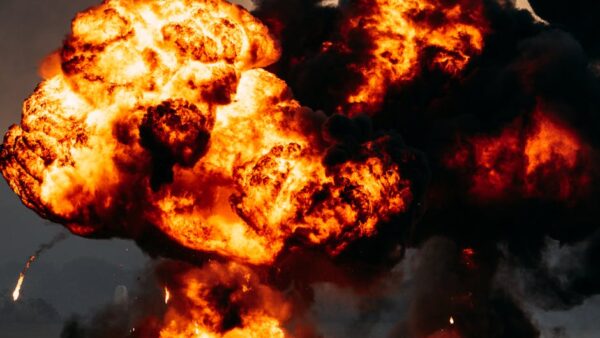
On a quiet Sunday in late May, the skies over southern Lebanon once again turned dark—not from clouds, but from the smoke of fresh airstrikes. At least six people were killed, according to local reports, including a paramedic who was inspecting the wreckage of an earlier attack. Among the dead: young men on motorcycles, a Syrian national, and a rescue worker. These were not combatants. They were people going about their daily lives in communities like al-Namiriya, al-Duweir, Abba, Jebchit, and Bazouriyeh. This Lebanese civilians violence underscores the ongoing crisis.
Evacuation Orders, Then Bombs: The Pattern of Lebanese Civilians Violence
The Israeli army issued 16 new evacuation orders across southern Lebanon on the same day, urging residents to leave areas it deemed dangerous. But local journalists on the ground report that strikes were already underway before and after those warnings came. “These attacks are very violent, and they are targeting places that are filled with many people, homes and communities,” said Obaida Hitto, Al Jazeera’s correspondent in Tyre, a city far from the immediate front lines.
This pattern—warnings followed by immediate bombardment—leaves civilians in an impossible bind. Do they flee, risking dangerous roads and uncertain shelter elsewhere? Or do they stay, hoping their village will be spared? Neither option offers safety.
A Wider War, Not a Ceasefire
What makes this escalation particularly chilling is that it is happening under the guise of a ceasefire. Since early March, when the latest round of open hostilities between Israel and Hezbollah erupted, the region has seen periodic calm punctuated by sudden, intense violence. According to Lebanon’s Health Ministry, more than 3,150 people have been killed and over 9,500 wounded in Israeli strikes since that date. Those numbers, carried by the National News Agency, reflect not just soldiers but entire families, neighborhoods, and rescue teams.
Meanwhile, Hezbollah continues to fire back. The group claimed responsibility for drone attacks on Israeli soldiers stationed in houses in the Biyyada area, as well as rocket barrages aimed at troops in Rashaf. This tit-for-tat violence is now woven into the region’s daily rhythm, with neither side willing to back down.
Original Insight: The Civilian Algorithm of Survival
One of the most troubling dynamics here—one rarely captured in official statements—is the cruel calculus that ordinary Lebanese now must perform. In places like Tyre or Srifa, families weigh whether sending a breadwinner out on a motorcycle to fetch supplies is worth the risk. Paramedics, who by international law should be protected, now hesitate before approaching bombed sites. This is a war fought not only with missiles and drones but with uncertainty and fear. The algorithm of survival has become as deadly as the weapons themselves. People are no longer just dodging bombs; they are trying to predict where the next order to evacuate will come, whether they will have time to move, and whether the road they take will be bombed.
Hezbollah’s Political Gambit
On the political front, Hezbollah’s leader Naim Qassem used the moment to lash out at the Lebanese government. He called on Beirut to reverse its recent decisions to criminalize “the resistance”—a term Hezbollah uses for its own armed activities—and dismissed new US sanctions against nine group-linked individuals as empty gestures. “They will only strengthen our resolve,” Qassem said, signaling that the group sees no path to disarmament while Israeli strikes continue.
His comments reflect a deeper fracture within Lebanon: a government trying to distance itself from Hezbollah’s military wing versus a population that feels abandoned by both. For many southerners, the state is absent when bombs fall and powerless when diplomats talk.
The Bigger Picture: Peace Talks and Pressure
All of this unfolds against the backdrop of tense negotiations between the United States and Iran. While Washington and Tehran discuss nuclear programs and regional influence, the ground in Lebanon burns. Israeli officials have signaled that their campaign will not pause simply because talks are underway—if anything, some analysts suggest, the military pressure is meant to strengthen Tel Aviv’s hand at the negotiating table.
For the people of southern Lebanon, these geopolitical games come with a very real cost. As Hitto put it, civilians are “stuck between a rock and a hard place.” The rock is the bombing. The hard place is a life of displacement, uncertainty, and loss that shows no signs of ending. For more on how regional conflicts reshape politics, see The Ripple Effect: How Foreign Crises Are Reshaping America’s Political Landscape. The ongoing Lebanese civilians violence also echoes the humanitarian crises seen in other conflict zones, such as Syria’s Fractured Health System. For authoritative analysis on civilian protection in conflict, visit ICRC: Civilians in War and UN: Protection of Civilians.