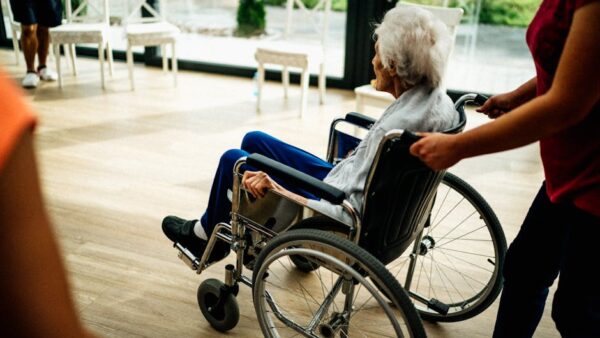
Every year, thousands of people in Ireland survive serious road traffic collisions. But for many, the real ordeal begins long after the ambulance has left the scene. Instead of receiving timely road crash survivors rehab to rebuild their lives, they find themselves stuck in hospital beds for months, fighting for a place in the country’s only high-level specialist unit — the National Rehabilitation Hospital in Dublin.
The result is a slow-motion crisis: patients with spinal cord injuries or traumatic brain injuries, whose recovery depends on early, intensive physiotherapy and occupational therapy, are instead left to deteriorate. Some have begun to travel abroad for care, seeking private clinics in the UK or mainland Europe to bypass waiting lists that can stretch up to ten months.
One hospital, one chance, endless wait for road crash survivors rehab
Ireland’s National Rehabilitation Hospital (NRH) in Dún Laoghaire is the only HSE facility that provides the highest tier of specialist rehabilitation. That means a patient from Kerry, Donegal, or Cork must compete with everyone else in the country simply to access a bed. Spinal cord patients can wait two to three months. Those with brain injuries may end up waiting five months — and that’s just to get into the unit, not to complete a full programme.
Dr John MacFarlane, president of the Irish Association of Physical and Rehabilitation Medicine (IAPRM) and a consultant at Cork University Hospital and Mercy University Hospital, says the system has “large gaps” that are leaving survivors without the care they urgently need. “If I got a brain injury in the morning from a road traffic collision,” he told the Irish Examiner, “I’d wait for five months inside Cork University Hospital until I got access to the National Rehabilitation Hospital.”
The hidden cost of delayed road crash survivors rehab
Waiting months for rehabilitation isn’t just an inconvenience — it can fundamentally alter a patient’s long-term outcome. For someone with a traumatic brain injury, early cognitive therapy can mean the difference between returning to work and needing lifelong assisted living. For a spinal cord patient, early mobilisation and wheelchair training can prevent pressure sores, joint contractures, and the crushing depression that comes from being bedbound.
“Patients are awaiting rehabilitation, sitting in acute hospital beds, and not getting the optimum treatment,” Dr MacFarlane says. Not only is this bad for patients, but it also clogs up the acute hospital system. Beds at Cork University Hospital that should be used for emergency patients are instead occupied by rehab candidates who have nowhere else to go.
An original insight: what the waiting lists really mean for road crash survivors rehab
There’s a quiet tragedy in these statistics that often goes unnoticed. When we talk about a “waiting list for rehab,” we’re not talking about a week or two. We’re talking about the critical window during which the brain and spinal cord are most plastic and responsive to therapy. In stroke care, we know that “time is brain.” The same is true for trauma rehabilitation — but our system treats rehab as something that can be put on hold while other priorities take the stage.
The irony is that investing in early, intensive rehabilitation is cheaper in the long run. A patient who receives timely rehab is far less likely to develop costly secondary complications like infections, chronic pain, or permanent disability. Yet we continue to underfund the only national specialist centre, expecting a single hospital to serve the entire island. It’s a false economy that costs the taxpayer more — and costs survivors their futures.
A major public health issue — still treated as an afterthought
The IAPRM and other medical bodies have repeatedly urged the Government to treat road injuries as “a major public health issue.” But the response has been piecemeal. While Ireland has made significant strides in reducing road deaths through better enforcement and vehicle safety, support for those left living with life-changing injuries has not kept pace. The thousands of people who survive serious crashes each year are effectively forgotten once the headlines fade.
Without a dedicated network of regional rehabilitation units — or at least a significant expansion of capacity at the NRH — patients will continue to face impossible choices. Some will drain their savings to travel abroad. Others will simply wait, and worsen.
Dr MacFarlane’s message is clear: “Patients are grappling with large gaps in care.” And until those gaps are filled, the road to recovery for many survivors will lead — out of necessity — out of the country. For more on related health crises, see Australia’s diphtheria outbreak and Zimbabwe’s malaria crisis. For authoritative information on rehabilitation, visit the World Health Organization’s rehabilitation page and the NHS guide to rehabilitation.