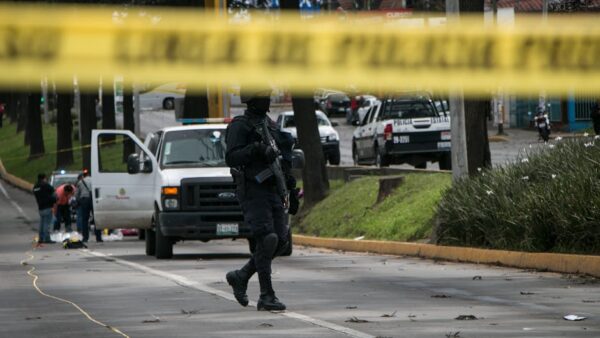
Another night, another barrage. The Russia Kyiv attack unfolded across Ukraine as the familiar wail of air raid sirens gave way to the thunder of explosions early Sunday morning when Russia unleashed a coordinated volley of hundreds of drones and missiles against the country. While the official toll — four dead and roughly 100 injured — tells one story, the real narrative in Kyiv this week is about a city that has learned, heartbreakingly, to endure the shock of waking up to a war that never sleeps.
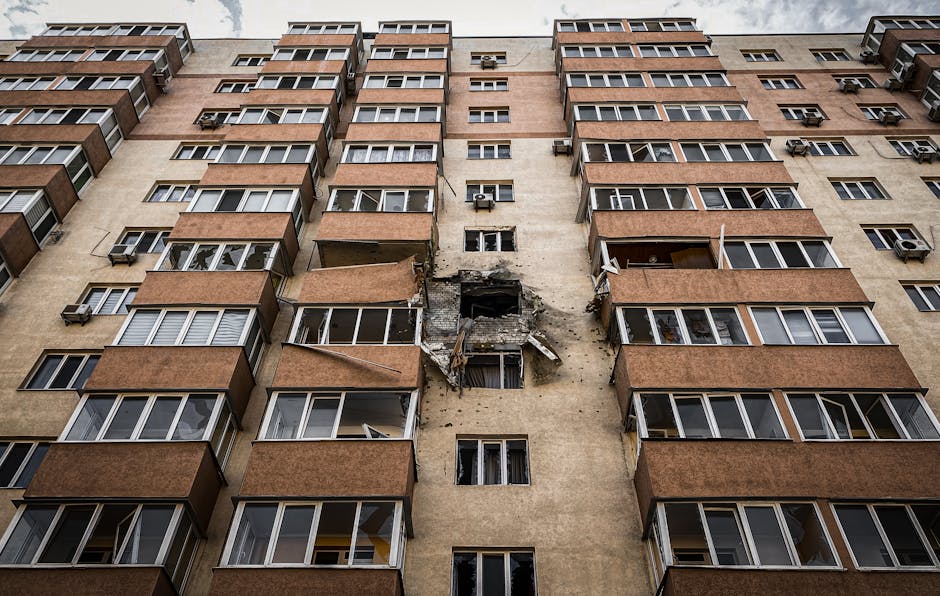
For the average Ukrainian, this was not a surprise. President Volodymyr Zelensky had warned days earlier that intelligence pointed to a major strike, potentially involving Moscow’s newest toy: the Oreshnik hypersonic missile. When the Russia Kyiv attack came, it didn’t just hit military targets; it carved a path through civilian life. A nine-storey apartment block in the central Shevchenko district went up in flames. A school’s air raid shelter was blocked by debris, trapping residents. The Chornobyl Museum — a shrine to a different kind of disaster — was reduced to a skeleton of broken glass and rubble.
Why Civilian Infrastructure is in the Crosshairs of the Russia Kyiv Attack
This isn’t random chaos. From a strategic standpoint, hitting a water-supply facility or an opera house serves a purpose beyond pure cruelty: it is designed to break the will of the populace and force Kyiv to divert resources from the front lines to urban recovery. Russia’s defense ministry framed the strikes as retaliation for Ukrainian attacks on civilian infrastructure — a claim Kyiv vehemently denies. But to the people sifting through the remains of their homes, the Kremlin’s justifications ring hollow.
Ukraine’s air force reported a staggering 90 missiles and 600 drones launched over a roughly 12-hour period. They claim to have intercepted or neutralized the vast majority — 55 missiles and 549 drones. But 16 direct hits and 51 drone strikes found their mark across 54 locations. In war, percentages don’t matter when your neighbor’s roof is gone.
The Oreshnik Factor: Fear and Propaganda in the Russia Kyiv Attack
This Russia Kyiv attack marks the third known battlefield use of Russia’s Oreshnik hypersonic missile, a weapon that travels at more than ten times the speed of sound. It is notoriously difficult to intercept and can carry either a conventional or a nuclear warhead. While Zelensky initially stated the missile was used against the city of Bila Tserkva, his office later walked that back, citing ongoing analysis. What is clear is that Moscow is weaponizing the threat of escalation as much as the actual munition. EU foreign policy chief Kaja Kallas called it "reckless nuclear-brinkmanship."
This tactic echoes a Cold War playbook: remind your enemy that you possess a weapon that could end the game. But on the ground in Kyiv, the psychological effect is more nuanced. "Every time we hear a hypersonic boom, we know we’re gambling," one local told emergency services. "You don’t hide from it. You just hope it misses."
Resilience in the Rubble After the Russia Kyiv Attack
Yet in the aftermath of the strikes, the human spirit refuses to be silenced. At the French Open in Paris, Ukrainian tennis star Marta Kostyuk tearfully dedicated her first-round win to "the people of Ukraine." Heavyweight boxing champion Oleksandr Usyk, defending his titles in Egypt, revealed that his own daughter was hiding in a bomb shelter back home, texting him: "Papa, I love you, you will win."
These moments of grace under fire are becoming as much a part of Ukraine’s identity as the air raid sirens. Emergency crews in Kyiv worked through the night, pulling survivors from debris and extinguishing blazes. Mayor Vitali Klitschko confirmed that two children were among the 36 people hospitalized in the capital alone. In the wider Kyiv region, two more bodies were pulled from wreckage.
Meanwhile, European leaders lined up to condemn the assault. French President Emmanuel Macron and German Chancellor Friedrich Merz voiced outrage, while UK Foreign Secretary Yvette Cooper promised to "keep up pressure on Russia." But for the families spending Monday morning boarding up shattered windows, diplomatic statements offer cold comfort.
A Broader Pattern of Escalation in the Russia Kyiv Attack
It’s worth stepping back to note a troubling rhythm in this conflict. Earlier this week, Putin accused Ukraine of striking a student dormitory in Russian-occupied Starobilsk, killing 21 people. Ukraine admitted to striking the town but insisted the target was an elite Russian drone unit, not civilians. Whether true or not, that incident gave Moscow the pretext it needed for Sunday’s "retaliation." This cycle — accusation, strike, counter-strike — is becoming dangerously predictable.
There is a deeper geopolitical irony here. The Oreshnik missile was touted by Russian state media as a "game changer." But its deployment against a museum and a residential block does not change the game; it merely confirms that Russia is willing to terrorize cities to achieve stalemate. The real game changer would be a diplomatic off-ramp, but neither side appears ready to extend a hand. For more on the evolving tactics in this war, see The New Face of Urban Warfare: What a Hypersonic Strike on Kyiv Really Means.
What Comes Next After the Russia Kyiv Attack
As the sun rose over Kyiv on Monday, workers began clearing rubble from the Chornobyl Museum. Volunteers set up water stations for neighborhoods that lost supply. The Ukrainian military, meanwhile, sent out another plea for Western air defense systems — specifically, more Patriot batteries capable of intercepting ballistic threats like the Oreshnik."
Zelensky visited the damaged sites, his face a mask of grim resolve. He knows that this Russia Kyiv attack will not be the last. And as winter approaches, the question haunting Kyiv is not whether Russia will strike again — but with what, and how often. For now, the city’s answer is simple: rebuild, repair, and refuse to look away. For authoritative analysis on hypersonic weapons, visit CSIS Hypersonic Weapons Analysis.