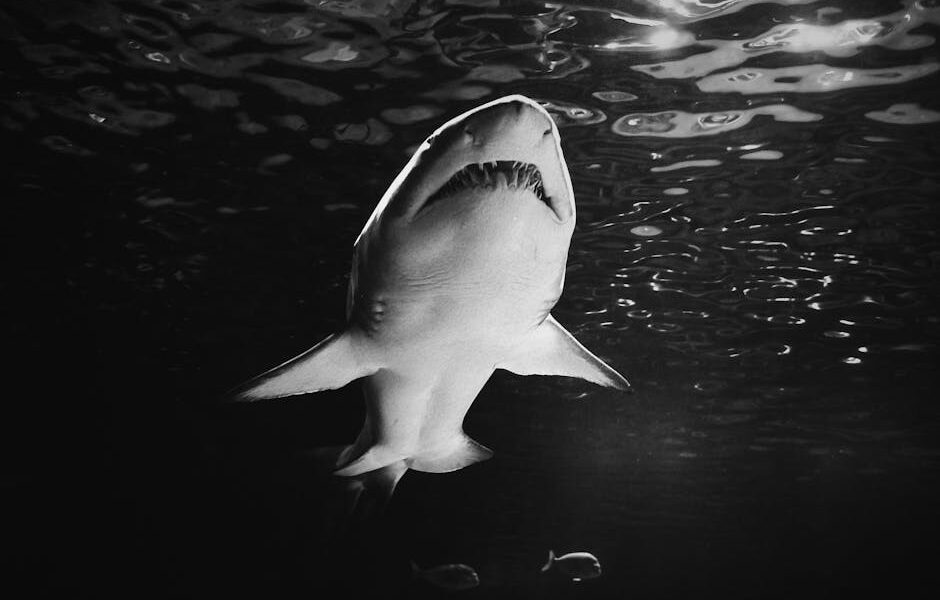
Australia’s coastal waters are among the most biodiverse—and dangerous—on the planet. Over the weekend, a 39-year-old man lost his life after a spearfishing shark attack near Kennedy Shoal, a shallow reef about 45 kilometers off the Queensland coast. The incident, which occurred Sunday just before noon local time, marks the second fatal shark encounter in Australian waters in less than two weeks.
Queensland Police confirmed the man was pulled from the water by a companion but succumbed to critical head injuries. He was declared dead after an hour-long boat ride back to shore. Police Inspector Elaine Burns described the scene as “quite a terrifying thing to see happen in front of you,” noting that officers are now providing support to the three other people who were with him.
The tragedy underscores a pattern: spearfishers are disproportionately represented in shark attack fatalities. According to data from the Australian Shark-Incident Database, there were four encounters with sharks across Australia in January, but only one was fatal—and that victim was also spearfishing. The weekend’s victim is the second in two weeks, following a 38-year-old man killed while spearfishing near Perth, Western Australia, who suffered severe bites to his lower legs and could not be revived.
Why Spearfishing Shark Attack Risk Is Particularly High
Spearfishing involves swimming silently, often near reef systems, while carrying dead or struggling fish. This combination can mimic the natural prey of larger sharks, especially tiger and bull sharks, which are common in Queensland waters. Marine experts point out that spearfishers are essentially broadcasting a dinner bell: the sound of a speared fish struggling, the scent of blood, and the erratic movements of a diver all attract predators.
Dr. Laurenne Schiller, a marine biologist at James Cook University, says that while shark attacks are statistically rare, the risks spike for those engaging in activities that mimic normal shark feeding behaviors. “Spearfishing is an activity where you are deliberately entering the shark’s hunting ground with a dead or dying animal strapped to you,” she explains. “It’s like walking into a lion’s den with a raw steak in your pocket.”
Broader Context: Shark Encounters Are Not a Crisis
Despite these high-profile tragedies, experts caution against panic. Australia averages about 20 shark bites a year, with roughly one or two proving fatal. To put that in perspective, you are 30 times more likely to die from a lightning strike. Yet the perception of sharks as man-eaters persists, fueled by dramatic headlines and Hollywood imagery. The reality is that many shark species are themselves endangered, and attacks are often cases of mistaken identity.
Shark mitigation strategies have become more sophisticated in recent years. Popular swimming and surfing beaches employ drum lines, shark nets, drones, and even personal electronic deterrents. But these measures are less effective in open ocean areas like Kennedy Shoal, where spearfishers venture far from shore. State authorities are now reviewing the incident, and police say a report will be prepared for the coroner.
Original Insight: The Emotional Toll on Survivors and First Responders
One aspect rarely discussed in these stories is the psychological trauma endured by those who witness a spearfishing shark attack. In this case, a friend was right next to the victim when the shark struck and had to drag his body back to the boat. Inspector Burns acknowledged that police are offering counseling to the three companions, noting that such events can lead to lasting anxiety, depression, and even post-traumatic stress disorder. For a small community like the Cassowary Coast, where everyone knows everyone, this ripple effect can be profound. The victim has not yet been publicly named, but local marine safety groups have already seen an uptick in worried calls from other spearfishers who now question whether it’s safe to return to the water.
It’s a stark reminder that every dive carries risk—not just from sharks, but from the human capacity to process sudden, violent loss. As one local charter boat operator put it, “We’ll all be looking over our shoulders a little more now.”
What Can Be Done?
While shark attacks cannot be eliminated, small changes can reduce risk. Experts advise spearfishers to:
- Never dive alone—always have a buddy who can watch for sharks and assist in an emergency.
- Minimize time in the water after a kill, and stow dead fish in a sealed bag or float immediately.
- Avoid areas where sharks are known to feed, such as near river mouths or offshore reefs with high seal or fish populations.
- Use personal deterrents like the Shark Shield, which emits an electric field that repels sharks.
The ocean remains a place of wonder, but as this latest tragedy shows, it demands respect. Our fascination with the deep should not come at the cost of ignoring its risks—or the lives of the people who get too close to its apex predators. For more on safety in extreme sports, see our article on how cheap drones are rewriting the rules of war in rural Colombia. For authoritative guidance on shark safety, visit the International Shark Attack File.