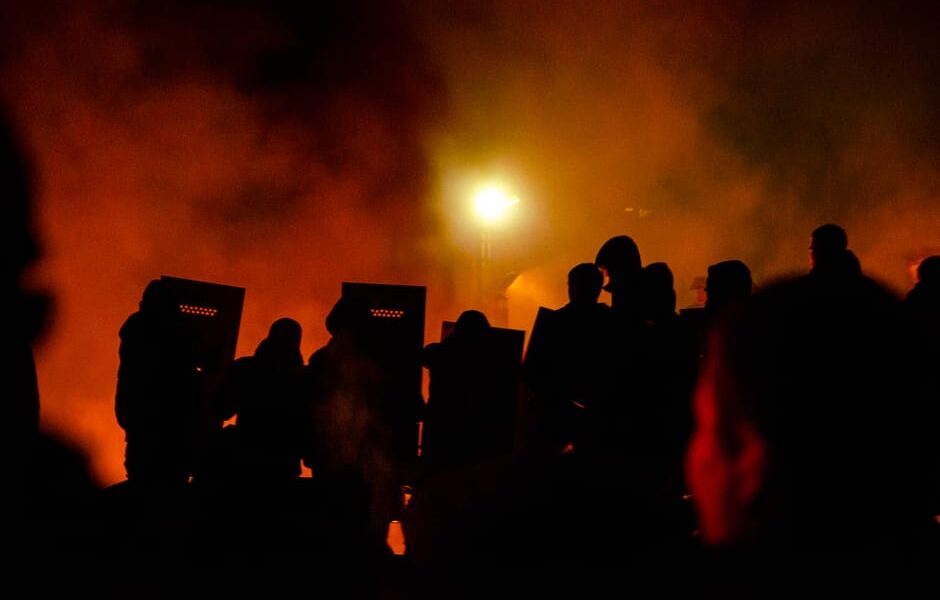
Turkish democracy faces a critical test as riot police stormed the headquarters of the main opposition party on Sunday, just days after a court overturned its leadership. The images of tear gas clouds billowing outside the Republican People’s Party (CHP) building in Ankara, and of officers smashing through a makeshift barricade, are a stark reminder of how quickly democratic norms can erode when power feels threatened.
This isn’t just a story about a party leadership dispute. It’s a story about a country at a crossroads, where the line between judicial independence and political convenience has become so blurred that the average citizen no longer knows what to believe. The court’s decision to nullify the election of CHP leader Özgür Özel and reinstate the 77-year-old Kemal Kılıçdaroğlu—a man who lost to President Recep Tayyip Erdoğan in 2023 and was subsequently voted out by his own party—raises fundamental questions about whether Turkey’s legal system is acting as a referee or as a player on the field.
What Triggered the Raid? A Blow to Turkish Democracy
The immediate cause was an appeal court ruling on Thursday that declared Özel’s leadership null and void, citing alleged vote-buying during the party primary. But the timing and the method of enforcement—state security forces battering down the door of a legal political party, using water hoses and tear gas on fellow citizens—suggest something far more strategic at play. The CHP had vowed to resist the ruling, calling it a political coup. The government, through Justice Minister Akin Gürlek, framed the decision as a triumphant moment for democratic trust. The disconnect between those two narratives is the chasm Turkish democracy is falling into.
As Özel himself stated in a frantic video message during the raid, “We are under attack.” He later emerged from the building, surrounded by supporters, and declared that the party would now take to the streets and squares, marching towards power. That shift—from parliamentary opposition to street-level defiance—is a dangerous new phase for a country that has long prided itself on its robust, if rowdy, democratic traditions.
Historical Context: A Pattern of Consolidation
To understand why this raid is so significant, you have to look at the bigger picture. President Erdoğan has been in power since 2003, first as prime minister and now as president. His AK Party has methodically tightened its grip on state institutions—the judiciary, the police, the media. What we are witnessing now is not an isolated incident but the next logical step in a long playbook: using the courts to neutralize political rivals after the ballot box has already spoken.
- 2023 Election: Kılıçdaroğlu lost to Erdoğan in a runoff election that many international observers noted was neither free nor fair amid media bias and state pressure.
- Party Primaries: The same CHP that voted to replace Kılıçdaroğlu with Özel seen as a generational shift, only to have that decision retroactively overturned by a higher court.
- Mayoral Crackdowns: Erdoğan’s government has also pursued cases against popular opposition mayors, including the high-profile effort to jail Istanbul Mayor Ekrem İmamoğlu on corruption charges, which critics see as political revenge.
The result is a democratic landscape where the opposition cannot win at the polls (the government controls the electoral board and media), and if they manage to win within their own parties, the courts can simply reverse it. This is not democracy; it is management of dissent.
Original Analysis: The Strategy of Exhaustion
There is a deeper, more cynical strategy at work here that rarely gets mentioned in the immediate headlines. By forcing the CHP into a state of perpetual legal crisis and physical confrontation, Erdoğan is not just neutralizing his current opponents; he is discouraging future generations from even considering opposition politics. Who would want to lead a major party if it means risking criminal charges, police raids, and having your internal elections overturned by a hostile judiciary? This is the chilling effect in action. The goal isn’t just to win the next election; it is to make the idea of a genuine political alternative seem futile, exhausting, and dangerous. It is a long-term strategy to depoliticize the public by making politics itself feel like a losing game.
Human Rights Watch summed it up on Saturday: Erdoğan’s government is using “abusive tactics” to undermine democracy. But the most insidious part is that these tactics often come dressed in legalistic robes. The court ruling cites bylaws and procedural irregularities. The raid is justified as upholding the court’s will. This is a soft authoritarianism—one that uses the language of the law to dismantle the spirit of democracy. And it is incredibly difficult for international bodies to condemn without appearing to interfere in a sovereign nation’s domestic legal affairs.
What Comes Next for Turkey?
The CHP has promised a sustained campaign of peaceful resistance, but they face a government that has proven it will not hesitate to use force. The real question is whether the Turkish public will rally behind the opposition or become desensitized to these events. Historically, moments like this can either galvanize resistance or crush it entirely. For now, the dust on the barricades has not yet settled, and millions of Turks are watching to see if their vote—even within a party primary—still has any meaning at all.
Erdoğan cannot run for president again unless he calls early elections before 2028 or changes the constitution, but moments like this suggest he may not feel the need to bother with votes at all. After all, when the police can simply take what the courts order, why risk the ballot box? For more on how foreign crises reshape political landscapes, see this analysis. Learn more about democratic backsliding from Human Rights Watch.