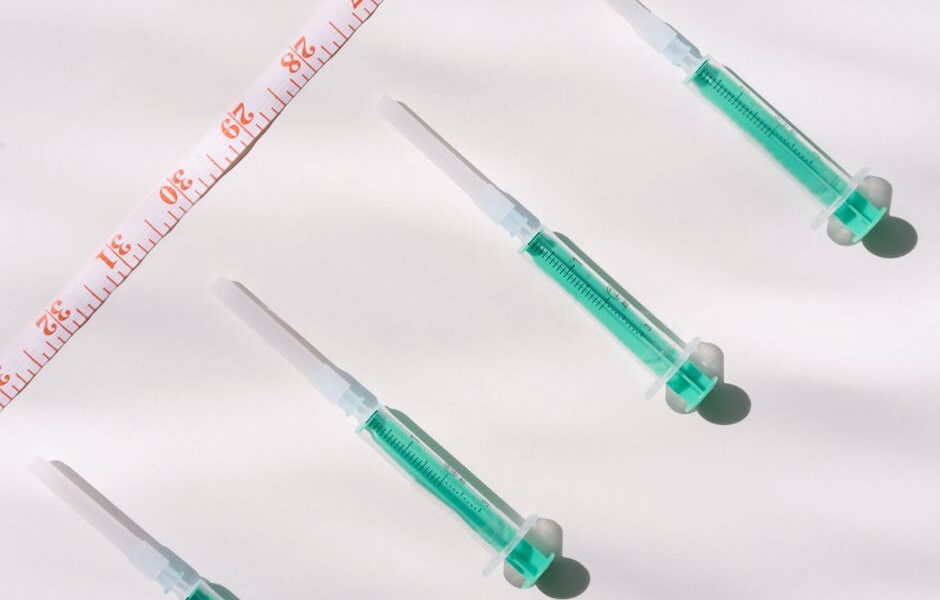
It’s one of those statistics that stops you mid-coffee: half a million euros a day. That’s what Ireland’s health service is now shelling out on weight-loss drugs HSE, a pair of injectable drugs that were barely on anyone’s radar a few years ago. But this isn’t just a story about a big number on a spreadsheet. It’s a window into a nation wrestling with its waistline, a healthcare system scrambling to keep up, and a pharmaceutical gold rush that’s rewriting the rules of public medicine. To understand the scale, forget the billion-euro budgets for a moment. Think instead about what €550,000 could buy. Roughly 12 fully staffed nursing home beds for a year, or about 20 new ambulances. Instead, each day that money flows into a single category of medication: GLP-1 receptor agonists, the class of drugs that includes Ozempic and Saxenda. Over the past three years, the HSE has spent more than €212 million on weight-loss drugs HSE through its free drug schemes. That’s not a trickle; it’s a torrent.
The Two Faces of a Wonder Drug: Weight-Loss Drugs HSE
There’s a crucial distinction buried in the figures that explains a lot of the confusion and controversy. Ozempic, the drug that has become a household name thanks to celebrity endorsements and TikTok weight-loss transformations, is technically a diabetes medication. The HSE will only cover it for patients on the Long-Term Illness (LTI) scheme or the medical card who have a confirmed diabetes diagnosis. Saxenda, on the other hand, is the HSE’s weapon of choice specifically for weight management, available through medical cards and the Drugs Payment Scheme. So when you hear that 80,000 patients are getting these jabs for free, you’re looking at two very different patient populations: those with a chronic disease, and those without it but with a clear medical need to lose weight. The numbers are staggering in their growth. In the first eight months of 2025 alone, nearly 60,000 people accessed Ozempic through the LTI scheme, a 34% jump since 2023. Medical card holders getting Saxenda or Ozempic also surged by 26% over the same period. This isn’t a slow burn; it’s a demand explosion that has caught every health department in the Western world off guard.
Where You Live Determines Your Access
One of the more telling details to emerge from the HSE records is the sheer variation around the country. If you live in Kildare and West Wicklow, you had a one-in-50 chance of receiving weight-loss drugs HSE through a free scheme last year. In West Cork, the odds were more like one in 150. Dun Laoghaire, one of the wealthiest parts of the country, had the lowest uptake of all. This pattern flips the old assumption that richer areas get more healthcare. In fact, the areas with the highest usage tend to be those with higher rates of obesity and lower average incomes. What’s happening here? It’s likely a mix of factors: GPs in different regions have varying comfort levels prescribing these drugs; patient awareness differs; and the local availability of specialist weight management services plays a role. The HSE insists that access is based solely on clinical need, but the data suggests that postcode is an invisible hand steering the prescription pad.
The Bigger Picture: A Sicker Ireland, or a Smarter System?
Let’s step back from the Kildare-versus-Cork debate and look at what this spending actually means for the health of the nation. There are two ways to read these numbers. The pessimistic view is that Ireland has a deepening obesity epidemic, and weight-loss drugs HSE are a very expensive sticking plaster. The HSE is essentially paying to manage a problem that could have been prevented with better public health policies, healthier food environments, and more active lifestyles. From this angle, €200 million is evidence of failure. But there’s a more optimistic reading. These drugs, for all their cost, are undeniably effective. Clinical trials show that patients on Saxenda lose an average of 5-10% of their body weight, and newer drugs like Mounjaro are pushing that even higher. That weight loss translates into fewer heart attacks, fewer diabetes complications, fewer joint replacements, and less strain on an already overstretched hospital system. Viewed this way, the €550,000 a day isn’t an expense; it’s an investment. A single bariatric surgery costs the HSE around €15,000. If these jabs keep even a fraction of patients out of the operating theatre, they could pay for themselves in the long run. The HSE is already looking at adding more weapons to its arsenal. Mounjaro and Wegovy are under review for potential reimbursement. The spokesman’s careful language suggests a system that is cautiously optimistic but nervous about the budget implications. If these drugs are approved, the daily spend on weight-loss drugs HSE could easily double or triple within a year. Let’s be honest: the pharmaceutical industry has done what it does best — it has created a product that people desperately want, and it has priced it accordingly. The question for the HSE, and for the taxpayer, is whether we are buying a cure or just a very expensive delay.
What This Means for Your GP Visit
For the average person reading this, the takeaway might be more practical. If you have type 2 diabetes or a BMI over 30 and you’re on a medical card, a conversation with your GP about weight-loss drugs HSE is not just a fantasy. It is a genuine, funded option. But the huge disparities highlighted by the data suggest that you should not assume your doctor will bring it up. In 2025, the odds of getting a prescription still depend heavily on which part of Ireland you call home. If you live in an area with low uptake, it might be worth asking why. Is it because there is genuinely less need, or because the local healthcare culture has been slow to embrace a new approach? One thing is certain: the era of the ‘miracle jab’ is not a passing fad. The HSE has committed hundreds of millions, and it is only going to spend more. The challenge now is to ensure that this money is spent equitably, effectively, and with real long-term health outcomes in mind, not just short-term weight loss. Because when you are burning through half a million euros a day, every single prescription should be a decision that makes Ireland healthier, not just thinner. For more on global health spending, see Global Health Overhaul: Why a Bureaucratic Shift Could Save Millions of Lives. Also, learn about Global Health Alert: How the New Ebola Outbreak Tests International Cooperation. For authoritative information on weight-loss drugs, visit the World Health Organization’s obesity fact sheet and HSE’s weight management services.