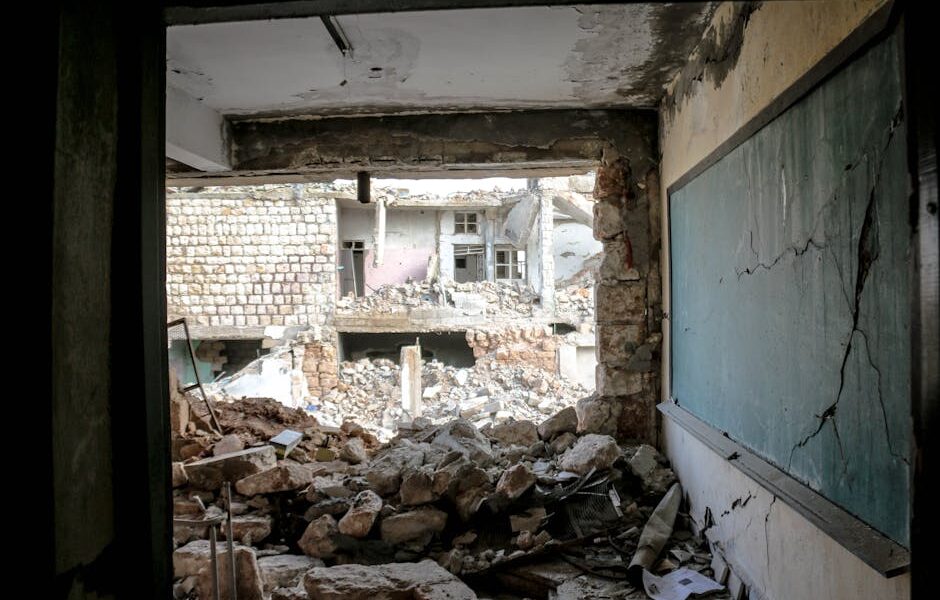
When Aref returned to his hometown in rural Deir Az Zor months ago, he expected hardship. What he didn’t expect was to find his local health centre locked and empty, its pharmacy stripped of the asthma medication that keeps him breathing. His story is not an isolated one—it’s emblematic of a public health disaster unfolding in plain sight across Syria. The Syria health system, once a model in the region, has been shattered by 14 years of war.
Last week, European Union officials met with Syrian representatives in Brussels to discuss reconstruction, announcing a 14-million-euro grant to rehabilitate Ar-Rastan Hospital in Homs. It’s a welcome gesture, but the reality on the ground tells a grimmer story: after 14 years of war, Syria’s health system is barely a skeleton of what it once was, and for millions of returnees, the promise of rebuilding rings hollow when they can’t access basic care.
The Scale of the Crisis in Syria’s Health System
According to a recent report by Relief International, 78 percent of returnees in Deir Az Zor say healthcare is simply unavailable. In the al-Tebni district alone, 41 percent of surveyed households reported that at least one family member couldn’t access emergency care in the previous six months. These aren’t statistics—they’re life-or-death situations.
Across the 50 health facilities that Relief International supports, the consequences are visible every day. Children arrive with acute malnutrition that should have been caught months ago. Adults with chronic conditions like diabetes and hypertension go without medication. Pregnant women risk complications because there’s no skilled obstetric care during birth. And many Syrians have simply stopped seeking care altogether, losing faith that help exists, is affordable, or is worth the journey.
More Than Physical Wounds
The war has left invisible scars that may take generations to heal. The same report found that 86 percent of women surveyed were experiencing anxiety and psychological distress, driven by years of conflict and displacement. Grief, trauma, and uncertainty are pervasive, yet mental health support remains severely underfunded and understaffed.
How can a nation recover when its people carry such heavy emotional burdens? Peace isn’t just the absence of bombs—it’s the presence of hope, security, and the ability to imagine a future. Without widespread mental health services, Syria’s recovery risks being superficial, addressing buildings but not the broken people inside them.
Disability and Landmines: A Growing Crisis
An estimated 28 percent of Syrians now live with some form of disability—nearly double the global average. This figure continues to rise as unexploded ordnance and landmines maim civilians returning to farmland and villages. Yet rehabilitation services, from prosthetics to physical therapy, are among the most under-resourced in the country.
This isn’t just a medical problem; it’s a social and economic one. People with disabilities face barriers to education, employment, and community life. If Syria doesn’t invest in rehabilitation and inclusive infrastructure, it risks creating a permanent underclass unable to participate in the nation’s rebuilding.
What Genuine Recovery Would Look Like
Rebuilding Syria’s health system isn’t about grand hospitals with shiny equipment. It starts with the fundamentals: primary care clinics, trained midwives, functioning supply chains for medicines, and community health workers who can treat people close to home. It means integrating mental health support into every level of care, not treating it as an afterthought. It requires targeted services for the most vulnerable—women, malnourished children, chronic disease patients, and people with disabilities.
And for the millions still displaced, support can’t stop at Syria’s borders. With health services in host countries declining due to aid cuts, Syrian refugees face impossible choices: return to a broken system or stay in limbo with diminishing care. True recovery must uphold safety, dignity, and choice for everyone.
The EU’s meeting in Brussels was a step in the right direction, but it’s a small step in a very long journey. Other governments, donors, and international organisations must ask themselves honestly: are their commitments matching the scale of what Syria actually needs? Because without a functioning health system, Syria cannot heal—and without healing, there is no real future for the millions who call it home.
For more on global health challenges, read about the global health reform that could save millions of lives. Learn from the Ebola outbreak that tests international cooperation.
External resources: WHO Syria crisis page and Médecins Sans Frontières Syria.