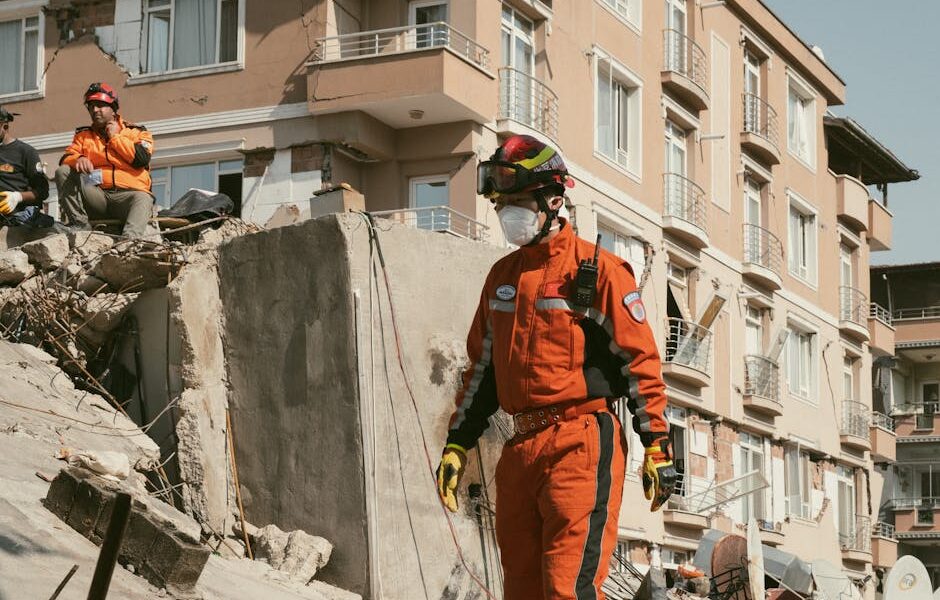
When an unfinished building in the Philippines suddenly gave way, trapping over twenty people and claiming at least one life, it wasn’t just a local tragedy — it was a stark reminder of the silent risks hiding in construction sites across the developing world. This building collapse Philippines incident, which occurred in a rapidly urbanizing area, left rescue teams digging through twisted metal and concrete for hours, hoping to pull survivors from the wreckage.
The Scene: A Race Against Time in the Building Collapse Philippines
Emergency responders arrived to a chaotic scene. Dust hung in the air as neighbors and workers frantically pointed toward the pile of rubble that moments before had been a multi-story structure. By nightfall, officials confirmed that more than two dozen people were still unaccounted for, their voices occasionally heard from beneath the debris. The lack of proper structural reinforcements in many such projects is a well-known hazard, yet this tragedy underscores just how often those warnings go unheeded.
Why Do These Collapses Keep Happening?
The Philippines has seen a construction boom over the past decade, driven by a growing economy and a desperate need for housing. But with that boom comes a dark side. A 2023 report from the Philippine Statistics Authority showed that nearly 70% of building permits were issued to contractors with no verified safety certifications. Corruption and corner-cutting are rampant. As one engineer who asked not to be named told me, “The pressure to finish fast and cheap means that safety inspections are often just paperwork.”
This building collapse Philippines isn’t an isolated incident. In 2022, a similar disaster in Manila killed five workers. In 2021, a condo project in Cebu collapsed under its own weight. Each time, the public mourns, promises are made, and then — nothing changes.
Deeper Than Steel and Cement
Here’s what the news reports often miss: this is a systemic failure that goes beyond shoddy materials or rogue contractors. It’s a story about rapid urbanization without accountability. As more people move into cities, the demand for buildings skyrockets. Governments, eager to attract investment, loosen regulations. Inspectors are underpaid or bribed. And the people who end up trapped under rubble are almost always the poor — those working on the site or living in cheap housing nearby.
Think about that for a second. The very structures meant to provide shelter become death traps. This isn’t just an engineering problem; it’s a social justice issue. Until building codes are enforced with real teeth, and until accountability reaches the top of the corporate ladder, these tragedies will repeat themselves. The building collapse Philippines highlights the urgent need for reform.
What Can Be Done?
- Independent audits for all large construction projects, paid for by a public fund rather than the developer.
- Whistleblower protections for workers and engineers who report unsafe practices.
- Community oversight — training local residents to spot red flags like missing rebar or cracked foundations.
These aren’t radical ideas. They’re common sense. And they’re already working in countries like Indonesia and Chile, where post-disaster reforms have cut building collapses by nearly half over the last decade. For more on systemic failures in other regions, see our analysis of China’s coal mine disasters.
The Human Cost
As I write this, rescue teams are still pulling rubble aside, hoping against hope. One rescue worker described hearing a faint tapping sound from deep within the pile. “It gives us hope,” he said, his voice cracking. But hope alone won’t fix the system. For every life lost under a collapsed building, there’s a family left to wonder if it could have been prevented. For every survivor pulled out, there’s a scar that won’t heal.
This story is far from over. The survivors need our attention, but the lesson here is universal: a building is only as strong as the integrity of those who build it. And integrity, it seems, is in short supply. To understand how similar issues play out globally, read about safety failures in China’s coal mines. For authoritative guidance on construction safety, consult the OSHA Construction Safety Guidelines and the World Bank Urban Development Resources.