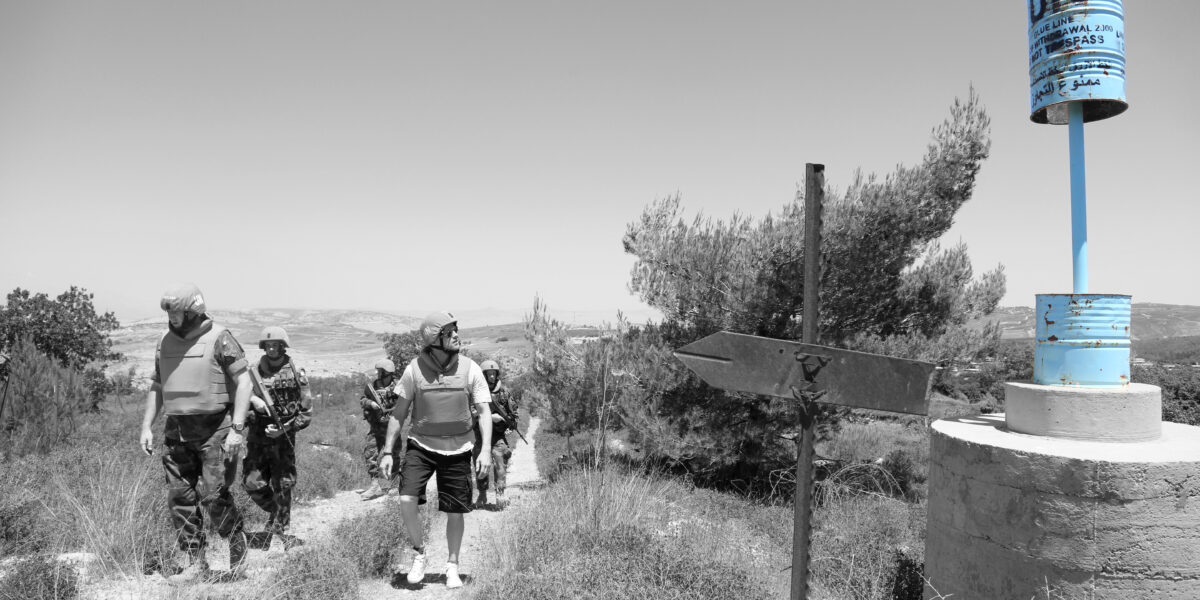
The Blue Line is not a real border between Lebanon and Israel. It’s more like a line the United Nations drew on June 7, 2000, to ensure that Israel’s forces were out of southern Lebanon. This line was drawn to confirm the withdrawal of Israeli troops from the area and has served as a reference point ever since. So it’s not an official border, but the Blue Line is important in demarcating the separation between Lebanese and Israeli territory. Tensions have recently increased on the Blue Line, provoking international concern.
The Israel-Hezbollah conflict has heated up in recent weeks, with clashes drawing the attention of the UN Security Council. The potential for escalation is significant. People living along the line are afraid of the threat of war.
Current Blue Line Tensions:
The United Nations mission in Lebanon (UNIFIL) has warned of increasing tensions on the Blue Line at the Israel-Lebanon border. Civilians were fleeing the affected areas amid continuing gunfire and explosions.
Both Israeli forces and Hezbollah have been fighting, leading to fears the fragile ceasefire in place since 2006 could collapse.
Things are getting worse in Gaza, and some experts say Hezbollah could complicate things further by opening a front from Lebanon to increase pressure on Israel. The fighting is ramping up and it’s becoming more dangerous for the ordinary population and the whole area.
The Blue Line:
The Blue Line was set up by the United Nations on June 7, 2000. It was meant to show that Israeli forces had completely left southern Lebanon. This line marked the area from which Israeli forces had withdrawn, confirming their pullout from the region.
This is a very small area, only 75 miles, but it is closely watched. There are occasional skirmishes , which puts the UN peacekeepers in a difficult position . The other day, the Security Council gathered to urge calm, but it’s hard to go forward when Hezbollah and Israel don’t agree on what matters. The tension is a reminder to residents living nearby that they might have to flee their homes at any moment. At the same time, governments are more preoccupied with the conflict than with providing basic services to their citizens. This means that everyday needs are being ignored making life even harder for those caught in the middle.
When the number of violations goes up, it’s a sign that things are getting worse. Talking to people who live in the area shows how these problems are affecting them personally. The ongoing Blue Line tensions are putting a strain on diplomatic efforts.
The pressure is really on for diplomacy, particularly for the United Nations and the United States, with civilians still trying to get out. What happens next, if things get worse or start to improve, may depend on the success of the current talks. There are some key meetings and diplomatic efforts in the works from countries like France or the United States, and those could help decide what to do next.
For now, the Blue Line is one of the most unstable and potentially explosive areas. For more context, see Lebanon-Israel border history. Learn more about UNIFIL’s role from UNIFIL official site.