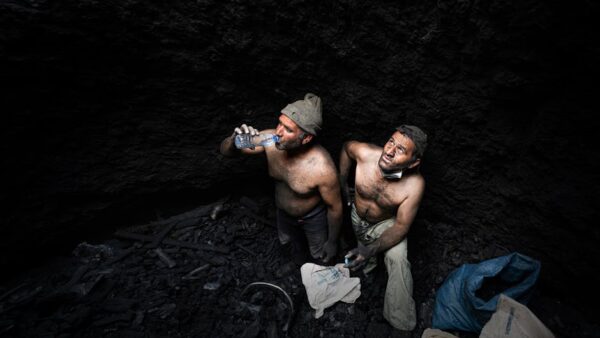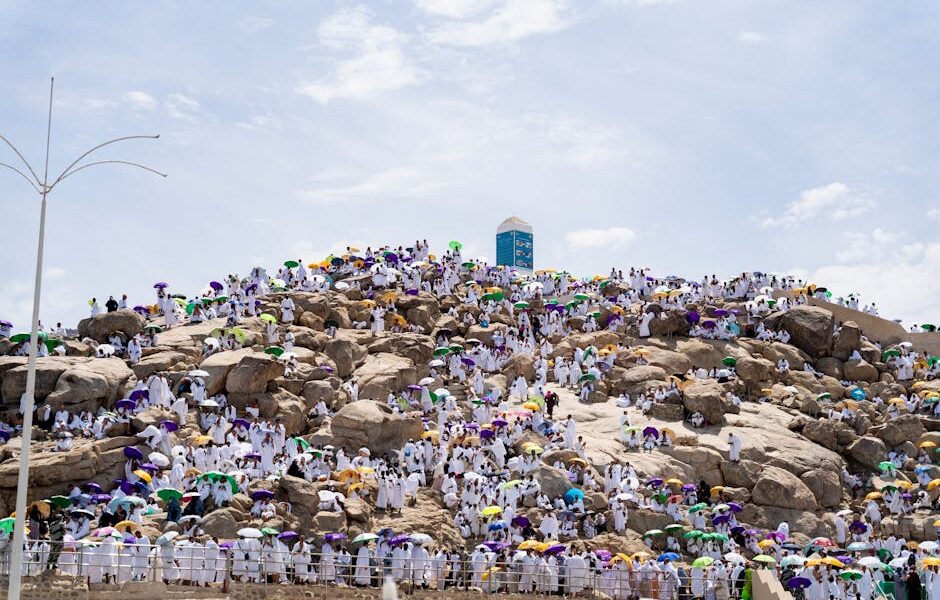
The Saudi government announced this week that more than 1.6 million pilgrims have already arrived in Mecca for the annual Hajj, one of the largest religious gatherings on Earth. This year, Hajj pilgrims war heat defines the journey, as many escape war zones and scorching temperatures. While the numbers are staggering, the real story lies in the quiet desperation of the men and women who made it here against all odds — many escaping war zones, economic collapse, and scorching summer temperatures just to stand before the Kaaba.
Hajj Pilgrims War Heat: The Weight of War on the Road to Mecca
This year, the pilgrimage carries a heavier emotional charge. Among the crowd streaming into the holy city are thousands from Sudan and Yemen, countries wracked by civil conflict and humanitarian crises. For them, the journey isn’t a simple flight or a comfortable bus ride. It’s a labyrinth of closed borders, overpriced visas, and checkpoints where the wrong stamp can mean the end of a dream.
One Sudanese pilgrim I spoke with, a teacher in his late 50s, described selling his only piece of land — land his father had left him — to afford the trip. “In Khartoum, there is no water, no electricity, no safety,” he said, his voice trembling under the desert sun. “But I came here to pray for peace. Not for myself. For my country.”
His story isn’t unique. Yemenis who crossed through Oman and then flew to Jeddah spoke of leaving behind children they may never see again, all to fulfill the religious duty that Islam requires of every able-bodied Muslim at least once in a lifetime.
Heat, Crowds, and New Safety Measures
Compounding the emotional toll is the physical grind. Saudi authorities have stepped up crowd-control measures in and around the Grand Mosque to prevent stampedes and heat-related injuries. Temperatures have hovered around 44°C (111°F), and the air-conditioned tents that once offered relief are now bulging at the seams with worshippers trying to escape the midday sun.
New this year: hundreds of extra cooling mist stations, advanced crowd-flow monitoring via AI cameras, and a strict wristband system that tracks pilgrim movement. Yet one aid worker told me that the simple human element — dehydration, exhaustion, and the dizziness that hits when you’ve been walking for hours — remains a constant challenge. “Technology helps, but it can’t replace a cool drink or a kind word,” she said.
A Different Kind of Pilgrimage
There’s a myth that Hajj is a wealthy person’s ritual. In reality, the majority of pilgrims are middle-class or poor, saving for years or going into debt. The Saudi government keeps promising to cap costs and ease visa processes, but this year, the number of pilgrims is slightly below pre-pandemic levels, suggesting that economic hardship worldwide is still keeping millions at home.
What the official numbers don’t show is the invisible weight each pilgrim carries: the family member who couldn’t come, the debt incurred, the war left behind. One Yemeni woman in her 70s sat on a marble floor near the entrance of the mosque, fanning herself with a cardboard sheet. She told me she had lost three sons in the fighting. “I only have God left,” she whispered. “So I came here to thank Him.”
The hajj is often framed as a celebration of faith. It is. But it’s also a testament to human endurance — a reminder that for millions, the path to God is paved with struggle, not just prayer. And that, more than the numbers, is the real story of the 1.6 million.
For more on regional conflicts, read about the hidden flaws in Gaza’s ceasefire. Learn about global health challenges in the new Ebola outbreak.
For authoritative information on Hajj, visit Britannica’s Hajj entry. For climate data, see WHO’s heat and health page.