A Community United in Grief and Resolve
On a sun-drenched Thursday afternoon, more than 2,000 people packed a San Diego park not just to mourn, but to bear witness to an act of defiance. The crowd—comprising families in traditional dress, police officers in crisp blue uniforms, and neighbors clutching tissues—stood shoulder to shoulder for the Janazah, the Islamic funeral prayer. They had come to honor three men whose final moments turned a routine weekday into a testament of courage.
The deceased—51-year-old security guard Amin Abdullah, 78-year-old Mansour Kaziha, and 57-year-old Nadir Awad—were killed on Monday while trying to stop two teenage gunmen who opened fire during school hours at the Islamic Center of San Diego. Their bodies lay under a white canopy as the faithful chanted “Allahu Akbar”—God is the greatest—and raised their hands in prayer. This was not merely a funeral; it was a signal that terror would not silence this community.
The Chain of Sacrifice That Saved Dozens of Children
Police have since credited the three victims with preventing what could have been a far deadlier massacre. When the first shots rang out around 11:43 a.m., Abdullah—a retired Marine known for his calm demeanor—immediately engaged the assailants in a gunfight. He simultaneously used his radio to order a lockdown at the mosque’s adjacent primary school, where 140 students were in class. Hearing the commotion, Awad, who lived across the street and whose wife taught at the school, ran toward the building alongside Kaziha, the center’s handyman and cook. All three fought back with nothing but their bravery—and all three lost their lives.
“The fact that he was on the front line, trying to defend kids and innocent people, that makes me feel good,” said Khaled Abdullah, the security guard’s 24-year-old son, in an earlier interview. “Calling him a hero is the least we can do.” Investigators later found the two teenage suspects dead from self-inflicted gunshot wounds after fleeing the scene.
A Broader Epidemic of Fear
While the attack is being investigated as a hate crime, it does not exist in a vacuum. The shooting comes at a time when Islamophobia in America has reached alarming levels—a surge driven by inflammatory political rhetoric, online extremism, and a normalization of suspicion toward Muslim Americans. According to the Council on American-Islamic Relations (CAIR), reported anti-Muslim incidents in the U.S. increased by nearly 40% over the past two years. Many of these never make national headlines; they occur in quiet moments—women having hijabs ripped off on public transit, families receiving death threats at their front doors. In this context, Monday’s attack is not an anomaly but a horrifying, predictable consequence of a society that has failed to protect its most vulnerable members.
As mourners at the service broke down in tears, one woman who asked not to be named whispered: “Today is just a really difficult day for our entire community.” She spoke for millions of American Muslims who now fear that their places of worship, their children’s schools, and their own lives are targets. Yet the response from San Diego’s Islamic Center tells a different story—one of solidarity that stretches across the country. People flew in from as far as the East Coast to attend.
A Prayer for Resistance
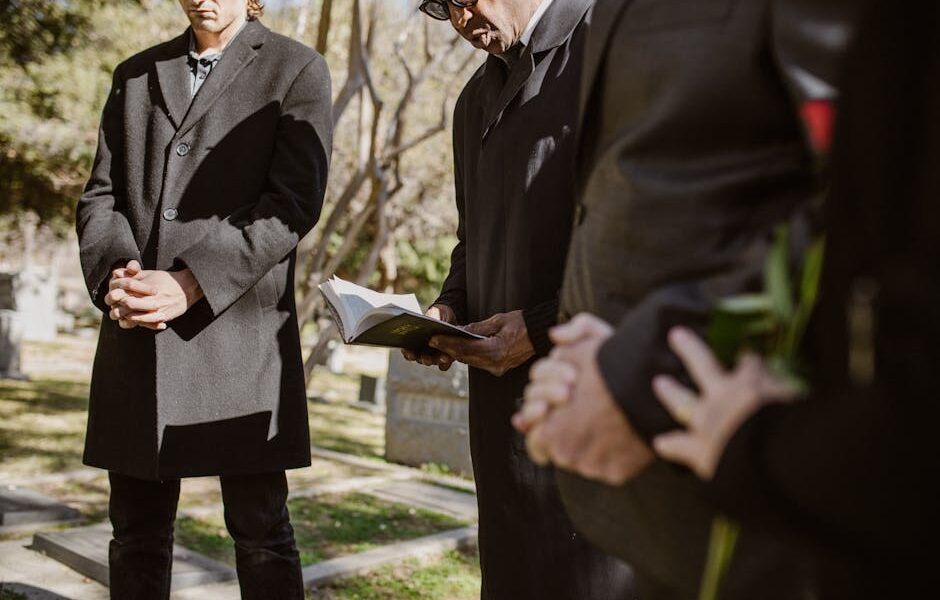
Standing before the crowd, Imam Taha Hassane delivered a message that was equal parts eulogy and rallying cry. “Today is a message to everyone: Our community got hurt, but our community is standing strong and firm,” he said. The three men will be buried side by side at a nearby cemetery, a final unity that their families hope will inspire others to reject division. As the service ended and the crowd slowly dispersed, one thing was clear: this community will not be broken. They will mourn, they will pray, and they will keep showing up—because to do otherwise would be to let the gunmen win.