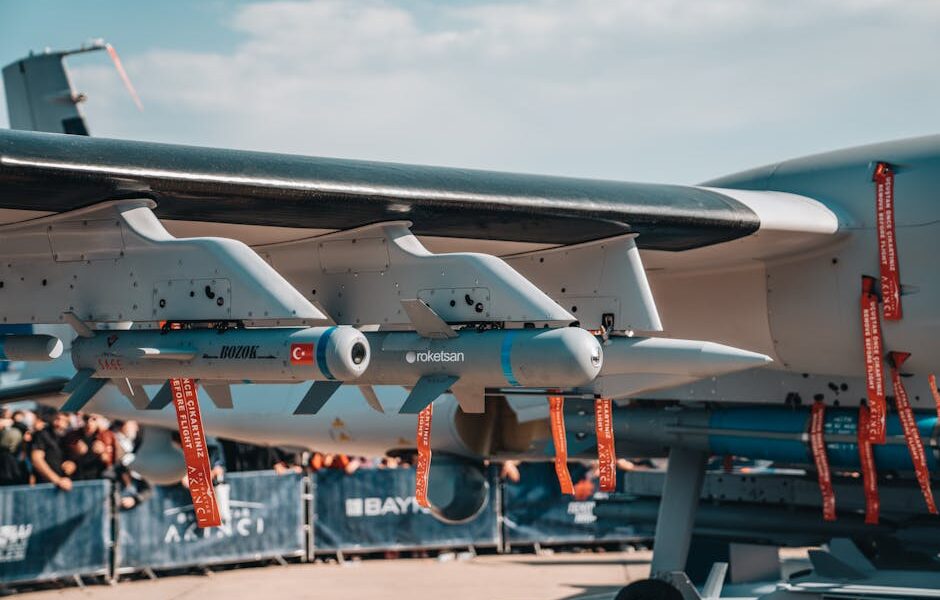
In a world already grappling with the implications of artificial intelligence in daily life, the news that North Korea has successfully test-fired AI-guided missiles marks a sobering step into a new era of conflict. Leader Kim Jong Un personally observed the launches, which took place in the country’s eastern waters. While the regime’s state media heralded the event as a display of defensive capability, the real story lies in how even isolated nations are racing to merge automation with firepower.
Why This AI-Guided Missiles Test is Different
Missile tests from Pyongyang are hardly new. Over the past decade, the country has fired off a steady stream of ballistic and cruise missiles, each time sending shockwaves across the international community. But the introduction of AI guidance systems changes the calculus. Unlike traditional missiles that follow a fixed trajectory or rely on human piloting, AI-guided missiles can adapt in real time — identifying targets, correcting course, and even selecting which objectives to strike without moment-to-moment human input.
This shift raises a troubling question for military planners: how do you deter a weapon that can think on its feet?
A Glimpse Inside the Technology
While technical details are scarce, experts believe the AI upgrade likely involves machine learning algorithms trained on terrain and radar data. These systems allow the missile to distinguish between a warship and a civilian vessel, or to evade countermeasures by predicting an adversary’s next move. For a country like North Korea — which faces severe sanctions and limited access to cutting-edge hardware — this is a remarkably sophisticated leap.
It also suggests a priority on asymmetric warfare: compensating for conventional weaknesses with smarter, more autonomous tools. In effect, Kim Jong Un may be betting that a handful of AI-guided missiles can do the work of a hundred older ones.
What This Means for Global Security
The broader implications extend far beyond the Korean Peninsula. If North Korea can field AI-guided missiles, it lowers the barrier for other nations — and potentially non-state actors — to acquire similar capabilities. The technology that powers a smartphone’s facial recognition or a car’s lane-keeping assistant can, with modifications, be turned into a guidance system.
International treaties like the Missile Technology Control Regime were designed to curb the spread of ballistic missile technology, but they were never written with artificial intelligence in mind. As weapons become more autonomous, our arms control frameworks are falling behind. The United Nations and major powers have struggled to agree even on definitions of “lethal autonomous weapons,” let alone binding rules.
This test should serve as a wake-up call. The conversation can no longer be solely about nuclear warheads or missile ranges. It must now include the algorithms that decide where those warheads land.
Behind the Propaganda
Of course, state media reports should be taken with a grain of salt. Pyongyang has a long history of exaggerating its military achievements. The missiles may have performed well under controlled conditions but could falter in a real combat environment cluttered with electronic jamming and decoys. Still, even an imperfect AI system represents a dangerous evolution — one that Korea watchers and defense analysts will be tracking closely in the months ahead.
What is clear is that the era of purely human-guided warfare is ending. Whether we are ready for that shift is another matter entirely. For more on global security challenges, see our analysis of global tensions stress-testing the system designed to prevent World War III. Additionally, learn about the quiet battle for Britain’s digital soul in the new era of hybrid warfare. For authoritative external perspectives, the Arms Control Association provides detailed analysis on missile technology proliferation, and the United Nations Office for Disarmament Affairs offers resources on autonomous weapons systems.