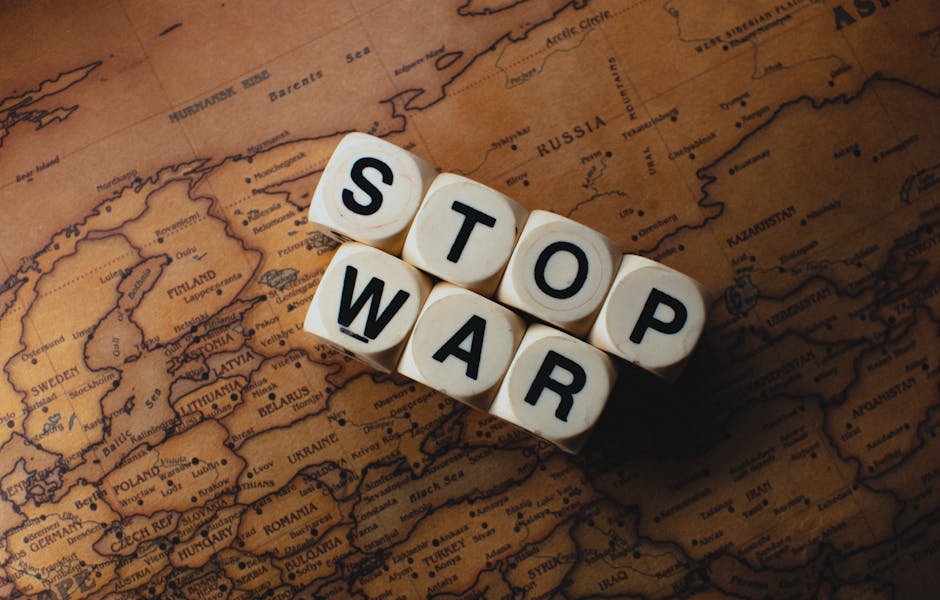
Global tensions world war III risks are mounting as the multilateral framework that emerged from the ashes of two world wars was never meant to be perfect, but it was supposed to be resilient. Lately, though, that resilience looks thinner than a thread. From ongoing conflicts in Ukraine and Gaza to escalating rhetoric between nuclear powers, the diplomatic scaffolding built in 1945 is groaning under a weight it was never fully designed to carry.
Global Tensions World War III: A Charter Under Siege
United Nations Secretary-General António Guterres recently stood before the Security Council and painted a stark picture. His message wasn’t new, but the urgency behind it felt amplified. He pointed to what he called a ‘dangerous erosion’ of the international order—a system that, for all its flaws, has kept the world from tipping into another global conflagration for nearly eight decades. Yet today, that system is being tested by a convergence of crises: active wars, an accelerating arms race, unchecked climate shocks, and a casual disregard for international law that would have seemed unthinkable a generation ago.
The Security Council itself—the very body meant to enforce peace—has become a stage for paralysis. Permanent members, each holding a veto, are increasingly using that power not to protect global stability, but to shield allies or block action against their own interests. The result is a broken feedback loop: the more the Council fails to act, the less nations trust it; the less trust, the more they go it alone.
More Than Just Bullets and Bombs
It would be easy to frame this moment purely in terms of battlefield casualties and treaty violations. But the erosion Guterres warned about runs deeper. Consider the climate crisis. While nations bicker over emissions targets and loss-and-damage funds, the planet is sending its own stark warnings. Heatwaves, floods, and droughts do not respect borders or veto powers. Yet the multilateral response remains fragmented, slow, and often symbolic rather than substantive.
Similarly, the global financial system—meant to lift developing nations out of poverty—now traps many in cycles of debt. The World Bank and IMF, created in a different era, still operate on rules that tilt toward the wealthy. When poorer nations call for debt relief or fairer trade terms, they are often met with bureaucratic indifference. This breeds resentment and fuels exactly the kind of populist nationalism that destabilizes entire regions.
“The system isn’t broken because it was badly designed. It’s breaking because the people who built it assumed future generations would share their memory of total war.”
A Forgotten Memory
And here is where an original insight cuts through: what if the real threat to world order isn’t a specific conflict or even a rising superpower, but the slow fade of historical memory? The architects of the UN Charter had experienced the industrial slaughter of two world wars. They knew what happened when diplomacy failed. Today, most of the world’s population has no living memory of those catastrophes. Wars in distant countries feel far away, abstract, even consumable as news headlines or short video clips. We have normalized conflict as a fact of life rather than treating it as a systemic failure requiring urgent repair.
This amnesia has a consequence: it lowers the political cost of abandoning diplomacy. Leaders can posture for domestic audiences, escalate rhetoric, and deploy force without fearing the same backlash that would have greeted such moves in the 1950s or 1960s. The guardrails are still there; we just stopped caring about them.
What Can Be Done?
The temptation is to despair. But fixating on gloom misses the point. The UN’s founding principle—that peace is a shared project, not a gift from the strong—is not obsolete. It simply needs updating. Reform, however, will not come from another speech. It will come when ordinary citizens demand that their leaders take risks for peace: funding conflict prevention, supporting independent international courts, and treating climate adaptation as a hard security issue rather than a green hobby.
Guterres may be right that we are facing a grave test. But tests also reveal what needs fixing. The erosion can be stopped—but only if we remember, first, that the alternative is something none of us want to see. For more on how diplomatic tensions are straining global institutions, see Global Trust Deficit: Why the UN’s Founding Promise Is Fraying at the Edges. Learn about the broader geopolitical context in The Quad’s Identity Crisis: Can an Alliance Survive When Its Leader Looks the Other Way?. For authoritative analysis, visit International Crisis Group and United Nations.