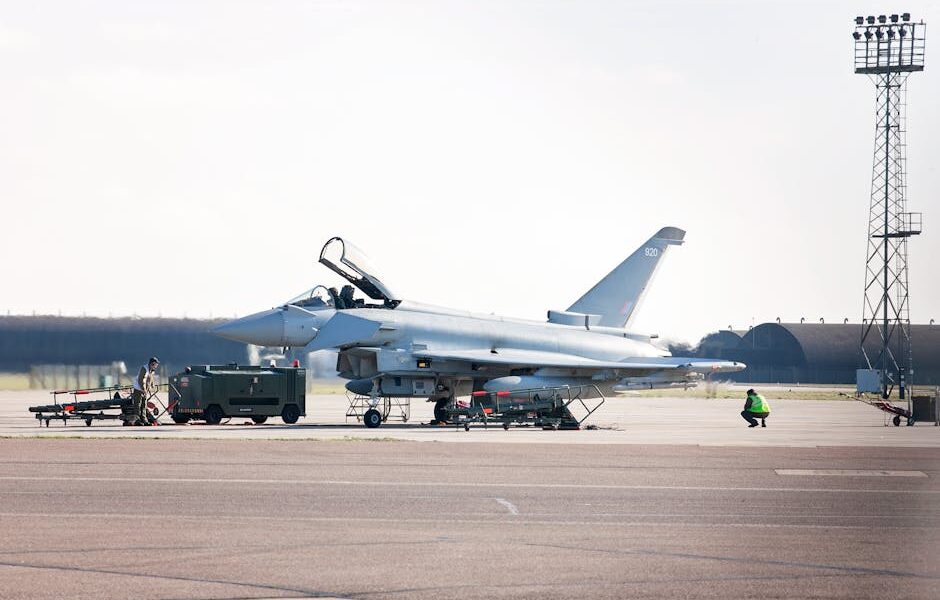
In the tense skies above the Baltic Sea, a routine flight carrying the UK’s defence secretary turned into a stark reminder of how quickly modern tensions can escalate—even at 30,000 feet. An RAF jet, transporting a high-ranking government official near Russian airspace last week, had its communications jammed, raising questions about the fragility of diplomatic travel in contested zones. This incident highlights the growing role of electronic warfare Baltic region.
The incident, which occurred as the aircraft approached an area close to Russia’s border, saw its satellite signals disrupted, forcing the crew to rely on backup systems. While the Ministry of Defence has described the event as a ‘technical interference’ and declined to name the specific technology used, experts widely suspect the involvement of Russian electronic warfare capabilities—a tool increasingly deployed as a low-cost, deniable form of aggression.
Beyond the Headline: What Jamming Means in Practice for Electronic Warfare Baltic
For the average passenger, a jammed signal might mean a dropped Netflix stream or a delayed text message. For a military aircraft carrying a cabinet minister, it means a sudden, unnerving silence. GPS navigation can flicker, secure radio links go dead, and the crew must revert to manual flying and basic instruments. This wasn’t a shot across the bow, but it was a signal—a deliberate, if ambiguous, warning.
This form of hybrid warfare isn’t new. Russian forces have long employed mobile jamming systems like the Krasukha-4 or the more modern Tirada-2 to blind NATO aircraft and drones. What is notable here is the target: a plane carrying the defence secretary himself, John Healey. While he was unharmed and the flight continued safely, the psychological impact is undeniable. It sends a clear message: We know you are there. We can touch you, even if we choose not to shoot.
A Pattern of Provocations in the Baltic Region and Electronic Warfare Baltic
The Baltic Sea has increasingly become a theatre for low-level, high-stakes gamesmanship. Since the escalation of the war in Ukraine, incidents involving Russian aircraft shadowing NATO planes, jamming signals, and even dumping fuel on US drones have become almost routine. This latest event fits into a broader pattern of strategic ambiguity, where Moscow tests the boundaries of acceptable behaviour without triggering Article 5 or a formal military response.
To understand the risk, consider the timeline:
- 2018: A Russian fighter jet shadows a Dutch frigate in the Black Sea, nearly colliding with its helicopter.
- 2019: GPS jamming disrupts civilian shipping and aviation across parts of Finland and Norway during a large Russian military exercise.
- 2023: An uncrewed Russian aircraft reportedly strikes a US drone over the Black Sea, prompting a diplomatic complaint but no retaliation.
- 2025 (this incident): The RAF jet experiences mid-flight jamming while transporting a senior minister.
Each event on its own is small. Taken together, they reveal a consistent strategy of de-escalatory escalation — applying pressure in ways that stop just short of open conflict.
An Original View: The Dangers of Normalising ‘Near-Miss’ Diplomacy in Electronic Warfare Baltic
There is a dangerous trap in treating these jamming incidents as mere background noise in great-power rivalry. When a government minster’s plane is targeted, and the official response is a measured statement about ‘technical interference’, we risk normalising an environment where electronic attacks are considered an acceptable cost of doing business. This is not simply a military inconvenience; it is a direct challenge to the principle of diplomatic immunity and freedom of movement for high-level officials.
From a strategic perspective, the UK and its NATO allies face a difficult choice. An overly aggressive response could escalate into a kinetic confrontation Moscow might welcome as a distraction. But a passive response—simply ‘painting through’ the jamming and carrying on—teaches adversaries that electronic harassment carries no price. The real risk is not an accidental war, but a slow, grinding acceptance that the rules of the road have changed. If defence ministers can be jammed with impunity, what message does that send to commercial pilots flying the same routes or to the crew of a reconnaissance plane collecting intelligence on force movements? The electronic warfare Baltic domain is becoming a new frontier for such provocations.
What Happens Next?
The UK government has reportedly lodged a diplomatic protest, and intelligence officials are analysing the specific frequency and pattern of the jamming to identify the exact system used. But in practical terms, the flight paths for senior officials will likely be altered, and electronic countermeasures on VIP aircraft will be upgraded. This is the new normal: a world where even the most secure communications can be silenced by a signal from below. The question is not whether such interference will happen again, but whether the Western alliance is prepared to draw a line in the sand—or in the sky—before it becomes an accepted part of the landscape. For more on hybrid threats, see this analysis. External resources: NATO’s stance on electronic warfare and Janes on Russian EW capabilities.