The dust has barely settled in Angeles City, but for families clustered near the collapsed building, time has already become a cruel adversary. Three workers are dead, seventeen remain missing, and a city is asking itself a painful question: How does a multistory building under construction simply give way? This Philippines construction collapse has exposed deep flaws in safety enforcement.
As of Monday, rescue crews have pulled two more victims from the debris—one was alive when found but died shortly after. The other suffered cardiac arrest while still trapped. These grim updates come from Maria Leah Sajili, an information officer with the Bureau of Fire Protection, who described the delicate, dangerous work underway just north of Manila.
The Race Against Time—and Physics in the Philippines Construction Collapse
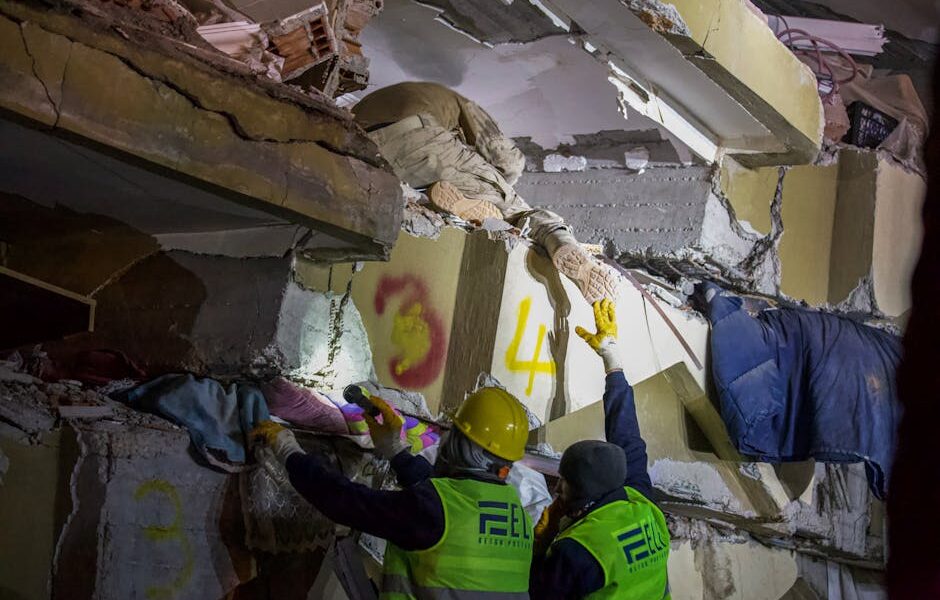
Rescue operations at a collapsed construction site are nothing like what you see in movies. There are no dramatic pulls from a single beam. Instead, teams work by hand, inch by inch, because heavy machinery could cause another collapse. Sajili explained that any sudden shift can crush both victims and responders. That is why, for now, it is manual labor alone.
Search dogs have been brought in. Thermal scanners have detected faint signs of life—breathing, heartbeats—beneath the concrete. But those signals are fading, and so is the window for rescue. If no more survivors are found in the coming hours, mechanical diggers will be used to clear the rubble and recover bodies. No timeline has been given for that grim transition.
Families Demand Answers They Can’t Get
Outside the cordon, tension is thick. Lea Casilao traveled from Manila after hearing her husband was among the trapped workers. “My youngest child keeps asking where his father is,” she said, her voice cracking. “I do not have answers.”
Alfredo Albis, 55, was sleeping in a worker barracks just 16 feet from the building when it fell. He survived. His two cousins did not escape. “They were working here to earn for their families,” he said, “and now they are missing.” He fears the worst.
Authorities say up to 70 people were employed at the site, though most had gone home for the weekend. That small mercy is cold comfort to the families still waiting.
The Mystery of the Collapse
What caused the building to fall? No one knows yet. Angeles City Mayor Carmelo Lazatin said investigators are trying to locate the building owner—not an easy task when developers and contractors can be hard to pin down in the chaotic Philippine construction industry. The number of workers on site that day remains unclear, adding to the confusion.
Here is where the story takes a sharper turn. Across the Philippines, construction booms have outpaced safety enforcement. Inspections are often rubber-stamped. Worker training is minimal. And when a building falls, accountability is rare. This Philippines construction collapse is not just a local tragedy; it is a symptom of a system that has long prioritized speed over safety.
A Wider Lens on Worker Safety
This is not the first time a Philippine construction site has turned into a tomb. In 2021, a building under construction in Manila collapsed, killing several workers. In 2019, a similar incident in Batangas left families grieving. Each time, officials promise investigations. Each time, the cycle repeats. Similar infrastructure failures have occurred elsewhere, as seen in the deadly collapse in South Korea that raised urgent questions about infrastructure safety.
The difference this time? Thermal scans found signs of life. That has kept hope alive—for now. But hope is a fragile thing when measured against concrete and steel. For every hour that passes, the chances of finding someone alive diminish. Rescuers know this. So do the families.
What Comes Next
If no survivors are found, the operation will shift from rescue to recovery. Heavy equipment will move in. The bodies will be pulled out. And then the real work begins: accountability.
But for Lea Casilao, Alfredo Albis, and the others waiting in the heat, none of that matters now. They just want their loved ones back—alive, if possible. Dead, if that is all that remains. They want answers for the children who ask questions no parent should have to answer.
This is not just a story about a building that fell. It is a story about the people underneath, and the families standing above, hoping against hope that the next body pulled from the rubble is still breathing. For more on construction safety issues, see OSHA’s construction safety guidelines and ILO’s occupational safety resources.