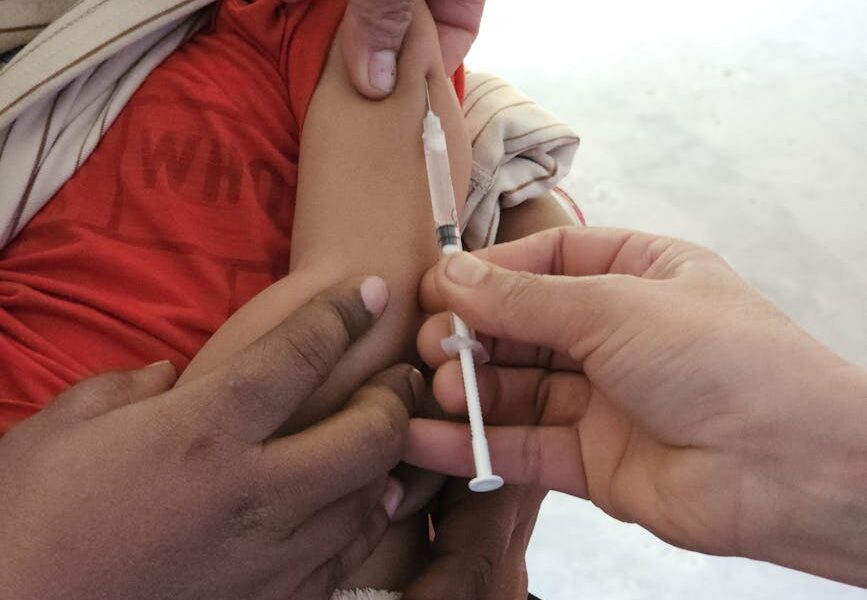
For millions of children around the world, the COVID-19 pandemic didn’t just disrupt school or family life—it erased their access to basic healthcare. Routine immunizations stalled, clinics closed, and supply chains broke down. The result? A dangerous immunity gap that left a generation of toddlers vulnerable to diseases like measles and polio.
Enter the Big Catch-Up (BCU), a massive global initiative launched in 2023 that has now delivered more than 100 million vaccine doses to an estimated 18.3 million children across 36 countries. The program, which wrapped up implementation in March 2026, represents the largest coordinated effort ever to track down and vaccinate children who missed their shots—not just during the pandemic, but in many cases, since birth.
Beyond the Numbers: Who These Children Are
Of the children reached, 12.3 million were so-called “zero-dose children”—kids who had never received a single vaccine before. Another 15 million had never been vaccinated against measles, a disease that is currently staging a global comeback with nearly 11 million cases recorded in 2024 alone.
The BCU focused on children aged 1 to 5, a group often overlooked by routine immunization systems that typically target infants under one year old. By expanding age eligibility and training health workers to identify and vaccinate older children, the initiative fundamentally shifted how countries approach missed vaccinations.
A New Playbook for Reaching the Hardest to Reach
What made the Big Catch-Up different wasn’t just its scale—it was its strategy. For the first time, countries systematically leveraged routine immunization systems to target older children, updating policies, training frontline workers, and engaging with local communities to find families that had fallen off the healthcare grid.
Twelve countries, including Ethiopia, Nigeria, Pakistan, and Somalia, reported reaching more than 60% of all zero-dose children under five in their territories. Ethiopia alone vaccinated 2.5 million previously zero-dose children with the DTP1 shot, alongside millions of doses of polio and measles vaccines.
“As the largest ever international effort to reach missed children with life-saving vaccines, the Big Catch-Up shows what is possible when governments, partners and communities work together to protect the most vulnerable in society,” said Dr. Sania Nishtar, CEO of Gavi, the Vaccine Alliance, in a statement.
The Equity Gap That Won’t Close Itself
But even as the BCU celebrates its successes, the data reveals a sobering reality: the countries that participated in the initiative account for 60% of all zero-dose children worldwide. Most of them are located in fragile, conflict-affected, or underserved communities where healthcare access is chronically unreliable.
These are not children whose parents opted out of vaccination—they are children who were never offered the shot in the first place. The pandemic simply made a pre-existing inequity worse. In 2024 alone, 14.3 million infants globally failed to receive a single vaccine through routine immunization programs. That’s a number that dwarfs even the most ambitious catch-up campaign.
“Vaccinations save lives,” said UNICEF Executive Director Catherine Russell. “We’ve caught up with some of the children who missed routine vaccinations during the pandemic—but many more remain out of reach.”
Original Insight: The Catch-Up Trap
While the Big Catch-Up is a remarkable logistical achievement, it also exposes a uncomfortable truth about global health funding. Large-scale emergency campaigns like this are expensive, labor-intensive, and reactive. They fill gaps after the damage is done, rather than preventing gaps from forming in the first place.
What the BCU data doesn’t show is the opportunity cost: the children born last week who are already falling through the cracks because routine immunization systems remain underfunded and understaffed. Catching up is not a substitute for keeping up. If the global community cannot find a way to deliver basic vaccines to every infant within their first year of life—regardless of where they are born—we will find ourselves launching another Big Catch-Up in another five years, and the cycle will repeat.
The measles resurgence is a warning shot. In 2021, roughly a dozen countries faced large outbreaks; by 2024, that number had nearly tripled. These outbreaks are not random—they are the direct consequence of persistent gaps in routine immunization, compounded by declining vaccine confidence in some previously well-covered communities.
What Comes Next?
The Big Catch-Up has catalyzed lasting improvements: better tracking systems, updated policies on age eligibility, and a health workforce now trained to find and vaccinate missed children. But sustaining these gains will require sustained investment. As birth cohorts grow, conflicts displace families, and health systems remain strained, the pressure on routine immunization will only increase.
Dr. Tedros Adhanom Ghebreyesus, Director-General of the World Health Organization, praised the initiative as a way “to undo one of the pandemic’s major negative consequences.” But he also acknowledged the work ahead: “The success of the Big Catch-Up is a testament to health workers and national immunization programs, which are now better equipped to find and vaccinate children missed by routine services.”
The BCU proved that with political will, targeted funding, and community engagement, it is possible to reach millions of the world’s most vulnerable children. The next challenge is to make sure we don’t have to do it all over again.