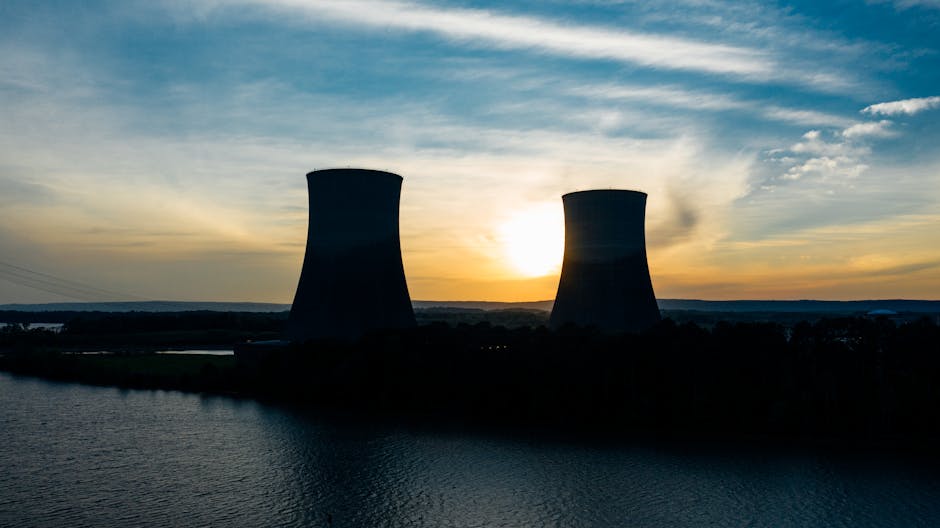
When a drone struck near the United Arab Emirates’ Barakah Nuclear Power Plant last week, the immediate shockwaves were felt far beyond the Persian Gulf. The UN Security Council convened an emergency session in New York, with International Atomic Energy Agency (IAEA) Director General Rafael Mariano Grossi providing a sobering briefing. But while the headlines focused on the immediate threat of radioactive release, a deeper, more troubling narrative is unfolding—one that questions the very wisdom of building mega-reactors in a region where national rivalries often play out in the skies.
The Incident That Changed the Conversation
The drone strike, which landed perilously close to the plant’s critical infrastructure, did not cause a radiation leak. Yet the incident marks a stark turning point. Until now, the assumption was that only state actors with sophisticated military capabilities might target a nuclear facility. The attack near Barakah, however, demonstrates that non-state actors or proxy forces equipped with off-the-shelf drones can now pose a credible threat to the world’s most sensitive energy installations.
This is not just a Middle Eastern problem. As nuclear power plants age in Europe and Asia, and as new ones are built in volatile regions, the security playbook must be rewritten. The Barakah plant, which began commercial operations in 2020, was designed to withstand earthquakes, airplane crashes, and even a direct hit from a conventional bomb. But a swarm of cheap drones, each carrying a small payload, presents a different kind of vulnerability—one that engineers are only beginning to model.
Regional Repercussions
The UAE has positioned itself as a stable, business-friendly hub in a turbulent neighbourhood. Its investment in nuclear energy was partly a geopolitical statement: that it could manage the most dangerous of technologies responsibly. Now, that reputation is under a new kind of scrutiny. Neighbouring states, including Saudi Arabia and Qatar, which are also exploring nuclear energy, will be watching closely. If the UAE—with its advanced air defence systems—cannot guarantee the safety of its reactors, can anyone?
Furthermore, the attack comes at a time of heightened tension between Iran and Gulf states. While no group immediately claimed responsibility, the proximity of the strike to the anniversary of Soleimani’s assassination and ongoing shadow wars in the region suggests the nuclear plant has become a symbolic target. The IAEA’s role, traditionally focused on technical inspections and safeguards, is now being pulled into active conflict de-escalation.
An Original Perspective: The Unseen Economic Cost
Beyond the obvious safety concerns, there is an economic dimension that few have discussed. The Barakah plant represents a $24.4 billion investment for the UAE. The consortium behind it includes reactors from South Korea, a country that prides itself on nuclear safety after the Fukushima disaster. If investors and insurers begin to price in the risk of drone strikes, the cost of financing future nuclear projects in the Middle East could skyrocket. This would create a vicious cycle—higher costs lead to less robust safety margins, which in turn make the plants more vulnerable to attack. For emerging economies that see nuclear power as a path to decarbonisation, this incident may push them back toward fossil fuels, undermining global climate goals. The irony is painful: a move designed to secure energy independence may have made the region’s energy grid more precarious.
What Happens Next?
The Security Council’s meeting ended without a formal resolution, but the conversation is far from over. The IAEA is expected to propose new guidelines for drone defence at nuclear sites, including the use of counter-UAS (unmanned aircraft systems) technology and advanced radar. Individual nations are also likely to bolster their air defence perimeters. But the most critical change may be a diplomatic one: the need for regional communication hotlines to prevent miscalculations in the fog of a drone attack.
For the average resident in Abu Dhabi or Dubai, the immediate risk is low. The plant’s safety systems held. But the psychological impact is real. The UAE had long enjoyed an aura of invulnerability—a place where the future was built without looking over one’s shoulder. The drone that buzzed Barakah didn’t just threaten a reactor; it pierced that sense of security. As the region moves forward, it will have to decide whether nuclear power can coexist with the new realities of asymmetrical warfare. So far, the answers are not reassuring.