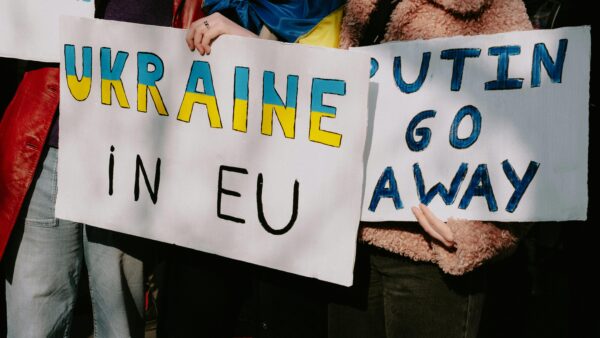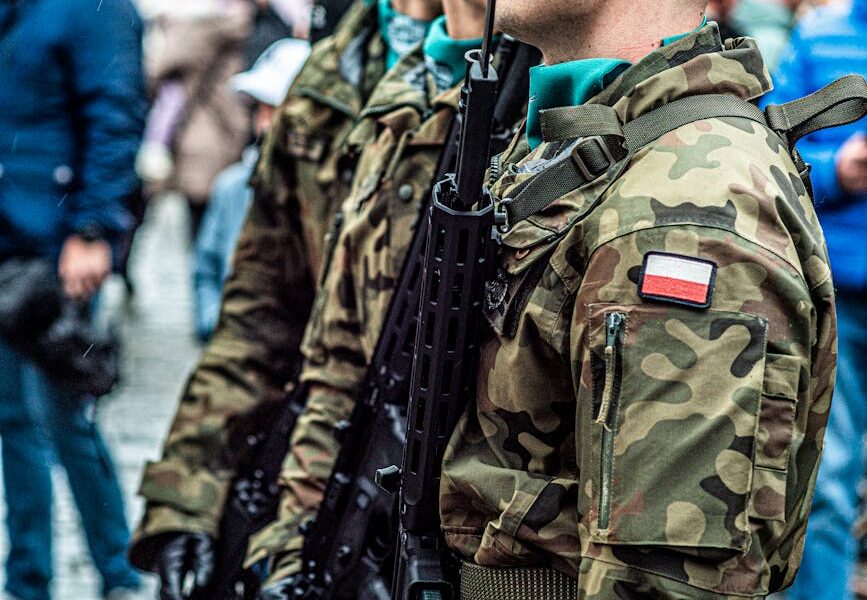
When President Donald Trump announced last week that the United States would send an additional 5,000 troops to Poland, the news landed with a thud of contradiction. Just days earlier, the Pentagon had abruptly cancelled a planned deployment of 4,000 troops to the same country. The whiplash left military analysts and NATO allies scrambling for clarity — and the answer, it turns out, has less to do with battlefield calculus and more to do with friendship.
A Shift in Tone, A Shift in Power
The announcement, made on Trump’s social media platform, cited the strong relationship between the U.S. and Polish President Karol Nawrocki — a leader Trump endorsed during last year’s presidential race. Nawrocki, for his part, has been one of the most vocal European allies in praising Trump, even claiming in a BBC interview that only Trump could stop Vladimir Putin. That kind of personal bond now appears to be shaping military posture in ways that traditional defense planners find unsettling.
Pentagon spokesperson Pete Hegseth downplayed the earlier cancellation as a “temporary delay,” insisting the U.S. remains committed to a strong presence in Poland. But the mixed signals have raised eyebrows. Just weeks ago, the White House signaled a broader intention to reduce troop levels across Europe under the “America First” doctrine. So what changed? The Nawrocki-Trump connection appears to be the wildcard.
What the Numbers Actually Mean
To understand the significance of this new deployment, it helps to zoom out. The U.S. currently stations roughly 36,000 active-duty troops in Germany — its largest European footprint. Italy hosts about 12,000 troops, and the UK about 10,000. If the full 5,000 troops are indeed new deployments — and not simply a re-labeling of the cancelled 4,000 — Poland would see its American contingent jump substantially, though still far short of Germany’s numbers.
But the real story here isn’t just the headcount. It’s the message. Trump has long been critical of NATO allies who he believes don’t shoulder their fair share. His decision to pull 5,000 troops from Germany earlier this month, following a spat with Chancellor Friedrich Merz over Iran negotiations, was framed as a punishment for ingratitude. Sending troops to Poland, by contrast, feels like a reward for loyalty — a signal that personal allegiance now outweighs strategic alliances.
The Geopolitical Ripple Effect
This troop shuffle sends a nuanced signal to Russia. While a stronger U.S. presence in Poland — a nation that shares a border with Russian ally Kaliningrad — might deter aggression, the simultaneous drawdown in Germany could be read as a weakening of NATO’s core. Republican lawmakers have already warned that cutting German deployments risks emboldening the Kremlin. Nawrocki, ironically, has insisted that only Trump can stop Putin, but the mixed messaging may actually complicate that goal.
Consider the optics: One week, the Pentagon cancels a deployment; the next week, the President announces a new one — bigger than the one cancelled — and ties it directly to his personal support for a foreign leader. This leaves allies wondering whether U.S. military commitments are now subject to the whims of presidential friendship rather than long-term strategic planning. It also raises questions for Poland: What happens if Nawrocki loses the next election? Does the troop commitment vanish as quickly as it appeared?
An Original Perspective: The Loyalty Dividend
What’s unfolding here is something larger than a troop movement. It’s a case study in how modern geopolitics can be bent by personal relationships. In the past, basing decisions were driven by threat assessments, treaty obligations, and cost-benefit analyses. Today, at least in this instance, the decisive factor appears to be something far less clinical: a leader’s willingness to publicly praise the U.S. president. Nawrocki’s endorsement of Trump — both in Poland’s election and on the world stage — has effectively earned his country a military dividend.
This is not entirely unprecedented; the U.S. has historically rewarded loyal allies. But the speed and transparency of this shift — announced on social media without prior consultation with the Pentagon or NATO — mark a departure from standard diplomatic practice. It suggests that in the Trump administration’s foreign policy, personal chemistry can override institutional process. For smaller nations, the takeaway is clear: flattery and alignment with the president’s worldview may be as valuable as aircraft carriers.
What Comes Next
The White House has not clarified whether the new 5,000 troops are a separate force or part of the cancelled deployment. Nor has it explained how this squares with the broader “America First” goal of reducing European troop levels. For now, Poland celebrates its special status. But the long-term implications — for NATO cohesion, for U.S.-German relations, and for the credibility of American commitments — remain uncertain.
In the end, the story of these 5,000 troops is less about military strength and more about the power of a personal phone call. And in an era where alliances are increasingly tested, that’s a development worth watching closely.