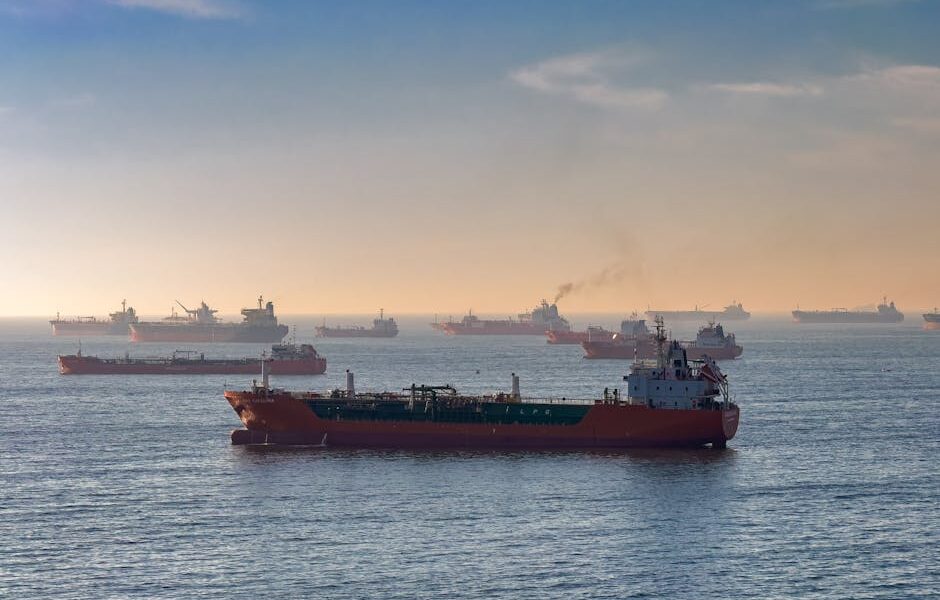
For decades, the Strait of Hormuz has sat at the heart of global energy security, a narrow funnel through which roughly a fifth of the world’s oil passes. Now, a freshly published map from Tehran is redrawing the lines in a way that has neighboring capitals crying foul and maritime lawyers reaching for the rulebook. The map, issued by a newly created Iranian authority called the Persian Gulf Strait Authority, claims Iranian military oversight over an area of more than 22,000 square kilometers — a zone that extends into waters that Oman and the United Arab Emirates consider their own.
This is not a routine boundary adjustment. The Iranian declaration states that all vessels transiting the strait must now coordinate with and receive authorization from this new authority. The United States has already advised commercial ships to ignore the directive, and the UAE has dismissed the move as “nothing but fragments of dreams”, in the words of presidential diplomatic adviser Anwar Gargash. Behind the rhetoric lies a real and simmering confrontation that could disrupt shipping routes and threaten the stability of global oil markets.
What makes the claim particularly provocative is that it flies in the face of widely accepted international law. The United Nations Convention on the Law of the Sea guarantees ships the right of innocent passage and transit passage through international straits. Iran, notably, has not ratified that convention, placing its legal posture on shaky ground. “The legal foundation for this claim is extremely thin,” says maritime security analyst Leila Hosseini. “Iran is essentially trying to assert control by fiat, not by law.”
A Timeline of Rising Tempers
The mapping move did not occur in a vacuum. Just days before its release, media outlets linked to Iran’s Islamic Revolutionary Guard Corps (IRGC) broadcast footage of what they described as a “punishment” strike on a tanker in the strait. BBC Verify analysis matched the vessel in the clip to the Barakah, a Liberian-flagged tanker that reported being hit by unknown projectiles in early May. The timing suggests a coordinated campaign of intimidation aimed at reinforcing the new authority’s message through action.
Simultaneously, the United States is escalating its own enforcement activities. On Wednesday, US Marines rappelled from helicopters onto the deck of an oil tanker in the Gulf of Oman — the Celestial Sea, a vessel previously sanctioned for its links to Iran. Central Command said the ship was suspected of attempting to violate the American blockade of Iranian ports. After searching the vessel, US forces released it and directed the crew to change course. The ship now lists its destination as the Omani port of Duqm.
According to Centcom, since the US blockade of Iranian ports took effect on April 13, American forces have redirected 94 commercial ships and disabled four vessels. These actions form a backdrop of intensifying interdiction that mirrors Iran’s own show of force in the strait.
The Diplomatic Tightrope
Amid this escalating standoff, diplomatic channels remain open — if tense. President Donald Trump stated on Monday that he had called off a planned military strike on Iran at the request of leaders from Qatar, Saudi Arabia, and the UAE, claiming that “serious negotiations are now taking place.” On the same day, Pakistan’s army chief General Asim Munir visited Tehran to mediate between the two sides. Iran’s foreign ministry confirmed it was reviewing the latest US proposals for ending the hostilities.
Yet Trump’s social media message also carried a warning: “If we don’t get the right answers, it goes very quickly. We’re all ready to go.” This volatile mix of back-channel talks and open threats leaves the Strait of Hormuz in a precarious position.
Original Insight: What This Means for the Rest of Us
Beyond the headlines of naval maneuvers and diplomatic brinkmanship, there is a quieter but deeper story unfolding. The Iranian map is not primarily aimed at the United States or the UAE — it is a message to Iran’s own domestic audience. The new Persian Gulf Strait Authority gives the IRGC a bureaucratic perch from which to claim sovereignty and portrays the Gulf as a zone of Iranian control rather than a contested international waterway. By framing its actions as a response to American aggression and justifying strikes as “punishment,” Tehran is attempting to solidify a narrative of strength and defiance at a time when its economy is under severe sanctions.
But the consequences will ripple outward. Every shipping company that operates in the region will now have to weigh the risk of ignoring Iranian directives against the impracticality of complying with them. Insurance premiums for vessels transiting the strait are likely to rise, and that cost will be passed down to consumers in the form of higher fuel prices. For countries heavily dependent on oil imports from the Gulf — including many in Asia and Europe — the stakes are existential. The world’s most important energy chokepoint has just become a lot more dangerous, and no amount of international law or diplomatic posturing can fully restore the certainty that markets crave.
Looking Ahead
The coming weeks will be critical. If the US blockade deepens and Iran responds with further strikes or seizures, the region could slide toward a conflict that neither side seems to want but both appear willing to risk. For now, the Strait of Hormuz remains open — but the map has changed, and so has the calculus for everyone who depends on it.