When police arrived at the Islamic Center of San Diego just four minutes after the first shots rang out, they found a scene of devastation — but also of defiance. Three men lay dead outside the mosque, and two teenage suspects were later discovered blocks away, dead from self-inflicted wounds. But the toll could have been far worse, authorities say, were it not for the actions of one man: Amin Abdullah, a father of eight and the mosque’s security guard.
A guardian’s final act
Abdullah, 50, had worked at the mosque for more than a decade. Friends describe him as a gentle, ever-present figure — always smiling, always welcoming children and worshippers. On Monday morning, he was the first line of defense when the two attackers, aged 17 and 18, arrived in a vehicle wearing military-style clothing adorned with Nazi symbols and armed with rifles, a shotgun, and a pistol covered with racial slurs.
San Diego Police Chief Scott Wahl stated plainly: “It’s fair to say his actions were heroic. Undoubtedly, he saved lives today.” Abdullah was fatally shot, but his intervention bought precious seconds for others inside the mosque to take cover.
Who were the victims?
The other two victims were Nader Awad, whose children grew up in the mosque and whose wife teaches at its school, and Mansour Kaziha, who helped maintain the building’s grounds and a nearby convenience store. All three were active, beloved members of the congregation. Tazheen Nizam, a spokeswoman for the Council on American-Islamic Relations – San Diego, called Abdullah “a shining light, a true hero, a martyr.”
The attack occurred around 11:43 a.m. local time. Police arrived within minutes, but by then the shooters had already fled. They were later found dead in a car less than a quarter-mile away from the mosque, having apparently turned their weapons on each other before one shot himself.
A ‘broad hatred’ — and an online path to violence
Authorities have not yet released the suspects’ names, but they have revealed chilling details about their mindset. FBI Special Agent Mark Remily said investigators recovered writings and documents from the attackers’ car that “outlined religious and racial beliefs of how the world they envisioned should look.” He added, “These subjects did not discriminate on who they hated.” San Diego’s police chief described the case as a possible hate crime rooted in a “broad hatred” of multiple religions and racial groups.
The suspects met online and later discovered they both lived in the San Diego area. They were radicalized through internet content, authorities said, though they declined to provide specifics. A search of three residences associated with the teenagers turned up more than 30 guns — including pistols, rifles, and shotguns — as well as a crossbow, tactical gear, and mobile phones. The weapons were registered to one of the suspect’s parents.
What the footage reveals
BBC Verify reviewed footage from Monday’s attack, which appears to have been filmed from a head-mounted camera worn by one of the suspects. The video, which has no audio, shows the attackers arriving at the Islamic Center’s parking lot, entering the building, and opening fire. The weapons are covered in slogans, including a clear racial slur, and the shooters are shown wearing masks and caps. After returning to their car, they fire more shots through the vehicle’s window. The footage ends with one suspect shooting toward the other before turning the pistol on himself.
The mother of one of the teenagers had called police around 9:40 a.m. that same morning, reporting that her son had run away with her firearms and her car. She warned that he might be suicidal and could be with a friend, and noted that he was dressed in camouflage.
Original insight: The dangerous gap between online radicalization and real-world intervention
This tragedy underscores a troubling pattern that law enforcement and communities are still struggling to address: the speed with which online hate can escalate into lethal violence. The suspects met in digital spaces, exchanged extremist ideas, and within a short time were planning an attack. Their “broad hatred” — against multiple races and religions — suggests they were not driven by a single ideological grievance, but by a toxic, generalized contempt for anyone outside their imagined order. This is a stark reminder that radicalization does not always follow a predictable script. It can thrive in echo chambers where bigotry is normalized and violence is glamorized. Meanwhile, parents, schools, and platforms are often left guessing until it is too late. The mother’s desperate call to police that morning shows that even when warning signs emerge, the system may not have the tools or time to prevent a massacre. Strengthening early intervention — through better mental health support, parental guidance resources, and clearer reporting mechanisms for online hate — is no longer optional. It is a matter of life and death.
A community grieves — and vows to rebuild
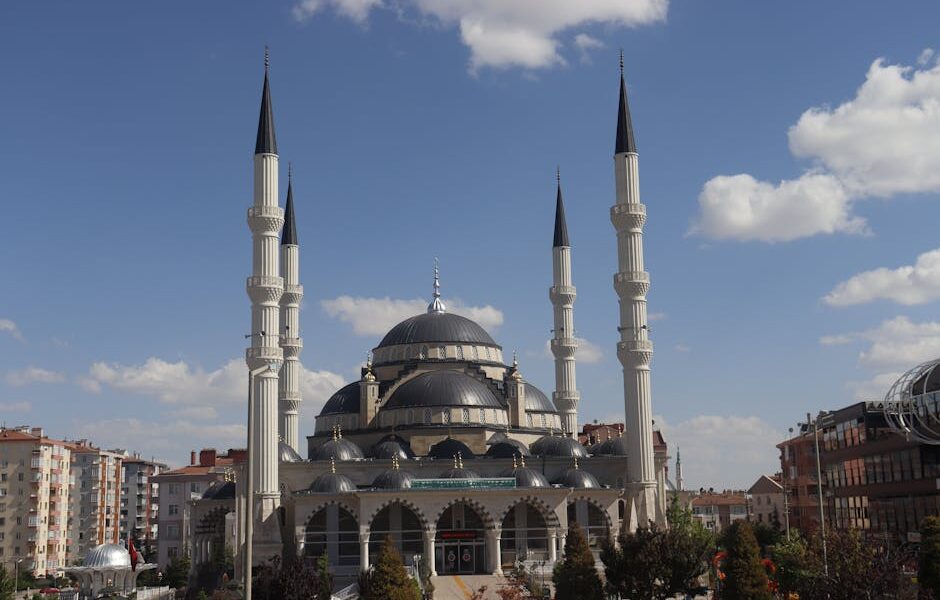
The Islamic Center of San Diego has been a cornerstone of the local Muslim community for decades. In the wake of the shooting, vigils have been held, and interfaith groups have expressed solidarity. For now, the community mourns the loss of three men who were more than victims — they were caretakers, fathers, and neighbors. As investigators continue to piece together the motives and timeline, one thing is clear: the worst was averted by a security guard who gave his life to protect others.