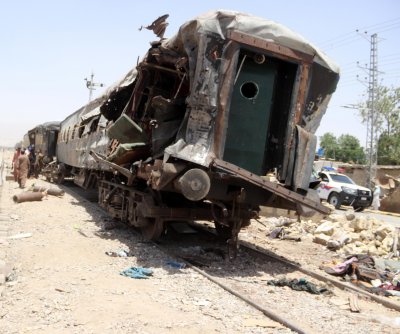
When a suicide bomber managed to sneak onto a packed passenger train in Balochistan on a quiet Tuesday morning, the Balochistan train bomb didn’t just rip through carriages — it tore open old wounds in a province that has been simmering for decades. The attack, which killed more than 30 people, including military personnel and civilians, happened near Sibi, a dusty junction town that most Pakistanis only know from weather reports. But this was no random tragedy; it was a calculated strike that shows how quickly Pakistan’s security forces can be outflanked, even in places they control.
The Attack: What Actually Happened
The train was en route from Quetta to Rawalpindi, a route routinely used by military personnel traveling on leave. According to local officials, the bomber boarded near a checkpoint, blending in with a crowd of passengers passing through a gap in security. He detonated his vest in a second-class compartment, where the blast was amplified by the confined space. Rescue workers described the scene as “a steel coffin” — bodies and luggage fused together.
Initial casualty figures fluctuated as survivors were pulled from the wreckage, but by nightfall, the death toll stood at 34. More than 50 people were injured, many critically. The Pakistani Taliban (TTP) quickly claimed responsibility, saying the target was specifically the off-duty soldiers on board. But local Baloch separatist groups also praised the attack, muddying the waters about who actually lit the fuse.
Why This Balochistan Train Bomb Feels Different
Suicide bombings in Pakistan are tragically common — over the past two decades, the country has endured thousands. But what made this Balochistan train bomb stand out is the symbolic vulnerability of a military train. For years, the Pakistani army has touted its success in pushing militancy out of urban centers. Cities like Karachi and Lahore have seen a drop in bombings. But the countryside — especially Balochistan — remains a patchwork of factions, safe havens, and ungoverned corridors.
“The train is a soft target that moves,” says former Brigadier Tariq Mahmood, a retired intelligence officer. “You can’t put a metal detector on every platform. The enemy knows our movements. They just wait for a moment of routine.”
The attack also reveals a troubling truth: the so-called “peace dividend” many Pakistanis hoped for after the army’s Zarb-e-Azb operation against militants has not trickled down to the provinces. Balochistan, in particular, is churning with multiple insurgencies — some religious, some ethnic, some purely criminal. The bomber may have been TTP, but he moved through a landscape shaped by Baloch nationalist anger, drug trafficking routes, and a state presence that is often heavy-handed but rarely effective.
Who Is Really Pulling the Strings?
The official narrative points the finger at the Tehreek-e-Taliban Pakistan, which has vowed to avenge the killing of its leaders by security forces. But experts caution against a simple answer. “The TTP is a brand, not a monolithic army,” explains Dr. Amina Durrani, a security analyst based in Islamabad. “They have loose affiliates, breakaway cells, and groups that swap allegiances for cash or ideology. The same guy who plants a bomb for the Taliban today might work for a Baloch smuggler tomorrow.”
In the immediate aftermath, the government announced a crackdown on illegal train boarding points and promised new facial recognition systems at stations. Yet, for residents of Balochistan, such pledges ring hollow. “We hear the same promises after every attack,” said a Quetta shopkeeper who declined to give his name for fear of reprisal. “They set up checkpoints for a week, then the militia comes back and demands money from us. The army doesn’t protect us — they just patrol in armored cars.”
An Attack on Ordinary Life
Lost in the casualty figures is the human toll that goes beyond the dead. Many of the survivors are now widows, children, and parents who lost the breadwinner of the family. The train was full of everyday passengers: a student returning to university, a father going to visit his daughter in the city, a cook headed for a job in Islamabad. For them, the train was not a military target — it was the only affordable way to cross the province.
“People in Balochistan are caught between the militants and the state,” says human rights activist Sabeen Mahar. “They can’t travel without fear, they can’t complain without being labeled as sympathizers. This Balochistan train bomb is a tragedy, but it’s also a symptom of a much deeper neglect.”
What Comes Next
The immediate response from Islamabad has been predictable: a flurry of official condemnations, a visit by the interior minister to the site, and promises of justice. But long-term, this bombing could push the army into a tighter grip on the province — more checkpoints, more surveillance, more collective punishment of villages suspected of harboring militants. That approach has historically backfired, driving more young men into the arms of insurgent groups.
Meanwhile, the people who rely on this train — the only rail link between Quetta and the rest of the country — are left with a stark choice: risk the tracks or pay for a bus that costs three times as much on a road that is just as dangerous. A security overhaul that actually works will require more than cameras and bag searches. It will demand a political settlement that addresses the grievances driving Balochistan’s fragmentation. Until then, the next bomb is just a matter of time.
For more on regional security challenges, read about The Quad’s Identity Crisis and Global Tensions Stress-Testing the System. For external context, see Crisis Group analysis on Pakistan and BBC coverage of Balochistan.