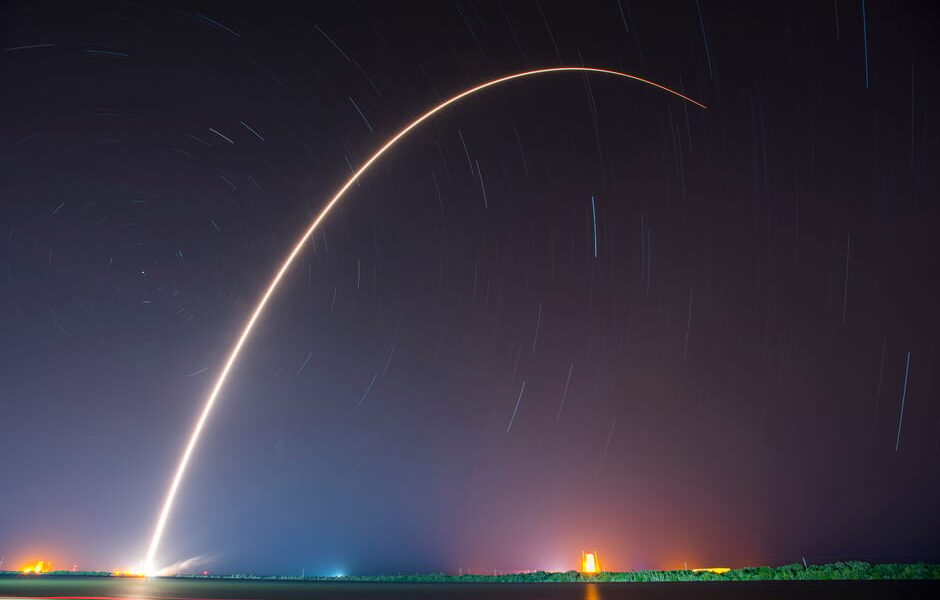
When the Shenzhou-18 spacecraft roared off the pad from the Gobi Desert this week, carrying three astronauts toward the Tiangong space station, it was easy to focus on the technical milestone. But beneath the smoke and the cheers lies a deeper story: China is not just racing to the moon — it is quietly redefining what it means to be a space superpower in the 21st century. This China space launch is a deliberate step in a methodical, long-term plan that stretches far beyond low-Earth orbit. The crew, consisting of Commander Ye Guangfu and astronauts Li Cong and Li Guangsu, are expected to spend roughly six months aboard the orbital outpost. Their mission includes scientific experiments, spacewalks, and maintenance tasks. But this is no mere repetition of past flights. It is a deliberate step in a methodical, long-term plan that stretches far beyond low-Earth orbit.
A Steady Cadence, Not a Sprint: The China Space Launch Strategy
While headlines often frame the current era as a “lunar race” between the United States and China, the reality is more nuanced. NASA’s Artemis program aims to return humans to the moon by the mid-2020s, with a long-term eye on Mars. China, meanwhile, has announced its own intention to land astronauts on the lunar surface before 2030. But the Chinese program is not trying to outrun Apollo’s ghost — it is building a different kind of presence. The Tiangong station, now fully operational, serves as a testbed for technologies that will be essential for longer missions. China has already retrieved samples from the lunar far side and landed rovers on Mars. Each flight adds layers of experience, especially in life support, orbital assembly, and human endurance.
The Commercial and Geopolitical Context
Unlike the Cold War space race, which was driven by ideology, the current landscape is heavily shaped by commercial interests and national pride. China’s space program is tightly integrated with its Belt and Road Initiative, and it has signed cooperation agreements with countries like Russia, Brazil, and the United Arab Emirates. The narrative is not just about planting a flag — it is about building a network. Critics argue that China’s space ambitions are opaque and tied to military objectives. The country has developed anti-satellite weapons and operates a growing fleet of reconnaissance satellites. But that is not unique: the U.S. Space Force exists for similar reasons. The difference is that China’s progress often catches the West off guard because it does not announce its plans with the same fanfare.
Original Insight: The Quiet Paradigm Shift
What is often missed in coverage of these launches is a fundamental shift in how space exploration is funded and executed. The Shenzhou-18 mission, like its predecessors, is a state-run affair. But China is now actively encouraging private sector involvement in satellite manufacturing, launch services, and even tourism. Companies like Galactic Energy and iSpace are emerging, supported by government contracts and a growing domestic market. This mirrors the early days of NASA’s Commercial Orbital Transportation Services program, which birthed SpaceX. If China’s private space industry matures, we could see a two-track global system: one Western, one Chinese — each with its own supply chains, standards, and partnerships. This fragmentation could complicate international collaboration on projects like the International Space Station’s successor or joint Mars missions. But it also creates redundancy and competition, which historically speeds up innovation.
What It Means for Everyday Readers
You might wonder why a rocket launch in China matters in your daily life. The answer is more practical than you think. Chinese satellites already provide communication and navigation services across Asia, Africa, and Latin America. The technologies tested on Tiangong — from water recycling to radiation shielding — have spin-offs that improve medical devices and materials science. And the geopolitical balance of space influence eventually trickles down to trade agreements, cybersecurity, and even the cost of internet access. The Shenzhou-18 crew will return to Earth in October, but the trajectory they represent will not end there. China has already begun constructing the International Lunar Research Station in partnership with Russia, and it is developing a new generation of heavy-lift rockets. The next time you hear about a Chinese launch, try not to see it as a single event. See it as another brick in a bridge that is quietly changing the world. For more on how global events shape international relations, read about how foreign crises are reshaping America’s political landscape. Also, explore China’s deepening ties with Cuba through rice aid. Learn more about China’s space program from NASA’s official site and Space.com.