When the ceasefire unraveling was announced last month, families in Mashghara allowed themselves to believe the worst might finally be behind them. Some started planning repairs to homes damaged in earlier rounds of fighting. Others just slept through the night for the first time in weeks.
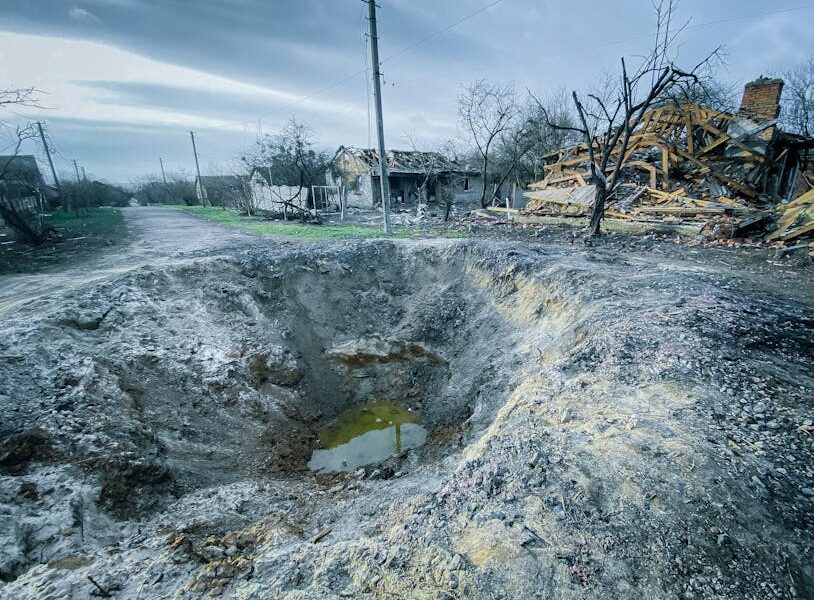
That fragile calm was shattered late Monday, when Israeli air attacks tore through this eastern Lebanese village in the Bekaa Valley. By Tuesday morning, the death toll had climbed to at least 12, with rescue crews still sifting through rubble for the missing. For residents, the message was brutally clear: the truce had never really taken hold — and now, it may be gone for good.
A Pressure Campaign, Not an Accident: The Ceasefire Unraveling in Real Time
The strikes were not some one-off escalation. According to local reporting, the village was hit by at least 10 separate attacks in the span of roughly 30 minutes. Witnesses described a terrifying, relentless rhythm of explosions that targeted what the Israeli military called Hezbollah infrastructure sites. But those sites sat among — and, in some cases, inside — residential buildings.
This was not just about destroying weapons or tunnels. Analysts and on-the-ground observers describe the assault as part of a deliberate pressure campaign by Israel against Hezbollah, intended to force the militant group to stop using explosive drones against Israeli forces occupying southern Lebanon and positions inside northern Israel. The attacks range far beyond Mashghara: southern towns including Arnoun, Yohmor al-Shaqif, Zawtar al-Sharqiyah, and Mayfadoun have all come under heavy artillery and air bombardment in the same wave.
Late Monday, the Israeli military issued new forced displacement orders for residents of Nabatieh, a city already battered by months of conflict. The warning was stark: evacuate immediately or risk being caught in the crossfire. For many families, it was the second or third time they had been uprooted since the broader war began.
The Fragile Accord That Never Really Was
The U.S.-brokered ceasefire that took effect in late April was supposed to halt hostilities between Israel and Hezbollah, following a devastating war that began after Hezbollah launched strikes on Israel in early March — a move it said was retaliation for the killing of Iran’s Supreme Leader in late February. That conflict has already claimed more than 3,100 lives in Lebanon and wounded over 9,600, while displacing at least a million people, according to the Lebanese Ministry of Public Health.
But even as the ink dried on the ceasefire deal, both sides accused the other of violations. Hezbollah pointed to near-daily Israeli incursions and airstrikes. Israel said the group was using the lull to rearm and reposition. The result has been a ceasefire unraveling in name only — a piece of paper that has offered little more than a pause between rounds of violence. For more on similar dynamics, read about Fragile Ceasefire Unravels: New Israeli Strikes Claim 11 Lives in Lebanese Village.
What Comes Next for Lebanon’s Civilians?
For the people of Mashghara, the immediate future looks grim. Excavators are still clawing through debris in search of survivors. Funerals are being prepared. And across the south and east, a familiar cycle is repeating: families packing whatever they can carry, heading north, not knowing when — or if — they will return.
The international community, meanwhile, has largely focused on the geopolitical stakes of the Israel-Iran shadow war. Diplomats talk about red lines and deterrence. But on the ground in Lebanon, the calculus is simpler: a ceasefire unraveling that was supposed to bring safety has instead brought another round of grief. For broader context on regional tensions, see Strait of Hormuz Tensions Threaten Fragile Iran Ceasefire Talks.
One thing is certain: the truce is buckling under the weight of broken promises and entrenched hostility. And as the bombs fall again in the Bekaa Valley, it is ordinary civilians — not soldiers, not politicians — who are paying the price. For more on the human cost of such conflicts, visit UN Humanitarian Affairs.