For most of us, a trip to the supermarket is a routine chore. We grab a loaf of bread, some milk, maybe a few tomatoes, and never think about the invisible supply chain that put them there. But behind that seemingly simple transaction lies a complex, fragile network of global trade, energy markets, and industrial chemistry. Right now, that network is under severe strain, and the culprit isn’t a trade dispute or a bad harvest — it’s a war in the heart of the Middle East, driving up fertilizer prices Europe.
While the headlines focus on the geopolitical game of chess between the US, Israel, and Iran, a quieter crisis is brewing in the fields of Europe. The disruption in the Strait of Hormuz may not have cut off Europe’s direct supply of fertilizer — only a small fraction of the EU’s ammonia and nitrogen imports come from the Gulf — but it has done something more insidious: it has lit a fuse under global energy prices, and that spark has traveled straight to the farm gate.
The Price of Nitrogen: How Fertilizer Prices Europe Are Soaring
Here’s the trick. Europe produces a lot of its own nitrogen fertilizer, but that production relies on natural gas. When the conflict in the Gulf sends gas prices soaring — as it has done — every bag of fertilizer made in a European plant becomes more expensive. According to the European Commission, nitrogen fertilizer prices Europe are now roughly 70 percent higher than their 2024 average. That is not a marginal increase; it is a seismic shock to the economics of farming.
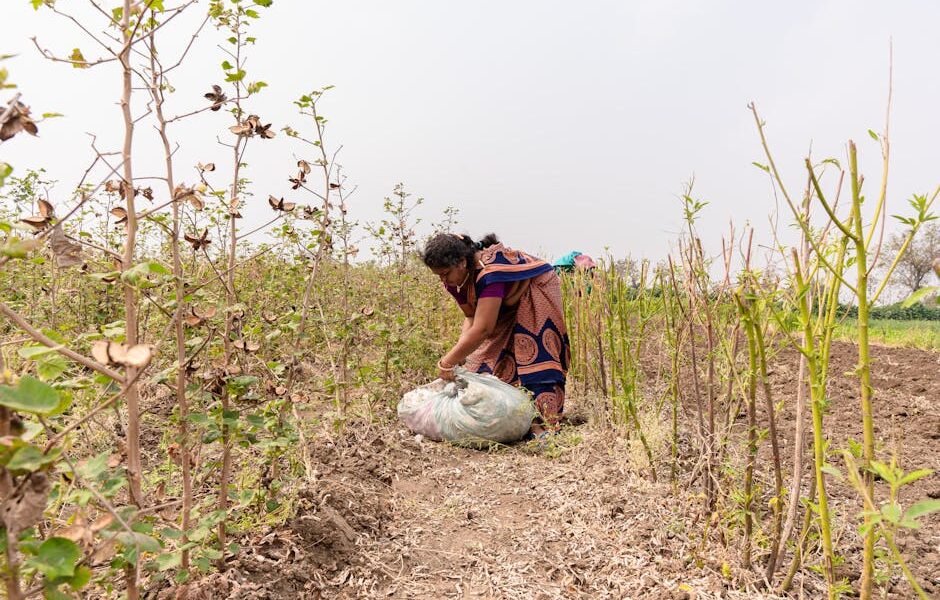
This isn’t just an abstract number. It means that a farmer deciding whether to plant wheat, corn, or grass for livestock is staring at a cost sheet that has doubled in some cases. And because fertilizer is often bought in bulk months in advance, the worst may still be ahead. The effect on food prices, experts warn, typically lags by as much as six months. That means the produce we buy this autumn may carry the hidden scars of a conflict thousands of kilometers away.
Uneven Burdens: Who Feels the Squeeze?
The pain is not being shared equally across the continent. Some countries are far more exposed than others. Ireland is a prime example. With almost no domestic fertilizer production and a heavy reliance on livestock grazing, Irish farmers depend on imports of nitrogen to keep their pastures green. In 2025, the country imported 1.7 million tonnes of fertilizer. For an Irish dairy farmer, every spike in global fertilizer prices Europe is a direct hit to their bottom line.
At the other end of the spectrum, Finland and Sweden have taken a different approach. They maintain state-backed stockpiles of fertilizer, grain, and fuel — a legacy of Cold War-era thinking that now looks prescient. Finland’s security-of-supply reserves mean that even if the Strait of Hormuz closed entirely, its farmers would still have something to spread on their fields. Sweden, fresh off joining NATO, has announced plans to expand its own “total defence” stockpiles. For them, the current crisis is not a panic; it is a drill they have been preparing for.
Meanwhile, deep divisions are emerging within the EU itself. Italy and France are calling for a pause on the bloc’s Carbon Border Adjustment Mechanism, arguing that adding a carbon levy on top of already skyrocketing fertilizer prices Europe is an unbearable burden. Poland and Germany, home to major fertilizer producers, are pushing back — they want to protect their domestic industries from cheaper imports. It is a classic Brussels tug-of-war: between environmental ambition and agricultural survival, between free trade and industrial protection.
An Original Insight: The Illusion of Cheap Food
But beyond the politics and price spikes, this crisis reveals a deeper truth that many consumers would rather ignore. For decades, Europe has enjoyed remarkably cheap food, and a big part of that cheapness came from abundant, inexpensive fertilizer made from cheap Russian and Middle Eastern gas. We built an entire agricultural system on the assumption that energy would always be affordable and that shipping lanes would always be open. That assumption is now crumbling.
The real story here is not just about fertilizer shortages — it is about the fragility of a system optimized for efficiency over resilience. We squeezed every penny out of the supply chain, and in doing so, we made it brittle. The war on Iran is not the cause of this vulnerability; it is simply the shock that exposed it. The question now is whether Europe will learn the lesson and invest in resilience — through stockpiles, domestic production, and a shift away from synthetic fertilizers toward bio-based alternatives — or whether we will patch the current crisis and wait for the next one.
What’s Being Done, and What’s Not
The European Commission has rolled out a Fertiliser Action Plan that includes emergency financial support for farmers, the suspension of import duties on some nitrogen fertilizers from countries other than Russia and Belarus, and a push for more sustainable farming practices. Commission President Ursula von der Leyen framed it as a way to build “a stronger European fertiliser industry.”
Yet for all the talk, several environmental groups have warned Brussels not to weaken nitrogen pollution rules in the name of crisis management. Nitrate runoff from over-fertilization already contaminates water supplies and costs billions in health damages. Loosening rules now could create long-term harm for short-term relief.
And then there is the human factor. Across the continent, farmers are already frustrated. They faced protests in 2024 over rising costs and green regulations. Now, with fuel and fertilizer prices Europe soaring again, that anger could easily spill into the political arena. Right-wing and populist parties, already gaining ground in several EU countries, are keen to weaponize rural discontent. The fertilizer crisis, in other words, is not just an agricultural problem — it is a political powder keg.
The Bottom Line
For now, EU officials are not predicting an immediate jump in supermarket prices. Many farmers are still using fertilizer they bought before the crisis hit. But the clock is ticking. By the time the harvest season arrives, the impact of today’s high prices will be baked into the cost of food. And for countries like Egypt, Kenya, and Bangladesh — which are far more dependent on Gulf fertilizer supplies — the situation is already dire.
Europe may be better insulated than the rest of the world, but that is cold comfort when the fuse is already lit. The war in the Gulf is not just reshaping geopolitics; it is rewriting the economics of your next meal. For more on how global conflicts impact agriculture, see our analysis of global tensions stress-testing international systems. Additionally, learn about how extreme weather is affecting farming. For authoritative data on fertilizer markets, visit the Fertilizers Europe association and the Food and Agriculture Organization.