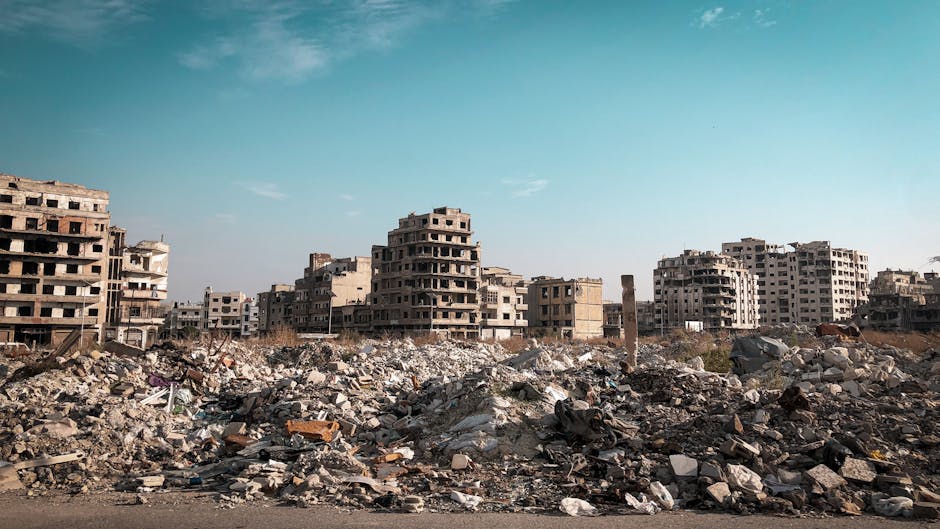
For most of the world, the war in Ukraine is understood through grainy drone footage, official statements, and disputed casualty figures. But on a recent day in the occupied city of Luhansk, Russian authorities did something unusual: they pulled back the curtain for international media, granting access to the smoldering remains of a college building struck by a Ukrainian attack. This event is a stark example of how war propaganda Ukraine shapes perceptions on both sides. The scene was devastating. Concrete floors pancaked into each other. Twisted metal and shattered glass littering what was once a classroom. Moscow claims the strike killed 21 people, framing it as a deliberate targeting of a civilian site. Ukraine, in turn, denies any such intent, asserting that the real target was an elite Russian drone command unit operating from the same vicinity. These competing narratives are more than just words — they are weapons in a broader struggle for international legitimacy and domestic morale.
War Propaganda Ukraine: A Rare Glimpse Behind Occupied Lines
Access to the front lines — let alone occupied territory — is strictly controlled by both sides. Russia’s invitation to journalists was a calculated move. By showing the physical aftermath, Moscow hopes to sway global opinion and undermine Ukraine’s claim that it only strikes military objectives. However, the visit also reveals something else: the extent to which the front line has blurred into residential and educational zones. Local residents interviewed by the visiting press offered mixed reactions. Some expressed anger at the Ukrainian military, echoing the official Russian line. Others, speaking on condition of anonymity, whispered that the building had been used as a barracks by Russian personnel in recent weeks. One elderly woman, her face wrapped in a scarf against the dust, simply said: “We just want this to end. No one cares who is right when your home is gone.”
Why the ‘Drone Command Unit’ Claim Matters
Ukraine’s assertion that the target was a drone command unit is not a minor detail. Drones have become the defining weapon of this war, responsible for surveillance, artillery correction, and precision strikes. Eliminating a command hub would be a significant tactical gain. But for the civilians living around such a hub, the distinction between a military target and a school is academic when the bombs fall. What is not being discussed in either capital is the deeper systemic issue: the deliberate co-location of military assets within civilian infrastructure. Both sides have been accused of this practice, though documentation is far more robust for Russian positions. The result is a cycle of strikes and counter-strikes that guarantees civilian casualties, each side using the resulting images to fuel its propaganda machine.
The Information War Beyond the Rubble
This single strike, one of thousands, is unlikely to change the trajectory of the war. But it offers a window into how information is being weaponized. Russia’s media tour is a bid to reclaim the narrative of victimhood after months of battlefield setbacks. Ukraine’s immediate and detailed rebuttal is a reminder that Kyiv, too, understands the power of a well-timed counter-narrative. For the average reader in New York, London, or Tokyo, the lesson is caution: trust no single source. The same building can be a “college” in one statement and a “military command post” in another. The same event can be a “deadly strike” or a “legitimate military action” depending on the website you visit. And behind every photograph lies a story that is carefully staged for a purpose far removed from simple documentation. For more on how foreign crises reshape politics, see The Ripple Effect: How Foreign Crises Are Reshaping America’s Political Landscape.
A Final, Sobering Thought
As the cameras rolled and the officials spoke in Luhansk, a small detail went largely unnoticed: the children’s drawings still taped to a surviving wall, now covered in ash. They depicted stick figures holding hands under a yellow sun. In today’s Ukraine, that sun has been replaced by the flash of a missile. Until both sides agree to stop fighting over the rubble and start rebuilding, those drawings will remain the most honest testimony of all. For a deeper look at how foreign volunteers shape Ukraine’s war effort, visit The Hidden Toll: How Foreign Volunteers Are Shaping Ukraine’s War Effort. Understanding war propaganda Ukraine requires examining multiple perspectives, including those from BBC News and Reuters.