Just months after a fragile ceasefire was negotiated, the specter of a wider conflict is once again looming over Gaza. Israeli Prime Minister Benjamin Netanyahu has ordered the military to extend its control over the coastal enclave to 70 percent, a move that has prompted rare public concern from Berlin, one of Israel’s staunchest allies. This Germany Gaza unease threatens to unravel the October truce and deepen the humanitarian catastrophe for 2.3 million Palestinians.
Germany Gaza unease: A diplomatic shift from Berlin
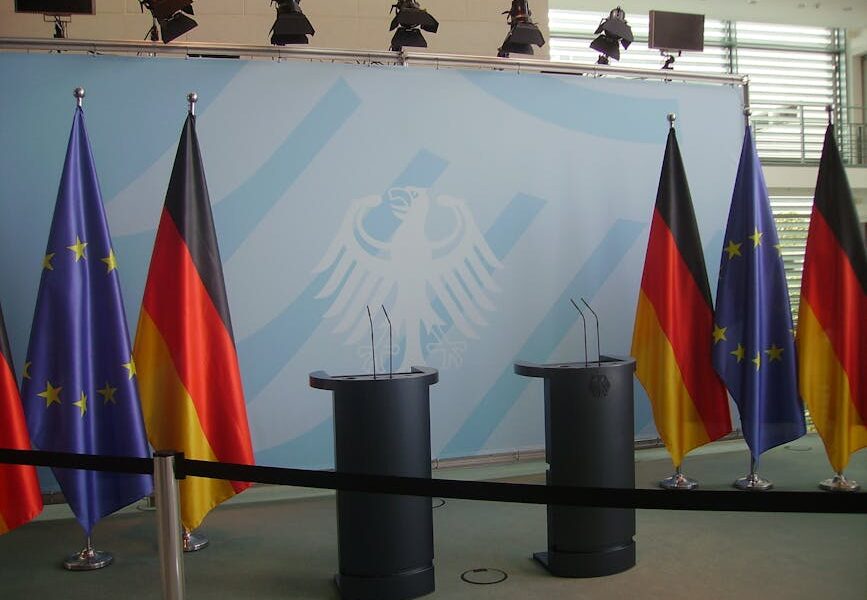
Germany, Israel’s second-largest arms supplier after the United States, has increasingly voiced unease over Israeli policy in the occupied territories. A spokesperson for the German Foreign Office stated plainly that Berlin opposes any permanent division of Gaza. This remark came directly in response to Netanyahu’s recent directive to the Israeli military, which would steadily push Israeli control from roughly 53 percent to 70 percent of the territory. The shift in tone from Berlin is significant. For decades, Germany has been a pillar of diplomatic support for Israel, but recent months have seen it openly criticize a string of actions, including the annexation of West Bank land and the imposition of the death penalty solely on Palestinians. Now, with the expansion in Gaza, German policymakers appear worried that the ceasefire is being hollowed out, piece by piece. “The nominal truce is starting to look like a mirage,” says Dr. Leila Mansour, a Middle East analyst at the European Policy Centre. “Germany’s statement is a signal that even close allies are losing patience with policies that seem to deliberately dismantle any prospect of de-escalation.”
How the ceasefire unravelled
The ceasefire brokered in October by the United States, Qatar, and Turkiye required the Israeli military to pull back behind the so-called “Yellow Line” artificial border, leaving it controlling about half of Gaza. Instead, the military has steadily expanded its footprint. Netanyahu himself acknowledged the incremental creep: “We were at fifty, we moved to sixty. Now we are at seventy. Let’s start with that. We’ll deal with the remnants.” This creeping control has fuelled Palestinian fears of permanent annexation. Some Israeli officials, including Defence Minister Israel Katz, have spoken of encouraging “voluntary emigration” from the territory. Critics dismiss the term as a euphemism, pointing to the systematic destruction of nearly all of Gaza’s infrastructure, leaving residents with little choice but to leave a place made uninhabitable by war. For context, most of Gaza’s 2.3 million people are now crammed into roughly 35 percent of the land, with no safe haven. The United Nations and the European Union have described the impact on human development as “catastrophic,” estimating that over $70 billion will be needed over the next decade just for recovery and reconstruction. More than half of hospitals are non-functional, and nearly all schools have been damaged or destroyed.
An election-driven gamble?
Netanyahu’s decision to escalate control in Gaza is not purely military; it is deeply political. Israel faces parliamentary elections in October, and the prime minister is under intense pressure from far-right coalition partners who demand a hardline stance against Hamas. Analysts argue that the expansion is partly designed to rally nationalist voters ahead of the ballot. Gareth Dale, a political analyst at Brunel University, calls Netanyahu’s move “an egregious breach of the terms of the ceasefire” that is “driven by his political concerns.” For Gaza’s civilians, he says, the results are immediate and brutal: “Already subjected to deliberately inflicted hunger, thirst and disease, on top of continued bombing, they now face a renewed round of suffering.”
What happens next?
On Friday, the Israeli military announced it had killed senior Hamas commander Imad Hassan Hussein Aslim in a strike in Gaza. Hamas has not commented on the claim. The incident underscores the fragile security situation: even as the ceasefire holds in name, active fighting continues, and the prospect of a return to full-scale war grows. For the international community, the question is whether diplomatic pressure can still compel a reversal. Germany’s objection may be just the beginning. But with no clear enforcement mechanism in the ceasefire deal, and with the United States showing little appetite to confront Israel publicly, the path ahead looks grim for Gaza’s trapped population — and for the already battered credibility of the peace process. For more on the broader context, see Israel’s Gaza Strategy Shifts Toward Permanent Military Control and Gaza Ceasefire Crumbles as Israel Expands Territorial Control. For external analysis, visit BBC Middle East and Al Jazeera Gaza.