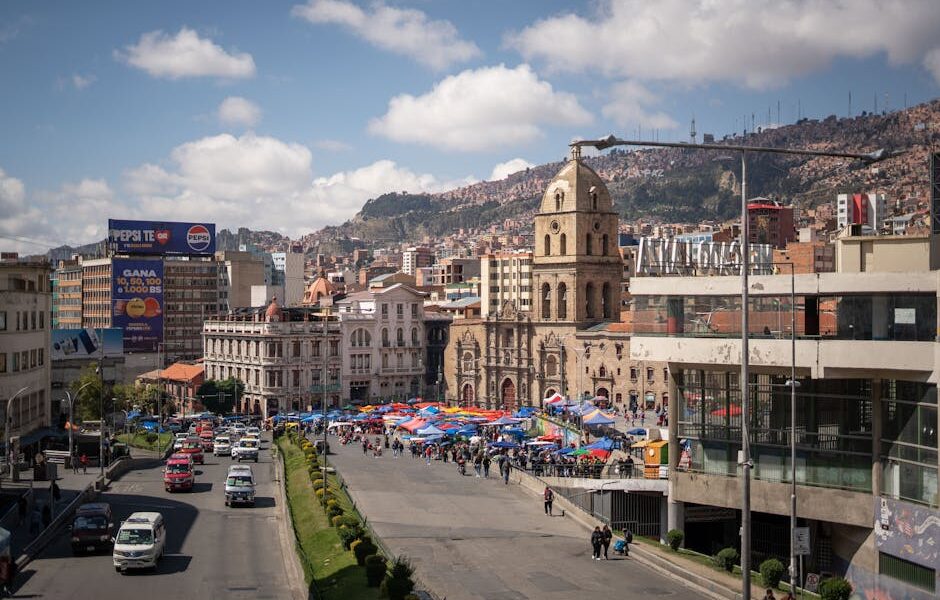
Bolivia democracy crisis is no stranger to political earthquakes, but the current standoff gripping the nation feels different. For weeks, the streets of La Paz and beyond have been filled with demonstrators, their demands echoing a deeper frustration with a system that many feel has failed them. President Rodrigo Paz, facing the most serious challenge of his tenure, has taken a hard line, warning that “time is running out” and securing the legal authority to declare a State of Emergency. But the protesters are not backing down, and the country is holding its breath.
A Crisis of Confidence, Not Just Economics: The Bolivia Democracy Crisis
At first glance, this is a conflict over bread-and-butter issues: rising costs, stagnant wages, and a perceived lack of opportunity. Bolivia, despite its vast natural gas reserves, has seen its economy struggle under the weight of global inflation and local mismanagement. The protesters, a coalition of labor unions, Indigenous groups, and middle-class professionals, argue that the government has squandered the country’s wealth. But scratch the surface, and you’ll find a deeper, more troubling crisis: a collapse of trust in democratic institutions. Paz’s move to secure emergency powers is a double-edged sword. It’s a tool to restore order, but it also risks silencing dissent at a time when dialogue is urgently needed.
The Echoes of 2019
This standoff is haunted by the ghosts of Bolivia’s recent past. In 2019, a disputed election tore the country apart, leading to the resignation of then-President Evo Morales and a violent period of instability. Many of the protesters on the streets today remember that trauma well. They see the government’s current posture as a replay of old authoritarian instincts. “We’ve seen this movie before,” one elderly demonstrator told me in a phone interview from the outskirts of Cochabamba. “They use emergency powers to scare us, but we are not scared anymore. We have nothing left to lose.” This sentiment—that the state is an adversary rather than a partner—is the core of the current impasse.
The High Cost of Inaction
While both sides dig in, the real victim is the ordinary Bolivian. Markets are running low on staple goods, transportation is disrupted, and a sense of uncertainty hangs over daily life. The government warns of economic collapse if the protests continue. The protesters counter that economic collapse has already arrived for many. The truth is more nuanced: Bolivia’s economy was fragile before this began, and every day of deadlock makes recovery harder. What’s missing from the headlines is the human toll—the shopkeeper whose sales have dried up, the nurse who can’t get to work, the student whose exams are delayed indefinitely. These are the people caught between a government that feels cornered and a protest movement that feels betrayed.
A Fresh Perspective: The Unseen Power Broker
Here is what the mainstream news coverage often misses: the quiet role of Bolivia’s military and its regional allies. The armed forces, which have historically acted as arbiters during moments of crisis, are watching from the sidelines. Their loyalty is not guaranteed. President Paz’s emergency declaration likely required behind-the-scenes assurances from top generals that they will not intervene on the protesters’ behalf. But if the standoff pushes into its second month, the military may feel compelled to act—not necessarily to crush the protests, but to broker a face-saving exit. Meanwhile, neighboring countries like Argentina and Peru are nervously eyeing the chaos. A destabilized Bolivia could send shockwaves through the region, disrupting energy trade and fueling migration. The international community has been muted, but that may change if the crisis escalates into violence.
What Comes Next?
The clock is ticking. President Paz has a limited window to use his emergency powers effectively before they become a sign of weakness rather than strength. The protesters, for their part, need a clear endgame beyond general anger. Historically, Bolivia’s most successful social movements have been those that combined street power with concrete demands and a willingness to negotiate. Right now, the demand for Paz’s resignation is a red line that makes compromise nearly impossible. A more realistic path might involve a power-sharing agreement or the appointment of a neutral mediator.
For the reader sitting comfortably thousands of miles away, it’s easy to see Bolivia as just another headline from the “troubled” south. But the country’s struggles are a mirror for democratic nations everywhere. When trust evaporates, institutions tremble. When dialogue stops, the streets fill. Bolivia is a warning—not of economic collapse, but of the fragile nature of democratic peace. Whether it learns from its own history remains to be seen. For more on regional instability, see our analysis of the Quad’s Identity Crisis. External sources: BBC Latin America and International Crisis Group.