During his first term, Donald Trump treated the Western Hemisphere like a chessboard where he was always trying to flip the board over. He threatened to pull out of NAFTA, berated NATO allies, and levied tariffs on China. But one quiet, steady pressure point was almost entirely personal: Cuba. Now, as the former president eyes a potential return to the White House, the question isn’t whether he’ll resume his hardline stance—it’s how far he’ll go in dismantling the legacy of the Obama-era opening, and at what cost to ordinary Cubans and U.S. businesses.
A Reversal Already in Motion
It’s easy to forget that before Trump took office in 2017, the U.S. and Cuba were cautiously thawing. Americans could fly commercial flights to Havana, cruise ships docked in Cuban ports, and the iconic embargo—the longest trade restriction in modern history—had been loosened enough to allow Americans to bring back Cuban rum and cigars. The Trump administration hit the brakes hard. By 2019, it had banned cruise travel, slashed family remittances, and expanded the embargo to target even small, private Cuban enterprises. These weren’t just political stunts; they were policy shifts that choked Cuba’s nascent private sector—the very engine that could have eventually liberalized the economy.
Why Cuba, Why Now?
The strategic logic is tangled. On one hand, Cuba’s relevance to U.S. national security is minimal compared to Venezuela, North Korea, or Iran. On the other hand, the island remains a potent symbol in Miami-Dade County, a crucial swing-voting demographic in Florida. For a candidate who needs every electoral vote in the Sunbelt, a tough-on-Castro line is a proven applause line. But the deeper motive may be ideological: Trump and his advisors view the 2014 détente as a betrayal of U.S. leverage, a naive gift to a regime that hasn’t held free elections in decades. The former president has made no secret of his belief that negotiations with adversaries are a sign of weakness—even when those negotiations are about easing travel restrictions for U.S. citizens.
The Human Cost of Squeezing the Island
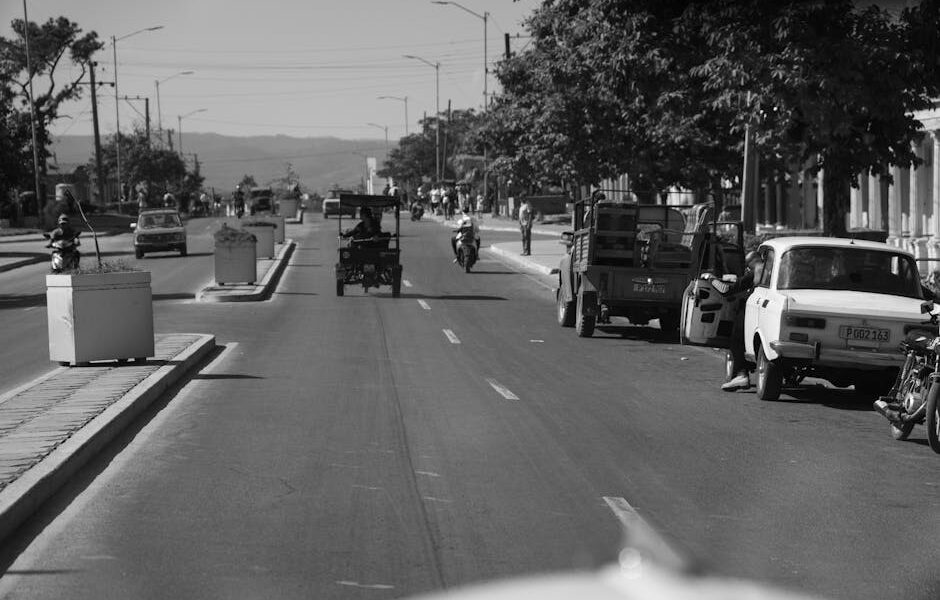
Cuba’s economy is already reeling from COVID-19, a collapsing tourism sector, and the exodus of thousands of skilled workers. The Biden administration, while keeping Trump’s sanctions largely in place, has restored some remittances and family travel. But a new Trump presidency could mean not just a freeze, but a deep freeze. U.S. sanctions on fuel imports, for example, have already caused rolling blackouts in Havana and Santiago. Tightening them further would push more Cubans toward the Darien Gap—a perilous jungle route toward a U.S. border that Trump insists on closing. The irony is palpable: a policy meant to destabilize the Castro regime would primarily hurt the very people the U.S. claims to champion.
The deeper, uncomfortable truth is that U.S. policy toward Cuba has often been a proxy for domestic political battles. The Cuban-American vote, once monolithic, is now split between older exiles who want regime change and younger Cuban-Americans who favor engagement. Trump’s hardline stance, while popular in Little Havana, alienates a growing population of Cuban-Americans who visit family on the island and send money home. This generational chasm could become a liability if Trump overplays his hand—especially if his sanctions inadvertently help the regime by strangling the independent sector it fears most.
What a Second Term Could Look Like
Should Trump return to power, expect the following likely moves:
- Reinstatement of the ‘wet foot, dry foot’ policy—or a tougher version—to deter Cuban migrants while simultaneously blaming them for a border crisis.
- A total ban on remittances, even to private businesses like bed-and-breakfasts and restaurants that operate outside state control.
- Sanctions on third-party countries that continue to trade with Cuba, especially on oil shipments from Venezuela, Russia, or Mexico.
- Raising the threshold for ‘national interest’ waivers currently used by telecom and agribusiness companies, effectively killing the remaining legal economic ties.
These measures would create a bizarre paradox: the U.S. would be actively undermining the very private sector its own government-funded agencies (like USAID) spent years trying to cultivate. It’s a classic example of the left hand not talking to the right—or, more accurately, the left hand being tied behind its back by foreign policy dogma.
The Bigger Picture: Latin America Watches
Beyond Cuba’s shores, Trump’s actions send a message to the entire region. When the world’s largest economy punishes a small Caribbean neighbor for its political system, it doesn’t look like principled diplomacy; it looks like bullying. Countries like Colombia, Brazil, and Argentina, all of which have cautious relations with Cuba, may view a Trump restoration as an invitation to pursue their own independent policies, further fracturing U.S. influence in the hemisphere. The irony, of course, is that China and Russia are already filling the void left by U.S. disengagement. Russia has upgraded its naval facilities in Havana; China is lending billions to maintain Cuba’s crumbling infrastructure. A second Trump term, with its instinctive isolationism and unpredictable tariffs, could accelerate that trend, leaving Cuba as a temporary trophy—and a long-term strategic loss.
For ordinary Cubans, the calculus is brutally simple. They don’t have the luxury of watching cable news or debating foreign policy theories. They live with the reality of empty shelves, exorbitant black-market prices, and the daily decision of whether to stay or flee. The next election in the United States will, as always, be decided by Americans. But its ripple effects will be felt most acutely on an island that has been waiting for sixty years for a policy that actually works—not just one that plays well in a campaign speech.