On a stage in Geneva this week, during the World Health Assembly’s high-level welcome, the global health community paused to honor four individuals whose names may not be household words, but whose work has reshaped the lives of millions. The Director-General of the World Health Organization, Dr Tedros Adhanom Ghebreyesus, presented the Award for Global Health, an honor established in 2019 to recognize lifetime contributions that go beyond the laboratory or the hospital ward. What links these four laureates is not just their expertise, but a shared refusal to accept the world as it is.
The quiet architect of global vaccination
Dr Tore Godal, a Norwegian physician and researcher, is often described as the quiet architect behind some of the most ambitious public health initiatives of the last three decades. He was instrumental in creating Gavi, the Vaccine Alliance, which has immunized hundreds of millions of children; he helped launch Roll Back Malaria; and he co-founded CEPI, the Coalition for Epidemic Preparedness Innovations. But his earlier work in the fight against neglected tropical diseases is just as striking. By expanding community-based distribution of ivermectin, Dr Godal helped protect entire populations in Africa from river blindness, turning a scientific insight into a practical, low-cost intervention that saved sight and lives. His career is a masterclass in how to translate research into action at scale.
Eliminating diseases across borders
Dr Merceline Dahl-Regis, from the Bahamas, has spent decades proving that disease elimination is not a pipe dream. She was a key figure in the Americas becoming the first region in the world to eliminate measles and rubella—a milestone that required not just vaccines but tireless community engagement and cross-border political will. Her advocacy also helped push forward the Dual Elimination Initiative, which targeted mother-to-child transmission of syphilis and HIV across the Americas. What stands out about Dr Dahl-Regis is her insistence that public health must be holistic: you cannot separate a child’s vaccination status from the social conditions in which that child lives.
The crisis manager who never flinched
When the world needed someone to coordinate the response to SARS, cholera, Ebola, polio, and finally the COVID-19 pandemic, Dr Mike Ryan was the person at the helm of WHO’s Health Emergencies Programme. As a co-founder of the Global Outbreak Alert and Response Network (GOARN), he helped design the very systems that detect and contain epidemics at their source. Dr Ryan’s leadership has been tested in some of the most dangerous environments on Earth—conflict zones, refugee camps, and remote villages—and he has consistently prioritized the most vulnerable. His calm, data-driven approach during the worst of COVID-19 briefings became a touchstone for millions watching at home. Yet his greatest legacy may be the network of responders he trained to act when the next crisis inevitably arrives.
A surgeon who saw beyond the wound
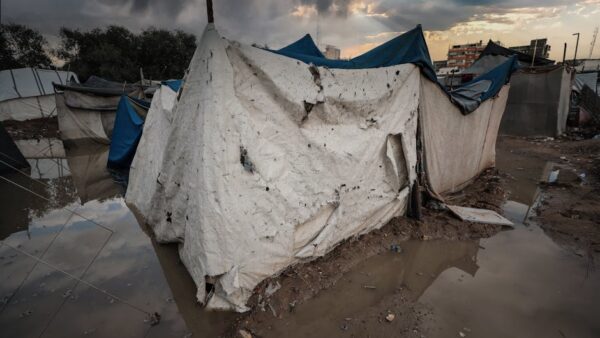
Dr Heba El Sewedy represents a different kind of global health leadership: one rooted in compassion and the dignity of survivors. Through the Ahl Masr Foundation, which she founded in Egypt in 2013, she pioneered an integrated approach to treating trauma and burn injuries—addressing not only the physical scars but the psychological and social reintegration of survivors. Her foundation’s work extended to providing humanitarian aid during the Gaza conflict, offering medical and mental health support where it was desperately needed. Dr El Sewedy’s model shows that people-centered care is not just a slogan; it is a discipline that requires building trust, listening to communities, and refusing to treat patients as statistics.
The bigger picture: why these awards matter now
The theme of this year’s World Health Assembly is “Reshaping global health: a shared responsibility.” That phrase can sound like bureaucratic jargon, but the four awardees give it concrete meaning. They represent a spectrum of approaches—from vaccine diplomacy to emergency response to holistic trauma care—that defy the old assumption that health is simply a matter of doctors and pills. What is striking is that each laureate succeeded by working across sectors: Godal with governments and philanthropists, Dahl-Regis with regional bodies and communities, Ryan with emergency responders and scientists, El Sewedy with NGOs and local healers.
In an era of rising distrust in public institutions, these four stories offer a counter-narrative. They show that global health progress is not inevitable; it is built by people who refuse to accept indifference. The awards also serve as a reminder that the next generation of public health advocates—perhaps some who are still in school today—will need more than technical training. They will need the courage to demand equity, the humility to listen to communities, and the stubbornness to keep going when the world looks away.
The Director-General’s Awards for Global Health, now in their seventh year, are not a retirement gift. They are a torch passed from one generation of leaders to the next—a signal that the work is far from finished.