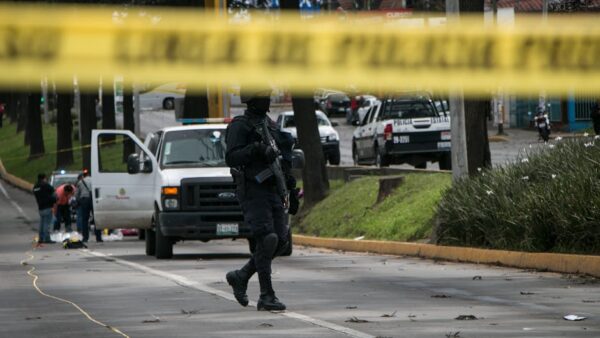
In the eastern reaches of the Democratic Republic of the Congo, a plume of smoke rising over a treatment center told a story far more complex than a simple act of arson. When a group of young men in Rwampara, Ituri province, set fire to an Ebola clinic last Thursday, they were not just destroying a building—they were giving violent expression to a deep, simmering distrust that has plagued outbreak response efforts for years. The immediate trigger: authorities refused to release the body of a local man, a suspected Ebola victim, for a traditional funeral.
When Public Health Meets Ancient Ritual
At the heart of this tragedy lies a fundamental clash between life-saving science and deeply held cultural practices. Ebola corpses remain highly contagious, and international health protocols demand that burials be handled by teams in full protective gear, with no washing or touching of the body—a direct contradiction of many local funeral rites, which involve intimate contact and large gatherings. To families already grieving, these measures feel less like protection and more like theft of their loved one’s dignity. “All bodies must be buried according to the regulations,” insisted Deputy Senior Commissioner Jean Claude Mukendi, head of public security in Ituri province. But for those who watched their friend’s body disappear behind the clinic’s walls, the rules felt punitive, not preventive.
Witnesses reported that police tried to intervene but were overwhelmed. The attackers broke in, torched tents, and destroyed a body that was awaiting burial. Staff fled as the facility burned. Six patients were later transferred to a hospital, and the humanitarian group ALIMA said operations eventually resumed. But the damage—both physical and psychological—is likely to linger.
A Volatile Cocktail: Displacement, Disinformation, and a Spreading Virus
This is not an isolated incident. Eastern DRC is a powder keg: a region scarred by decades of armed conflict, mass displacement, and weak governance. The current Ebola outbreak—the 17th to hit the country—has already claimed 148 suspected deaths and nearly 600 suspected cases, with at least one death reported in neighboring Uganda. The World Health Organization has declared it a public health emergency of international concern, warning that violence and community mistrust are allowing the virus to slip through the cracks. During the 2018–2020 outbreak in nearby North Kivu, the second-deadliest on record, hundreds of health facilities were attacked. The pattern is tragically predictable.
Misinformation adds fuel to the fire. Rumors that health workers are stealing organs, that the virus is a hoax, or that treatment centers are places of death rather than healing have circulated for years. Each burning clinic, each angry confrontation, deepens the cycle: communities reject outside help, the virus spreads, and stricter measures breed more resentment. The WHO has acknowledged that the true scale of this outbreak is likely far larger than official figures suggest.
What the Fire Didn’t Destroy
While the flames consumed tents, equipment, and a body, they could not erase a crucial truth: the only way to stop Ebola is through trust, not just bleach and thermometers. Health workers in Ituri are now trying to rebuild that trust from the ashes. Local leaders, religious figures, and even survivors are being enlisted to explain why safe burials matter, and to negotiate compromises—such as allowing families to view the body from a distance or participate in supervised ceremonies. But these efforts require time, patience, and resources that are in desperately short supply in a region where people are already fighting for their survival.
The attack in Rwampara is a stark reminder that a vaccine or a treatment protocol is useless if the people it is meant to protect do not believe in it. The real battle against Ebola is not just medical—it is a battle for credibility, for empathy, and for the willingness to see the outbreak through the eyes of those who fear the cure almost as much as the disease.