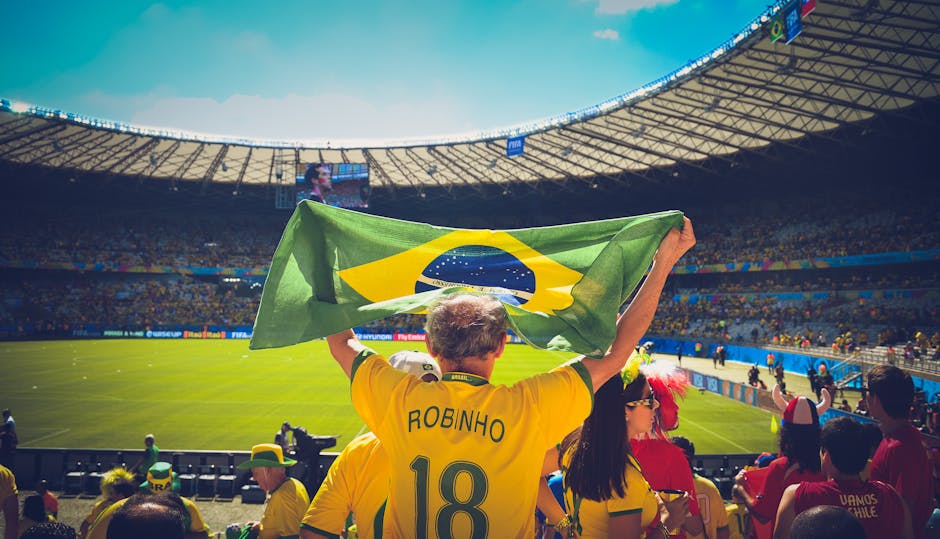
The FIFA World Cup is more than a tournament; it is a crucible that forges heroes from mere mortals. Every four years, billions watch as a select few transcend the game, becoming symbols of national pride, resilience, and artistry. But what truly separates a great player from an all-time legend? It is not merely the shiny gold medal around their neck, but the indelible mark they leave on the sport’s soul.
As we approach the 2026 World Cup, it is worth examining not just the statistics of the immortals, but the stories behind them. The players who top the all-time lists often share a common thread — a blend of raw talent, unbreakable will, and a touch of the extraordinary that makes their journey feel almost mythological.
The Architects of Beauty and Chaos
Consider the likes of Johan Cruyff and Ferenc Puskas. Cruyff didn’t just play football; he reimagined it. His interpretation of Total Football was a philosophical shift, treating the pitch as a canvas for geometric precision and fluid movement. Puskas, the captain of Hungary’s legendary ‘Mighty Magyars’, led a team that lost only one match in an entire decade — the 1954 World Cup final, a result that still stings for a nation that defined an era. These men didn’t just win games; they changed how the game is understood.
On the other end of the spectrum, you have Diego Maradona and Zinedine Zidane, whose careers were symphonies of brilliance punctuated by moments of beautiful chaos. Maradona’s 1986 run, including the ‘Hand of God’ and the greatest solo goal in history, was a one-man takeover of the world’s biggest stage. Zidane, meanwhile, gave us the poetry of his volley in the 2002 Champions League final and the tragedy of his headbutt in the 2006 World Cup final. Flawed, brilliant, and deeply human — these are the stories that keep fans arguing in pubs for decades.
The Quiet Giants and the New Records
Not every legend wears a cape of flamboyance. Some, like Miroslav Klose and Jimmy Greaves, built their legacies on consistency and grace. Klose, the all-time leading World Cup goalscorer with 16 goals, is a study in humility. He famously refused a wrongly-awarded penalty during a club match because he believed in fair play. Greaves, the beloved English poacher, was adored not just for his six hat-tricks for his country, but for rescuing a stray dog during a World Cup match — a moment of spontaneity that endeared him to millions.
Then there are the leaders who defined dynasties. Franz Beckenbauer and Lothar Matthaus are the twin pillars of German football dominance. Beckenbauer won the World Cup as a player and a manager, a feat matched by only two others. Matthaus, known for his box-to-box power, played in five World Cups and holds the record for most matches in the tournament (25). Even Maradona called him the toughest opponent he ever faced. These are the players who built the myth of German efficiency and resilience.
And of course, Ronaldo Nazário — ‘The Phenomenon’ — who reinvented the striker’s role. His 15 World Cup goals, his explosive speed, and his ability to juggle the ball past defenders made him a global icon. His convulsive fit hours before the 1998 final added a layer of tragedy to his narrative, but his 2002 redemption, scoring twice in the final, cemented his place among the gods.
A Broader Insight: The Global Stage as a Leveler
What is often missed in the debate over who is ‘best’ is the unique democratic nature of the World Cup itself. Unlike club football, where money and global scouting networks can skew the odds, the World Cup is the great leveler. It is the one stage where a boy from the favelas of Rio, a girl from a refugee camp, or a kid kicking a ball in a Nairobi slum can stand equal to a prince from a European football academy. This universality is what makes the World Cup legends so powerful. They are not just athletes; they are proof that talent, when paired with opportunity and grit, can rewrite destiny. The 2026 tournament, hosted across North America, promises to add another chapter to this ongoing story, where new heroes will emerge from unheard-of places.
The Enduring Debate
Ultimately, any list of the ten greatest World Cup players is a conversation starter, not a conclusion. Pele, Maradona, Zidane, Cruyff, Beckenbauer — these names are contested, but their impact is not. They represent different eras, different styles, and different definitions of greatness. Some won with flair, others with grit. Some were conductors, others were generals. But all of them, in their own way, gave us moments that suspended time.
As we gear up for 2026, the question remains: who will be the next immortal? The answer lies not just in the goals they score, but in the stories they leave behind.