On a quiet Thursday that began with hope—a racing champion hospitalized but expected to fight—news tore through the motorsports world with the force of a high-speed wreck. Kyle Busch, the two-time NASCAR Cup Series champion known for his fiery temper and relentless pursuit of victory, had died. He was 41 years old. The announcement, jointly issued by his family, Richard Childress Racing, and NASCAR itself, offered no cause of death, only a void that will reverberate for years.
A Legacy Defined by Records, Rivalries, and Redemption
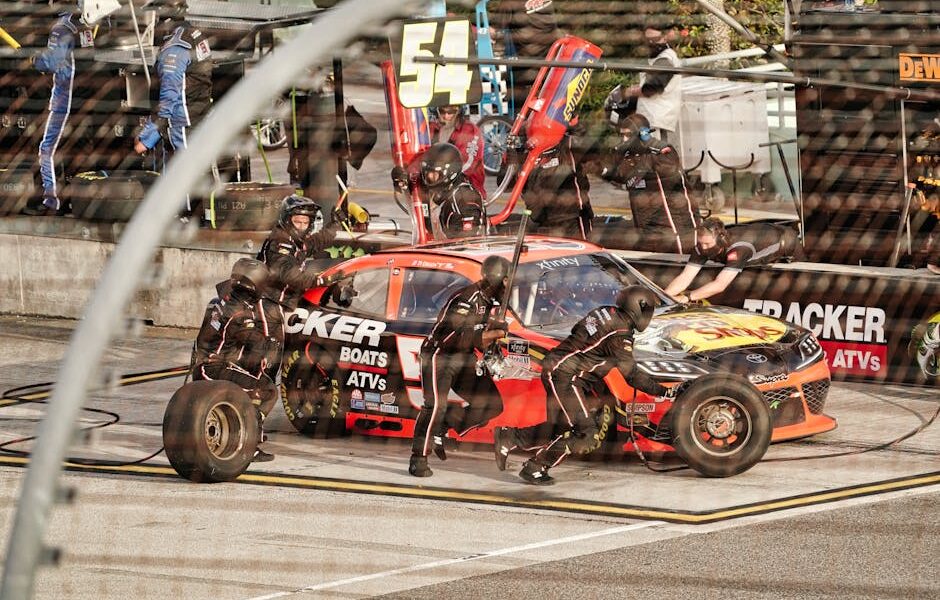
Busch wasn’t just a driver; he was a generational lightning rod. His 63 Cup Series wins placed him ninth on the all-time list, but his influence stretched far beyond the trophy case. He owned a Truck Series team, nurturing young talent, and cultivated a fanbase—the proudly named “Rowdy Nation”—that loved him for his unapologetic edge. From his early days as a brash newcomer to his role as a seasoned veteran, Busch’s career arc tracks the evolution of modern NASCAR itself: louder, faster, and more personal than ever before.
At the time of his passing, Busch was in his 22nd full-time season. He had been scheduled to compete in the Coca-Cola 600 at Charlotte Motor Speedway over the Memorial Day weekend—a race he’d won before. But on Thursday, his family revealed he had been hospitalized with a severe illness. Hours later, the tone shifted from concern to grief.
An Unfinished Chapter
What makes Busch’s death so staggering is not just the suddenness, but the sense of interruption. Here was a competitor still sharp, still winning, still planning. His joint statement from NASCAR called him “a future Hall of Famer” and a “giant of the sport.” But giants aren’t supposed to fall mid-race. The tragedy leaves a gap in the schedule—no driver to fill his seat, no final lap to cheer.
The racing community responded with raw disbelief. Denny Hamlin, Busch’s former teammate, wrote on social media: “Absolutely cannot comprehend this news. We just need to think of his family during this time. We love you KB.” Brad Keselowski called it “absolute shock,” and Dale Earnhardt Jr., who once famously clashed with Busch, issued a poignant statement revealing that it was Busch himself who bridged their rift over coffee in his motor coach. “My heart is broken,” Earnhardt Jr. said. “I will never be able to make sense of this loss.”
Beyond the Finish Line: What This Loss Means Off the Track
Busch’s death forces the sport to confront an uncomfortable question: How well do we really know the people we cheer for? His public persona was honed in victory lane and on pit road—shouting, shoving, grinning under a firesuit. But behind that blunt exterior was a man who, according to those closest, initiated conversations about reconciliation and helped shape the next generation of drivers. His family surviving him—his parents, wife, and two young children—now carries a private sorrow we can only imagine.
The loss also spotlights the physical and mental toll of racing at the elite level. While no cause of death was given, the fact that a seemingly healthy 41-year-old athlete could be felled so suddenly raises uncomfortable questions about the unseen burdens these drivers carry. As the sport prepares to run the Coca-Cola 600 without him, the silence in the stands will say more than any roar could.
What Comes Next for the Rowdy Nation?
In the days ahead, NASCAR will honor its fallen champion. Tracks will observe a moment of silence. Fans will leave flowers and die-cast cars at gate entrances. But the true legacy of Kyle Busch is not in the ceremonies—it’s in the bumper-to-bumper battles he waged and the emotional connection he forged with millions. He made people care, even when they booed him. And in a sport that thrives on passion, that might be the most enduring victory of all.
Busch leaves behind not just a season incomplete, but a story that will now be told by those who race on. His rivals, his fans, his family—they’re all left to navigate a track with no guardrails, no pace car, and no number 8 car in the rearview mirror. The green flag may wave again this weekend, but for the first time in over two decades, the circuit will feel a degree slower.