A Warning from the Peace Frontlines
When a veteran diplomat who has spent years navigating the minefield of Middle East peace talks warns that a bad situation is about to become permanent, it is worth pausing the daily scroll. This week, Nickolay Mladenov — the high representative for the US-founded Board of Peace for Gaza — did exactly that before the United Nations Security Council. His message was blunt: Gaza is not merely stuck; it is calcifying into a divided, desolate reality that could last for a generation.
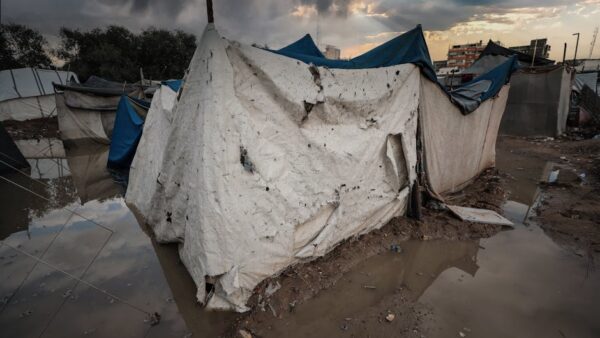
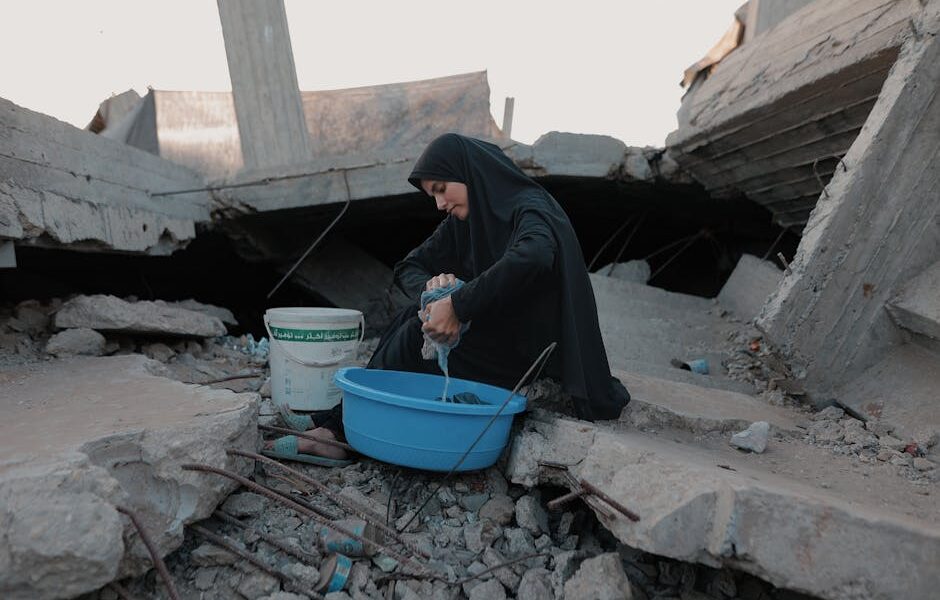
Mladenov did not mince words. He described a scenario where Hamas retains military control over a shrinking strip of land, where two million people exist in rubble, reliant on erratic aid shipments, and where no meaningful reconstruction begins — because, as he put it, “reconstruction financing will not follow where weapons have not been laid down.” The result, he warned, is a population left with nothing but despair, growing up in tents, with fear as their most rational emotion.
The Ceasefire That Isn’t Quite One
Let’s look at the timeline. The war that erupted after the October 7, 2023 attacks by Hamas on southern Israel eventually wound down into a ceasefire in October 2025. More than 72,775 Palestinians have lost their lives in the conflict. Since that ceasefire, however, Israeli military operations have not fully stopped. Drone strikes, like the one that killed a 26-year-old in Deir el-Balah this week, continue. Monitors report that Israeli bombardment has actually accelerated since a separate ceasefire was reached in the US-Israel conflict with Iran last month. Simultaneously, settler violence in the occupied West Bank is on the rise.
So what exactly did the ceasefire achieve? In theory, a phased process: disarmament of Hamas, a gradual pullback of Israeli forces from more than half of Gaza, and a panel of Palestinian technocrats to take over governance. An international stabilisation force was also envisioned. But in practice, the transition to phase two has stalled — and the world’s attention has shifted dramatically to the global energy crisis ignited by the war with Iran.
The Trap of a Divided Gaza
Mladenov’s central point is that this limbo is not a holding pattern — it is a trap. The longer both sides fail to move, the more the status quo hardens. Israel continues to maintain a strict security regime and has not fully withdrawn from large areas. Hamas, meanwhile, still holds weapons and administrative control over about half of Gaza. The result is a fractured territory: one part under military siege, another under militant governance, and millions of civilians caught in the middle.
The diplomat urged the Security Council to press both parties — not just one. “The implementation cannot advance through Palestinian obligations alone,” he said, noting that Israeli restrictions on humanitarian flows and continuing killings are not “abstract issues.” It was a rare moment of balanced accountability in a forum often paralysed by geopolitical alignments.
Why This Is Different: A New Kind of Stalemate
Here is what the official briefings often miss. This is not the familiar, weary cycle of Israeli-Palestinian conflict. What is unfolding now is a post-war stalemate with no endgame architecture. In previous rounds, international mediators could at least point to a roadmap — the Oslo Accords, the Roadmap for Peace, even the Abraham Accords. Today, there is no credible political horizon. The US-backed Board of Peace was meant to fill that void, but it is now operating in a vacuum as global crises multiply.
The deeper tragedy is that both sides have incentives to not move forward. For Israeli hardliners, the current arrangement allows them to maintain security control without making territorial concessions. For Hamas, remaining armed is a guarantee of relevance, even if the price is the suffering of the people they claim to govern. Meanwhile, the international community — distracted by energy prices, the war in Iran, and domestic turmoil — is content to let Gaza fester.
This is the definition of a “permanent” crisis: not a resolution, but an accommodation of misery. Mladenov’s warning is that if the world does not act now, the temporary will become the forever.
What Needs to Happen — and Why It Probably Won’t
The roadmap Mladenov presented is clear in its demands: Hamas must disarm, Israel must honour its ceasefire commitments, and a credible Palestinian governance body must take over. But the political will is absent. The US is consumed elsewhere. The EU is fractured. Arab states are wary of stepping in without a clear Israeli commitment to a two-state solution.
What remains is a humanitarian catastrophe in slow motion. Even if fighting stops completely, the question of who governs Gaza, who pays for its reconstruction, and who protects its civilians remains unanswered. Until those questions are addressed, the children Mladenov spoke of will inherit not a future, but a tent.
The Stakes for the Region
The West Bank is already boiling over. A new generation of Palestinians sees no peaceful path forward. If Gaza remains a permanent cage, the entire region should fear the consequences — not just for humanitarian reasons, but for the security of Israel and its neighbours. Despair, as Mladenov noted, makes violence rational in the minds of those who have lost everything.
The message to the Security Council was clear: use every tool available to push for a real peace. But the real question is whether anyone is still listening.