A Rocket Grounded, Investors Waiting
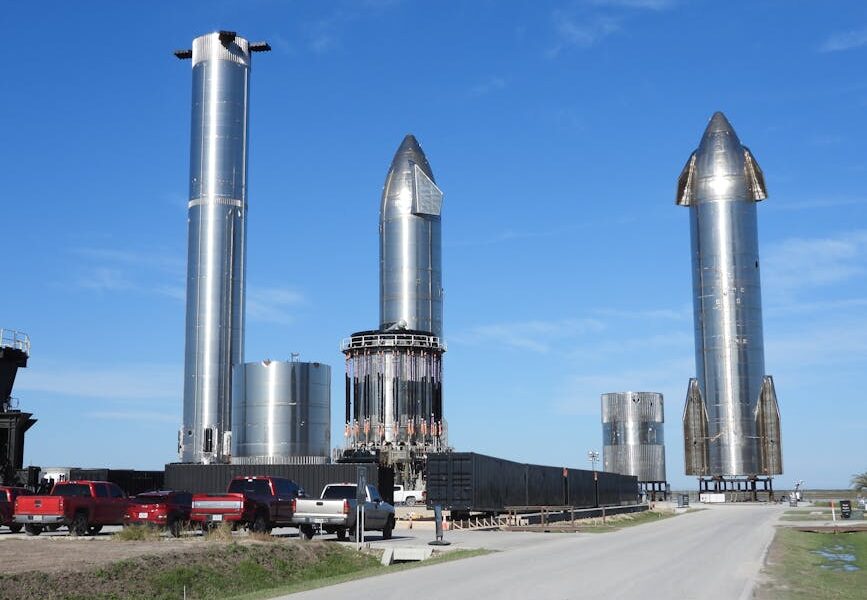
A last-minute mechanical glitch has grounded SpaceX’s next-generation Starship rocket, pushing back what was meant to be a triumphant test flight ahead of one of the most anticipated public offerings in Wall Street history. The delay, attributed to a faulty hydraulic pin in the launch tower, may seem like a minor hiccup. But for a company poised to redefine both space travel and the stock market, every setback carries outsized weight.
Elon Musk confirmed on social media that engineers are working through the night to resolve the issue, with a fresh attempt now targeted for Friday evening. The uncrewed launch of the Starship V3—dubbed the most powerful rocket ever built—was already seen as a crucial proof-of-concept. Now it also serves as a high-stakes preview for investors who will soon be able to buy shares in the private aerospace giant.
The Trillion-Dollar Man
SpaceX’s impending initial public offering on the Nasdaq, expected to begin next month under the ticker SPCX, is projected to be the largest in American financial history. The company values itself at a staggering $1.25 trillion, and Musk’s majority stake could push his personal net worth past the trillion-dollar threshold—a milestone no human has ever reached. Already the wealthiest person on Earth, Musk’s fortune last year exceeded $500 billion, largely fueled by Tesla’s electric vehicle boom.
But this isn’t just another stock listing. SpaceX is not a typical aerospace contractor. It operates a growing satellite internet network called Starlink, owns the controversial artificial intelligence firm xAI, and now wants to turn Starship into a commercial cargo hauler capable of ferrying 100 metric tons to orbit. The IPO prospectus frames Starship as the centerpiece of this vision: a vehicle designed for rapid reuse, lunar missions for NASA, and eventually Mars colonization.
The Numbers Behind the Ambition
Behind the grand promises lies a more sobering reality. SpaceX has poured more than $15 billion into the Starship program to date, according to its IPO filing. While the company generated $18.6 billion in revenue last year, it posted a net loss of $4.9 billion. In the first quarter of this year alone, losses reached $4.3 billion on sales of $4.7 billion. That pattern—burning cash while scaling operations—is familiar to investors who watched Tesla’s early years, but it still raises questions about how long SpaceX can sustain such losses without clear profitability.
The filing describes Starship V3 as capable of lifting 100 metric tons to low Earth orbit, with future versions designed to double that capacity. But as any aerospace engineer will tell you, there is a vast gap between a rocket’s design specs on paper and its performance on the launchpad. The hydraulic pin failure is a reminder that even the most ambitious hardware is vulnerable to simple mechanical faults.
Broader Implications: Space as a Market
The delay also spotlights a deeper tension in the modern space industry. Governments and private companies alike are racing to lower launch costs, but the financial model remains speculative. Starlink, which now serves hundreds of thousands of subscribers, is frequently cited as SpaceX’s cash cow. Yet the cost of deploying thousands of satellites—and replacing them every five to seven years—eats into those profits. Meanwhile, competitors like Amazon’s Project Kuiper and international players such as China’s rocket startups are closing the gap.
What makes SpaceX’s bet on Starship truly transformative is not just the rocket’s power, but its cost-per-kilogram. If the vehicle can be reused rapidly, as Musk promises, it could undercut every existing launch provider. That would open up markets that currently don’t exist: orbital manufacturing, space tourism, asteroid mining, and beyond. The IPO is essentially a wager that these markets will materialize within the next decade. For now, investors are watching a hydraulic pin, waiting to see if the machine can fly.
What This Means for Everyday Investors
For ordinary people, the SpaceX IPO is both an opportunity and a risk. The stock will likely be volatile, driven by each launch success or failure. Musk’s personal style—his social media outbursts, his political tangles, his ownership of multiple high-risk companies—adds another layer of unpredictability. Unlike traditional automakers or aerospace giants, SpaceX doesn’t have a century of incremental progress behind it. It has one charismatic founder and a rocket that hasn’t yet reached orbit.
Still, the allure of being part of history is powerful. If Starship flies, and if the IPO goes as planned, investors could see returns that dwarf those of Google or Amazon in their early days. But if the test flight fails—or if the mechanical delays become a pattern—the market’s mood could shift overnight. For now, all eyes are on a launchpad in Boca Chica, Texas, where engineers wrestle with a pin and where the future of space commerce hangs in the balance.