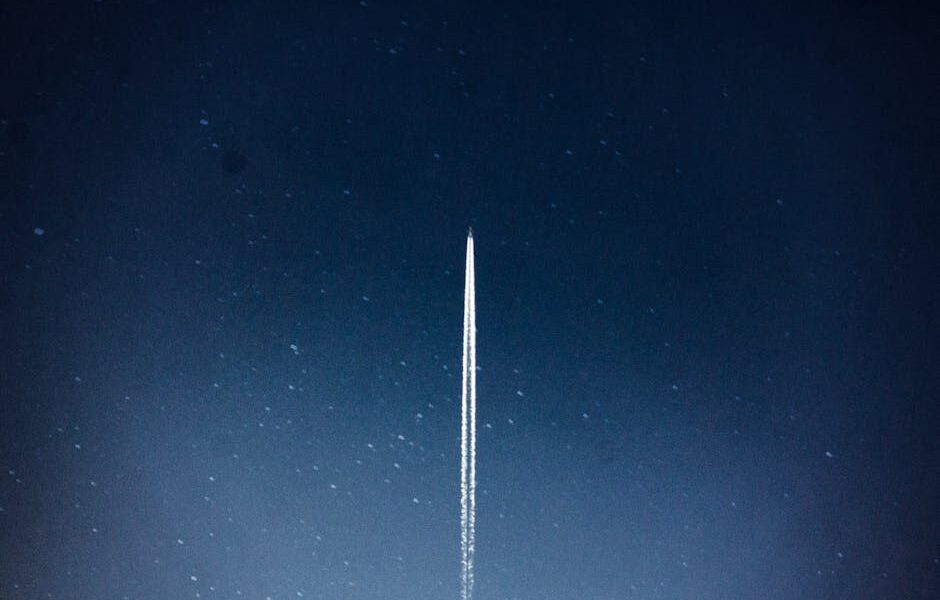
When the world’s largest rocket finally tore through the Texas sky on Friday afternoon, the cheers from mission control masked a more complicated story. The Starship V3 — standing 124 meters tall, the most powerful launch vehicle ever built — did something remarkable. It also did something quite imperfect. And for anyone following the methodical, chaotic, brilliant march of spaceflight, that imperfection is the real news.
The flight began after a 24-hour delay, scrubbed Thursday by a finicky hydraulic pin in the launch tower. That kind of hiccup is almost routine at this point in SpaceX’s playbook; the company has built its reputation on breaking things, fixing them, and flying again. But even by those standards, Friday’s test was a rollercoaster.
An Engine Failure That Wasn’t a Failure
About eight minutes into the flight, one of Starship’s six engines shut down prematurely. The remaining engines burned longer to compensate, and the vehicle continued on its trajectory. The booster, meanwhile, failed to complete what engineers call a “boost-back burn” — a critical maneuver designed to steer the first stage back toward the launch site for a vertical landing. That part of the mission didn’t go as planned, either.
SpaceX’s communications manager Dan Huot was refreshingly blunt: “I wouldn’t call it nominal orbital insertion.” Yet the rocket still splashed down in the Indian Ocean roughly an hour after liftoff, having released 20 mock Starlink satellites and two heat-shield monitoring spacecraft along the way. In other words, the primary mission objective — get the vehicle up, release payloads, and bring it down in one piece — was achieved. The margin for error just wasn’t as wide as the company wanted.
The Billion-Dollar Context
Friday’s launch isn’t happening in a vacuum — and I mean that in more than the literal sense. Days earlier, SpaceX revealed plans for an initial public offering that could be the largest in Wall Street history. With a private valuation of $1.25 trillion, the company is poised to make Elon Musk the world’s first trillionaire. Every successful flight now carries an enormous financial subtext: investor confidence, regulatory goodwill, and a public narrative of unstoppable progress.
But here’s the thing about progress in space: it’s never linear. The Apollo program had explosions. The Space Shuttle had catastrophic failures. Even the most celebrated missions often stumbled before they soared. What SpaceX is doing differently — and what the Starship V3 flight demonstrates — is a willingness to test publicly, fail openly, and iterate aggressively. That approach has already transformed the launch industry. Now it’s being applied to the most audacious goal yet: putting humans on Mars.
What This Means for the Moon — and Beyond
NASA administrator Jared Isaacman, who flew a private mission on a SpaceX Dragon capsule, congratulated the team with a pointed post: “One step closer to the Moon… one step closer to Mars.” The agency is counting on a version of Starship to serve as the lunar lander for its Artemis program, which aims to return astronauts to the Moon before the end of the decade. A major failure on Friday would have cast doubt on that timeline. Instead, the flight delivers enough data to keep the program on track — albeit with new problems to solve.
Those problems include the engine anomaly and the failed boost-back burn. Both issues will be scrutinized by engineers over the coming weeks. But in the calculus of test flights, a flight that accomplishes most of its goals while revealing specific, actionable flaws is actually a very good outcome. You learn far more from a controlled failure than from a perfect, boring success.
My Take: The Rocket We Need, Not the Rocket We Want
There’s a temptation, especially in the breathless coverage of Musk ventures, to frame every launch as either a triumph or a disaster. That binary misses the point. The Starship V3 is not a finished product. It is a prototype, one that will fly dozens more times before it carries crew. The fact that it flew at all, given its unprecedented size and complexity, is a testament to engineering ambition. The fact that it flew with glitches is a reminder that this is hard — really hard — and that the path to the stars is paved with partial successes and honest post-mortems.
What matters most is that the vehicle completed a full flight profile, deployed payloads, and returned in a controlled descent. That’s more than most rockets achieve in their first dozen flights. And with an IPO looming, Musk’s team has sent a clear signal: Starship is real, it works — mostly — and it’s only going to get better.
If you’re looking for perfection, wait a few years. If you’re looking for history being made in real time, Friday’s flight was exactly that — glorious, messy, and forward-moving.