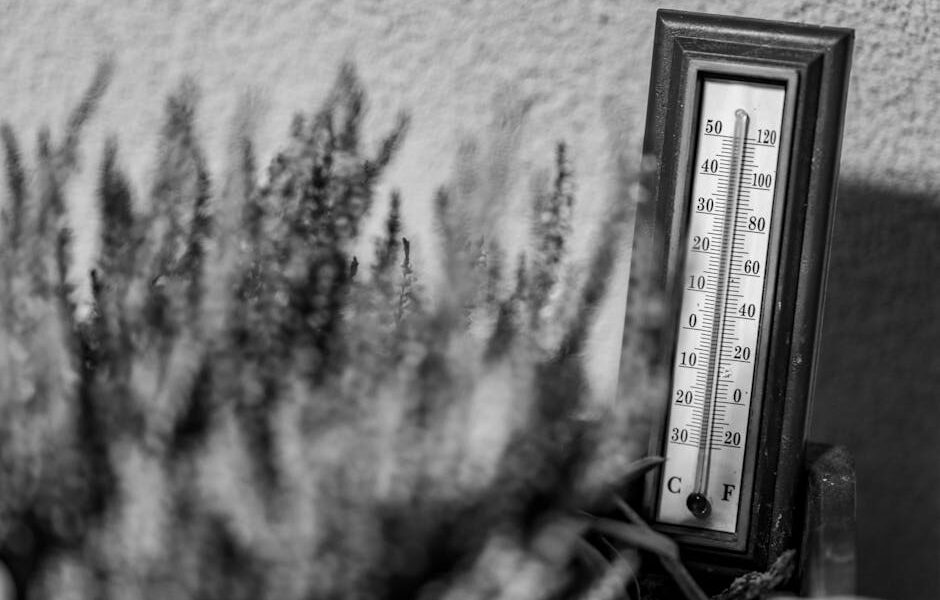
If you’ve been sweating through the spring chill that never came, you’re not alone. Across Europe, from the vineyards of France to the hills of Ireland, thermometers are hitting numbers that for this time of year are, well, unprecedented. This isn’t just about a hot afternoon that leaves you reaching for a fan. It’s about records being shattered with an aggression that climate scientists call ‘mind-bogglingly crazy.’ These extreme weather heatwaves are becoming the new normal.
The immediate culprit is something called a heat dome — a stubborn area of high pressure that parks itself over a region, trapping hot air like a lid on a pot. But that’s just the weather. To understand why this spring’s warmth feels like midsummer on steroids, we have to look at a much bigger, slower-moving force: climate change.
How extreme weather heatwaves break the old rules
Think of how temperature records usually work. In a stable climate, you’d expect a new record to be set by, say, a tenth of a degree every few decades, if at all. But that’s not what is happening. In May, the UK saw temperatures climb past 35°C — more than 2°C above the previous record for the month. That’s like a high jumper topping a world record by 30 centimetres instead of one.
Erich Fischer, a climate scientist at ETH Zurich, puts it bluntly: ‘When a record is broken after 150 years of data, you’d expect it to be by a tiny margin. But when the system is warming as rapidly as it is, the same rare weather event that once nudged the mercury a bit higher now smashes the record.’
France has seen hundreds of records fall in a single heatwave, while Ireland’s May temperature record was beaten by more than a full degree. Even in March, about 30% of weather stations in the western US set new highs, with margins that the Berkeley Earth team called ‘utterly absurd.’
Europe is warming faster than almost anywhere else
Here’s a number that should make you sit up: Over the past 30 years, Europe has been heating up at a rate of 0.56°C per decade — more than twice the global average. That might seem minor, but in climate terms, it’s seismic. It means that every heatwave is now built on a much hotter baseline than it would have been just a generation ago.
Richard Betts, head of climate impacts at the Met Office, says the current extremes are arriving faster than many models predicted. ‘I’ve been working on this for 33 years, and we are seeing exactly the kinds of things we warned about. But the scale and timing have caught us off guard.’
Meanwhile, heat is not a European problem alone. Delhi hit 45°C while this article was being written. The entire planet is running a fever, and the symptoms are becoming impossible to ignore.
Why extreme weather heatwaves matter for your daily life
It’s easy to think of record heat as something that only affects holiday plans or ice cream sales. But the real impact is far more serious. Our buildings, roads, and even our bodies are not designed for the new normal. The UK’s all-time temperature record stood at 36.7°C for nearly 80 years. Then it broke. And then it broke again. In July 2022, the UK hit 40.3°C. That’s not just a new record — it’s a whole new category of danger.
Hospitals see more heatstroke cases. Train lines buckle. Crops dry up in the field. And for people without air conditioning — which in countries like the UK and Germany is still rare — the home becomes a hazard.
Friederike Otto from Imperial College London puts it in plain language: ‘The climate we are living in today is simply not the one we grew up with, and our buildings and infrastructure are woefully unprepared for what’s next.’
What’s coming is even bigger
This is not a one-off freak event. Global warming currently stands at about 1.4°C above pre-industrial levels. But based on current climate policies, we’re on track for close to 3°C by the end of the century. That means the heatwaves we call ‘unprecedented’ today could become the mild baseline of tomorrow.
Experts are clear: until we reduce global carbon emissions to net zero, records will keep tumbling. There is no magic switch that stops the mercury from rising. Every year without serious cuts to fossil fuels locks in more heat. More smashed records. More ‘unprecedented’ headlines.
Perhaps the most unsettling thought is this: the spring heatwave you just lived through is not a warning of things to come. It is the first page of a story that hasn’t been written yet. For more on how climate change fuels these events, see global tensions world war III risks and Europe’s fertilizer dilemma. Learn more about the science behind heatwaves from IPCC and Met Office.