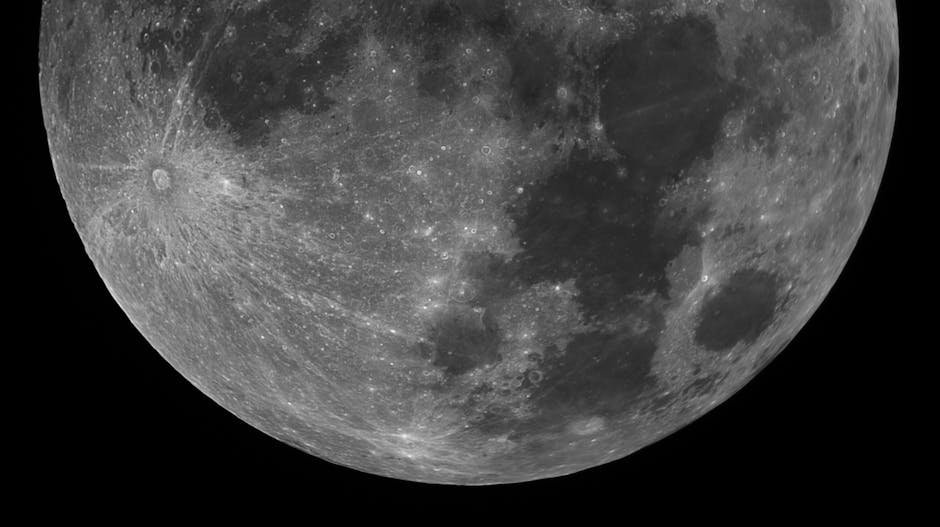
The notion of a permanent human settlement on the Moon has for decades lived in the realm of science fiction. But fresh announcements from NASA reveal that the agency is now actively pursuing contracts for robotic landers, hopping drones, and infrastructure components that could turn that fiction into reality within this decade, aiming to establish a lunar outpost that is not just a repeat of the Apollo era; it’s a fundamentally different ambition aimed at staying, not just visiting.
Why the South Pole Matters More Than the Sea of Tranquility for a Lunar Outpost
While the Apollo missions targeted the Moon’s equatorial regions, today’s focus has shifted sharply to the South Pole. Why the change? The answer lies in water ice. Permanently shadowed craters in that region are believed to contain vast deposits of frozen water, a resource that can be melted into drinking water, broken down into breathable oxygen, and even separated into hydrogen and oxygen for rocket fuel. This makes the South Pole not just a scenic destination, but a potential gas station for deeper space exploration, including missions to Mars. A lunar outpost here could serve as a critical hub for refueling and resupply.
Carlos García-Galán, a program executive for NASA’s Moon Base initiative, has outlined a three-phase plan. The first phase involves an ambitious robotic reconnaissance campaign: 25 launches ferrying roughly four metric tons of cargo to the surface by 2029. The hardware will include hopping drones that can leap over treacherous terrain and landers like Blue Origin’s Endurance, designed for pinpoint autonomous landings. These initial steps are crucial for laying the groundwork for a permanent lunar outpost.
A Timeline Under Pressure: A Political and Scientific Tightrope
NASA’s roadmap is undeniably ambitious. The stated goal is to land Americans on the Moon again before 2028, with a semi-permanent habitat powered by nuclear and solar energy possibly ready by 2032. Yet experts widely view this timeline as a stretch. Dr. Simeon Barber, a lunar scientist at the Open University, points out that the single biggest bottleneck isn’t the base design or the robots — it’s having a spacecraft that can safely get astronauts from orbit down to the surface. The success of the lunar outpost hinges on overcoming these technical hurdles.
SpaceX has been contracted to build the Starship Human Landing System, but the vehicle has faced significant technical delays and test failures. Meanwhile, China is proceeding systematically toward its own crewed lunar landing by 2030. If NASA stumbles, the geopolitical optics of a Chinese crew planting their flag on the Moon first — in a region rich with resources — would be profound. As Dr. Barber notes, there is a lot of political drive behind NASA’s aggressive announcements to secure a lunar outpost.
Beyond the Base: A Permanent Lunar Economy?
The new contracts awarded to companies like Blue Origin, Intuitive Machines, and Astrobotic suggest NASA is leaning heavily on commercial partnerships to share costs and risks. This shift moves the space agency from being the sole operator to being a customer, purchasing delivery services for scientific instruments, high-resolution cameras, and laser-guidance tools that will be delivered to sites like Nobile Crater. These partnerships are essential for building a sustainable lunar outpost.
Original Analysis: While much of the coverage focuses on the hardware, the quieter revolution here is about establishing a legal and economic framework for off-world resource extraction. By investing in these contracts now, NASA is effectively seeding the ground for a future where mining the Moon for water, helium-3, or rare earth metals is not a science experiment but a business. This will inevitably force a global conversation about ownership and property rights beyond Earth — a conversation that, to date, has remained largely hypothetical. The race to build a lunar outpost is as much about setting precedents in space law as it is about setting foot on the lunar surface.
The robots slated for the MoonFall program will spend years mapping obstacles, testing power systems, and delivering hardware. If successful, the next phase will see the installation of fission nuclear reactors to provide continuous power through the two-week-long lunar nights. A decade from now, if the plans hold, astronauts could be living in pressurized habitats, driving long-range rovers, and looking up at Earth — not as visitors, but as residents of a thriving lunar outpost.
For more on the geopolitical implications of space exploration, see our analysis on The Quad’s Identity Crisis. Learn about the technical challenges of lunar missions from NASA’s Moon to Mars program.