In the remote, mineral-rich hills of eastern Democratic Republic of Congo, the latest Ebola outbreak Congo has claimed its first known casualties: three people who dedicated their lives to helping others. Their deaths are not just statistics — they represent a deeper, often invisible tragedy that unfolds before the world tunes in.
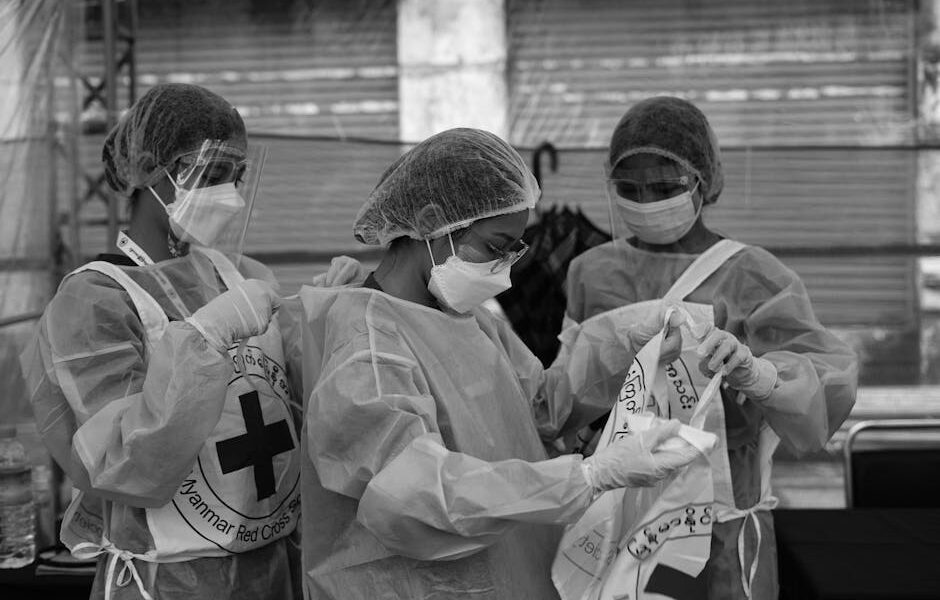
The volunteers worked for the Red Cross in the town of Mongwalu, a community that has now been identified as the epicentre of an outbreak caused by a rare strain of the virus known as Bundibugyo. Unlike the more famous Zaire strain, there is no proven vaccine for this variant, which kills roughly one in three people it infects. The volunteers are believed to have been exposed to the virus on March 27 while handling the bodies of deceased community members — an act of service they performed before anyone knew Ebola was circulating.
Their deaths, which occurred between May 5 and May 16, highlight a cruel irony: the very people trained to contain the virus are often the first to fall when an outbreak is invisible. The International Federation of Red Cross and Red Crescent Societies (IFRC) confirmed the three volunteers were Alikana Udumusi Augustin, Sezabo Katanabo, and Ajiko Chandiru Viviane. They were not working on an Ebola-specific project at the time. They were simply doing what volunteers do — showing up when their community needed them.
A Perfect Storm of Risks in the Ebola Outbreak Congo
Health experts have long warned that the bodies of Ebola victims remain highly infectious after death because bodily fluids can still transmit the virus. This biological reality turns every funeral and every body retrieval into a potential transmission event. In a region where traditional burial rites involve close contact with the deceased, containing the virus becomes a battle against culture, grief, and fear.
The World Health Organization (WHO) has already raised the public health risk for DR Congo from “high” to “very high.” Meanwhile, neighboring Uganda reported five confirmed cases, and the African Centres for Disease Control has flagged ten other countries as being at risk, including Angola, Kenya, and Rwanda. The virus is moving, and it is moving fast.
When Trust is the First Casualty
One of the most troubling aspects of this Ebola outbreak Congo is not the virus itself, but the erosion of trust between communities and responders. In Ituri province, an angry crowd set fire to part of a hospital after a family was prevented from taking the body of a young man believed to have died from Ebola. The day before, a tent provided by Médecins Sans Frontières (MSF) in Mongwalu was burned.
These incidents reveal a deep-seated skepticism that has plagued Ebola responses for years. Rumors spread like wildfire: that responders are stealing organs, that the disease is a hoax, that foreign health workers are bringing the virus, not stopping it. In a context where rebel groups like M23 control parts of the region and clashes with government forces are routine, suspicion is a survival mechanism. But it is also a deadly obstacle.
As MSF noted in a statement, “Understandably, there are still many uncertainties and fears among the community in this rapidly evolving context. This incident highlights just how critical sustained community engagement and trust building are.”
The Long Shadow of Conflict
This Ebola outbreak Congo is unfolding in one of the most volatile regions on earth. Parts of Ituri and the neighboring Kivus are under the control of armed groups, making it nearly impossible for health workers to move freely. The government has suspended all commercial and private flights to and from Bunia, the provincial capital, and the military governor has banned gatherings of more than 50 people and suspended funeral wakes. Burials can now only be conducted by specially trained teams.
These measures are necessary from a public health perspective, but they also fuel resentment. When people cannot gather to mourn, when they cannot touch their dead, when flights are grounded and movement is restricted — the sense of being under siege grows. And in a region already traumatized by decades of war, that sense can quickly turn into violence.
What Makes This Ebola Outbreak Congo Different?
While the world has become somewhat familiar with Ebola — thanks in part to the devastating 2014-2016 West African outbreak and the more recent 2018-2020 epidemic in eastern DR Congo — the Bundibugyo strain poses unique challenges. There is no proven vaccine, and the case fatality rate, while lower than Zaire, is still devastating. The outbreak has already resulted in more than 200 suspected deaths and over 850 suspected cases.
But numbers don’t tell the full story. What makes this Ebola outbreak Congo particularly dangerous is the combination of a rare virus, a conflict-ridden region, a community in crisis, and a health system that is chronically underfunded and overstretched. The volunteers who died were not just victims of a virus — they were casualties of a system that asks too much of too few.
An Original Perspective: The Unseen Heroes
In the coverage of disease outbreaks, we often focus on the science — the vaccines, the isolation protocols, the case counts. But we rarely stop to consider the people who make the response possible. The Red Cross volunteers who died were not doctors or nurses. They were community members — teachers, farmers, parents — who stepped forward to help their neighbors. They were the eyes and ears of the health system in places where no one else goes.
Their deaths should serve as a stark reminder that the first line of defense in any outbreak is not a laboratory or a hospital. It is a person. And when that person is not protected, when the outbreak is detected too late, when trust is broken — the virus wins. The real story here is not just the spread of a rare virus. It is the erosion of the very human networks that are supposed to stop it.
As the world watches the case count rise, we must ask ourselves: what are we willing to do to protect the protectors? Are we investing in community engagement as much as we invest in vaccine research? Are we listening to local voices, or are we simply parachuting in with protocols and expecting compliance? The deaths of these three volunteers are a call to action, not just for better medicine, but for better humanity.
For more on the broader crisis, read our analysis on A Perfect Storm: Conflict, Disease, and the Race to Contain Ebola in DR Congo. Learn about the challenges of Ebola Meets War in Eastern Congo: Why the Next Epidemic Could Be Even Worse. For authoritative information, visit the World Health Organization’s outbreak page and the CDC’s Ebola updates.