The current Ebola outbreak DR Congo is not just a medical emergency—it is a humanitarian crisis unfolding in one of the world’s most volatile regions. While headlines focus on case counts and vaccine timelines, the reality on the ground is far more complex: a lethal virus is spreading through communities already battered by decades of armed conflict, displacement, and deep mistrust of authorities.
Ebola Outbreak DR Congo in a War Zone
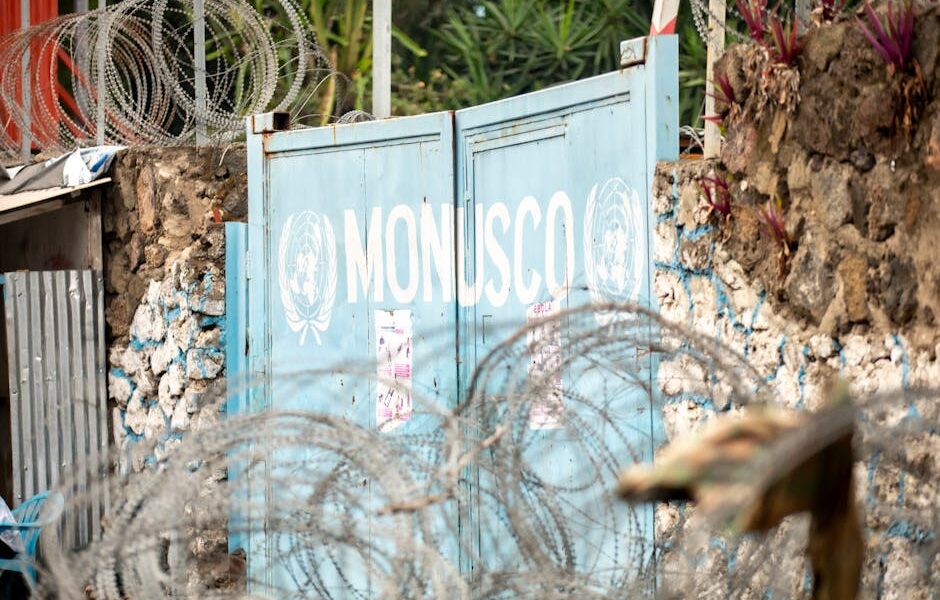
The epicenter of this Ebola outbreak DR Congo is Ituri province, a region that has been under military rule since 2021 in a bid to quell dozens of armed groups, including the Allied Democratic Forces (ADF), which are linked to the Islamic State. Johnny Luboya Nkashama, the military governor of Ituri, has described the fight against Ebola as a “second war”—one for which his province lacks the basic tools to fight. He told French broadcaster RFI that existing resources were already stretched thin by the ongoing conflict, and now responders must also battle a highly contagious virus with no approved vaccine or treatment for the strain involved.
This is the 17th Ebola outbreak DR Congo since the virus was discovered in 1976. But this time, the culprit is the rare Bundibugyo species—only the third outbreak of its kind worldwide, and the first in over a decade. Unlike the more common Zaire strain, there are no licensed vaccines or specific medications for Bundibugyo. The World Health Organization has warned that a targeted vaccine could take up to nine months to develop, a timeline that feels excruciatingly slow when the virus is already outpacing response efforts.
More Than 900 Suspected Cases and Growing
Since the outbreak was declared on May 15, officials have reported more than 900 suspected cases and at least 223 suspected deaths. The disease has spilled beyond Ituri into the neighboring North and South Kivu provinces, and has already crossed into Uganda, where seven cases have been confirmed. The Africa Centres for Disease Control and Prevention (Africa CDC) has flagged Angola, Burundi, the Central African Republic, Ethiopia, Kenya, Rwanda, South Sudan, Tanzania, and Zambia as countries at risk.
What the Governor Says the Region Needs
Governor Nkashama has been blunt about the gaps. In his radio interview, he listed three urgent necessities:
- Qualified personnel — He called for trained health workers to be deployed immediately to treat patients and trace contacts.
- Secure treatment centers — He emphasized the need for facilities that can protect both patients and staff from attacks by angry relatives, who have already targeted two treatment centers while trying to claim the bodies of loved ones.
- Financial resources — He warned that every day of delay brings the region closer to catastrophe.
On Saturday, Africa CDC Director-General Dr. Jean Kaseya met with health ministers from DR Congo, Uganda, and South Sudan to coordinate a cross-border response. They agreed on a $319 million budget to contain the outbreak. So far, only about 10% of that funding has been secured from the affected countries themselves. South African President Cyril Ramaphosa has pledged an initial $5 million, and African business leaders are meeting this week to raise additional funds. But international partners have been slow to commit, raising concerns that the response is already behind schedule.
An Original Insight: The Hidden Cost of Distrust
One critical factor that the official statements and funding pleas often overlook is the deep-seated mistrust between affected communities and health responders. In Ituri, years of armed conflict have eroded faith in any uniformed authority—whether military or medical. When health workers arrive in hazmat suits to isolate suspected cases or remove bodies, they are often met with suspicion, hostility, or outright violence. The attacks on treatment centers are not random acts of rage; they are symptoms of a population that has learned to fear anyone bearing official insignia. Until this trust is rebuilt—through local leaders, transparent communication, and genuine community engagement—no amount of funding or personnel will fully stop the virus.
The WHO has declared a public health emergency of international concern, and Director-General Tedros Adhanom Ghebreyesus is due to visit DR Congo to assess the situation firsthand. He has admitted that responders are “playing catch-up” as the virus spreads faster than containment measures can be scaled up. The Africa CDC has also warned that the outbreak risks spiraling into a continental crisis if neighboring nations do not prepare now.
What Makes This Outbreak Different
This is not the first time DR Congo has faced Ebola, but the combination of a rare strain, an active war zone, a fragile health system, and widespread population displacement makes this outbreak uniquely dangerous. The lessons from previous outbreaks—especially the 2014-2016 West African epidemic that killed over 11,000 people—should have been a wake-up call. But those lessons require sustained investment, not just emergency funding. They require building health infrastructure in peacetime, training local health workers, and creating systems that can respond before a virus crosses borders.
For now, the clock is ticking in Ituri. The governor’s plea for a “swift response” is not hyperbole—it is a warning that the world may be ignoring until it is too late. For more on the broader context of disease outbreaks in conflict zones, see Ebola Meets War in Eastern Congo. Additionally, the World Health Organization’s Ebola page provides authoritative updates on the global response.