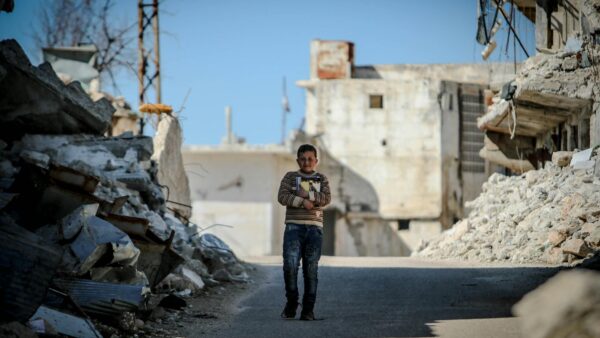
In a significant escalation of the conflict along Israel’s northern border, Prime Minister Benjamin Netanyahu announced that Israeli forces have crossed the Litani River in southern Lebanon, expanding operations into the Bekaa Valley and even the outskirts of Beirut. This Litani River incursion signals a dramatic widening of Israel’s military campaign beyond Gaza into Lebanese territory.
Litani River incursion opens a new front in an old war
For decades, the Litani River has served as a de facto red line in Israeli-Lebanese hostilities. The river, which runs about 30 kilometers north of the Israeli border, has historically been the limit of Israeli ground incursions — most notably during the 1978 and 1982 invasions. By crossing it now, Israeli forces are moving into territory that has long been a stronghold for Hezbollah, the Iran-backed militia that has been trading fire with Israel since the Gaza war erupted in late 2023.
Netanyahu’s announcement came just days after he ordered the Israeli military to seize control of 70% of the Gaza Strip. The twin offensives — in Gaza and now southern Lebanon — represent the broadest Israeli military campaign since the 1973 Yom Kippur War. The Litani River incursion is part of this broader escalation.
What the push into Lebanon means for civilians
For the hundreds of thousands of people living in southern Lebanon, the crossing of the Litani River raises the specter of a ground war that could devastate villages and displace families. The Bekaa Valley, a fertile agricultural region, is also home to many Syrian refugees who have already fled one war. An expanded Israeli operation threatens to create a new humanitarian crisis in a country that is already reeling from political paralysis and economic collapse.
In northern Israel, residents who have been evacuated from border communities for months now face the prospect of an even longer displacement. The Israeli government has framed the Litani River incursion as necessary to push Hezbollah fighters away from the border, but critics warn that deeper ground operations risk bogging down the military in a costly occupation.
The strategic calculus behind the escalation
Why cross the Litani now? Analysts point to several factors. First, the Israeli military believes that Hezbollah’s rocket capabilities — many of which are hidden in villages and tunnels north of the river — cannot be neutralized by airstrikes alone. A ground operation is seen as the only way to physically destroy launchers and supplies. Second, Netanyahu’s domestic political position is fragile; a dramatic military success could shore up support at home. However, this logic carries high risk: Hezbollah is far more battle-hardened and better armed than Hamas, and a prolonged ground war in Lebanon could exact a heavy toll on Israeli soldiers and civilians alike.
Third, the timing may also be linked to broader regional dynamics. Iran, Hezbollah’s patron, is locked in its own shadow war with Israel, and the United States is distracted by domestic political turmoil and its own election cycle. Netanyahu may calculate that he has a window of opportunity to reshape the security landscape on his northern border before international pressure mounts.
The crossing of the Litani River is not just a tactical move—it is a strategic pivot. For decades, Israeli policy sought to contain conflict along the Blue Line, the UN-demarcated border. That policy now lies in ruins. What comes next is uncertain, but the region is bracing for a wider war that nobody — not even the most experienced generals — can fully predict. The Litani River incursion could reshape the entire region.
A history of rivers and red lines
It is worth remembering that the Litani River has been a flashpoint before. In 1978, Israel’s Operation Litani aimed to create a security buffer zone that would protect its northern towns from Palestinian attacks. In 1982, the invasion went even farther, reaching Beirut. Both times, the result was years of occupation, guerrilla warfare, and eventual withdrawal under international and domestic pressure. History does not repeat itself exactly, but the echoes are unmistakable.
For now, the world watches as Israeli troops ford the Litani once again. Whether this chapter ends in a negotiated settlement, a quagmire, or a broader regional conflagration depends on decisions made in the coming days and weeks. What is clear is that the old rules of engagement no longer apply. For more on regional tensions, see Germany joins growing unease over Israel’s Gaza control expansion. For background on the broader conflict, read Gaza Ceasefire Crumbles as Israel Expands Territorial Control. External analysis from the Council on Foreign Relations and BBC News provides further context.