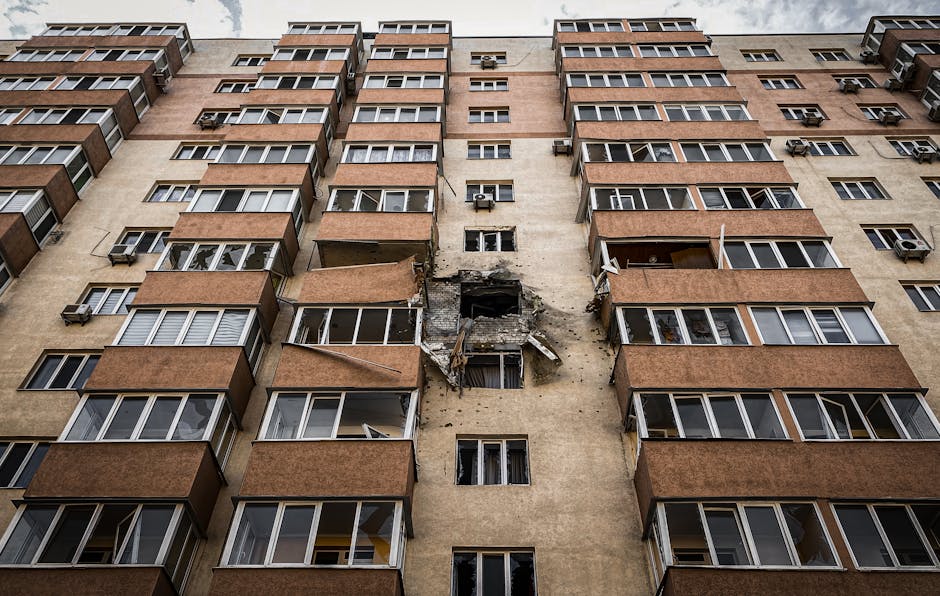
A Renewed Warning and a Grim Reality
The Russia threat Kyiv escalated last weekend when Moscow issued an ominous ultimatum: foreign nationals and diplomats should leave Kyiv immediately, as a fresh round of systematic strikes is coming. The target list includes what Russia calls decision-making centers and drone manufacturing sites. For residents of the Ukrainian capital, this is not a new threat but a terrifying escalation in a war that has already reshaped their lives beyond recognition.
The warning follows one of the most devastating aerial assaults on Kyiv since the invasion began in 2022. On Saturday night, a barrage of ballistic and cruise missiles, plus hundreds of drones, slammed into the city and surrounding areas. At least four people were killed, and roughly 100 were wounded. Among the damaged structures were the Chernobyl Museum, the National Art Museum of Ukraine, a shopping center, and residential buildings in the Lukanivka district. These were not military installations.
The Trigger and the Counter-Narrative
Russia claims the upcoming strikes are retaliation for a Ukrainian attack on a student dormitory in the Russian-occupied town of Starobilsk on Friday, which Moscow says killed 21 people. Ukraine’s military counters that its forces targeted an elite Russian drone unit in the area and had no intention of hitting civilians. This back-and-forth is familiar: both sides routinely accuse each other of war crimes, while civilians bear the brunt.
What’s different this time is the explicit call for foreigners to leave. Some analysts see this as psychological warfare—a way to amplify fear and isolate Ukraine internationally. Others argue it’s a pragmatic move: Russia knows that a strike hitting a diplomatic compound or foreign journalists would escalate the conflict dangerously. By warning them out, Moscow may be trying to avoid such a disaster, while still terrorizing the population.
Air Defenses: A Shield with Holes
Four and a half years of war have forced Ukraine to become a master of air defense. The country now operates a layered, sophisticated system that intercepts the vast majority of incoming drones and missiles. But no system is perfect, especially when Russia fires waves of ordnance designed to overwhelm defenses. Saturday’s attack proved that: despite intercepting many, enough got through to cause death and destruction.
Ukraine remains heavily reliant on foreign-supplied air defense systems, particularly from the US and European allies. In March, President Volodymyr Zelensky warned that his country would face a critical shortage of these weapons due to the US diverting resources to Israel’s conflict with Iran. This dependency puts Ukraine in a precarious position: one diplomatic shift or political decision abroad could leave Kyiv vulnerable to even deadlier strikes.
Original Insight: The Psychological Toll and the New Normal
Beyond the immediate devastation, there is a quieter but equally dangerous consequence: the normalization of terror. When a city experiences nightly explosions for years, its residents develop a kind of grim resilience. But that resilience has a cost. Children grow up knowing the sound of air raid sirens. Adults calculate risk every time they leave their homes. The constant threat of a hypersonic missile—like the nuclear-capable Oreshnik fired at Bila Tserkva, 90 km south of Kyiv—means no place feels safe.
This is not just a physical war; it is a war on the mind. Russia’s strategy seems designed not just to destroy infrastructure but to break the will of the Ukrainian people. Yet so far, that will remains unbroken. The irony is that each new Russia threat Kyiv, each attack, reinforces the sense that Ukraine must fight for its very existence. The warning to foreign nationals, intended to isolate the country, may instead rally more international support. The world watched the Bucha massacre and the bombing of maternity hospitals. It is watching again now.
What Comes Next
The immediate future looks grim. Ukraine’s allies are deliberating over more air defense systems and longer-range weapons. Meanwhile, Russia seems willing to escalate, using ever more advanced weaponry. For those living in Kyiv, the advice from Moscow to leave is not practical—many have nowhere to go, and the rest of the country is under frequent attack as well.
One thing is clear: the pattern of threat, attack, and retaliation is not ending soon. The question is not whether Russia will strike again, but how Kyiv and the world will respond. For more on the broader diplomatic crisis, see our analysis of Moscow’s veiled ultimatum to diplomats. Additionally, the global tensions stress-testing the system highlight the stakes of this conflict.
- Key points to watch: Western aid commitments, Ukraine’s ability to sustain air defense, and the civilian toll of future strikes.
- What locals need: More air defense systems, safe shelters, and psychological support.
- Global stakes: This conflict continues to test international norms about civilian protection and the limits of retaliation.
For further reading on the broader implications, see BBC’s coverage of the Ukraine war and Reuters’ Europe news.