For a full week, a handful of families in a remote corner of central Laos held their breath, praying for a miracle. On Wednesday afternoon, that miracle arrived — five villagers emerged alive from a flooded cave system in Xaysomboun province, after being trapped since the previous week. Two others remain missing, and rescue teams say they will continue to search as long as there is hope. This Laos cave rescue highlights the extreme risks faced by those who rely on the land for survival.
The story could easily have ended in tragedy. Instead, it has become a testament to the grit of local volunteers and international experts who braved narrow, muddy passageways barely 50 centimeters wide — some nearly completely underwater — to reach the stranded group. The villagers had entered the cave in search of gold deposits and wildlife, a common practice in an area where people often rely on the land for survival. But heavy rains and landslides slammed the entrance shut behind them, turning a routine foraging trip into a nightmare.
A familiar brand of danger: Laos cave rescue parallels
Anyone who remembers the 2018 Thai cave rescue will feel a chill of recognition. That operation, which saved 12 boys and their football coach from a flooded cave in Chiang Rai, captivated the world for 18 harrowing days. The Laos cave rescue shares some eerie parallels: a monsoon-swollen cave system, victims trapped deep underground, and a frantic race against time. But there’s a crucial difference. The Thai rescue involved more than 10,000 experts from dozens of countries, global media coverage, and millions of dollars in resources. The Laos operation was far more modest — a handful of divers from Laos and Thailand, working quietly in the jungle without fanfare.
One of those rescuers, Kengkach Bangkawong, was part of the Thai team in 2018. He knows better than most how quickly a cave rescue can go wrong. In a Facebook post, he confirmed the survivors were found at 4:30 p.m. local time — a moment that brought tears to the eyes of many volunteers. ‘Our team made it happen,’ said Bounkham Luanglath of the Lao rescue group Rescue Volunteer for People, his voice still shaking with emotion.
The hazards that lurked beneath
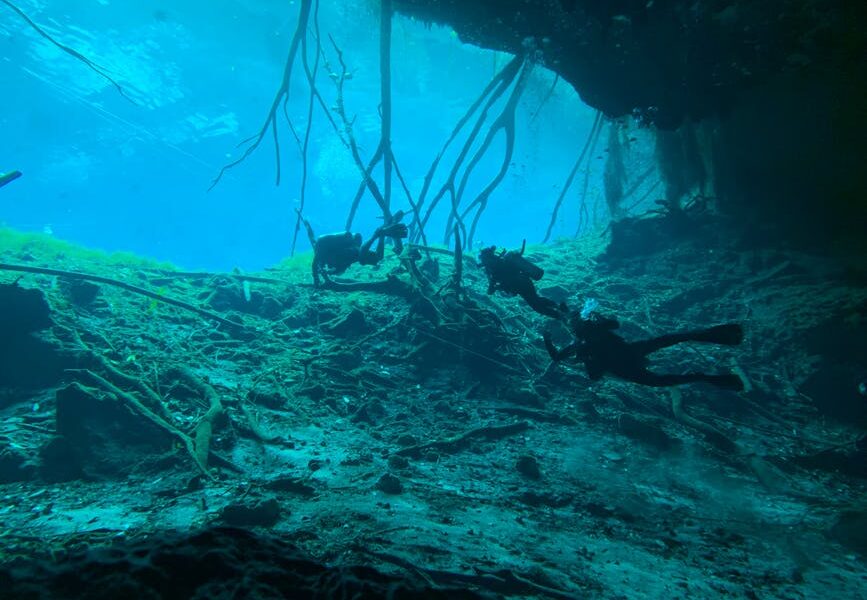
Specialist diver Mikko Paasi from Finland, who worked on the rescue, offered a chilling description of the cave’s interior. He called it an ‘abandoned gold mine’ where rescuers had to navigate hundreds of meters of tight restrictions, floodwaters, collapse hazards, and air quality so poor it posed a serious health risk. The seven victims were estimated to be about 300 meters from the exit — but in a cave that narrow and flooded, 300 meters might as well be three miles.
The footage released by rescuers shows divers crawling on their bellies through muddy channels, with barely enough room to turn around. It’s a stark reminder that cave diving is one of the most dangerous activities on earth, even for professionals. For untrained villagers with no equipment, being trapped in such an environment is a living nightmare.
Why these rescues matter beyond the headlines
It’s easy to dismiss a story like this as just another far-away disaster — a blip in the news cycle. But the Laos cave rescue is a powerful illustration of a truth that applies everywhere: the poorest communities often face the deadliest risks. The villagers who entered that cave weren’t thrill-seekers or reckless adventurers. They were people trying to feed their families, scraping together an existence in one of the least developed regions in Southeast Asia. The cave itself is not owned by anyone; locals dig holes and hunt for food there out of necessity.
When disasters strike, the gap between the haves and the have-nots becomes brutally clear. Wealthier countries can afford cutting-edge sonar, underwater drones, and teams of specialized cave divers. In Laos, the rescue relied on a skeleton crew of volunteers, a few donated air tanks, and sheer determination. The fact that anyone came out alive is nothing short of extraordinary.
We should also ask ourselves: as climate change intensifies monsoon seasons across Southeast Asia, how many more such tragedies are waiting to happen? Heavy rainfall and landslides already kill hundreds in the region every year. Caves that were once safe are now flood traps. The 2018 Thai rescue was a wake-up call. The Laos cave rescue is a reminder that we haven’t learned enough.
What happens next
For now, the five survivors are receiving medical care in a local hospital. Their identities have not been released, but officials say they are in stable condition. The search for the two missing villagers continues, though hope fades with each passing hour. Baeng, a Laotian rescuer who asked to be identified by only one name for security reasons, told AFP: ‘Locals usually go there to dig holes and look for food. We will not stop looking until we know for sure.’
The international community should take note. The next time a group of poor villagers gets trapped in a flooded cave, they may not be so lucky. And when the cameras leave, and the news cycle moves on, the families left behind will still be there — waiting, hoping, and praying for a miracle that may never come.
For more on similar rescue operations, read about the Deadly Elephant Collision Highlights Uganda’s Growing Human-Wildlife Conflict. Learn about the risks of extreme weather in Why today’s heatwaves are rewriting the rulebook on extreme weather.
For authoritative information on cave rescue techniques, visit the National Speleological Society. For insights on disaster response, see the United Nations Office for Disaster Risk Reduction.